 |
Lhasanese |
|
He is not recognized by the F.C.I. |
Origin |
Tibet <> China -> U.S.A. | |
Translation |
Francis Vandersteen |
A brief presentation of the Lhasanese |
| The Lhasanese is a hybrid breed. It is a mixture of Lhassa Apso and Pekingese. The Lhasanese is a small dog, just like its parent breeds. It will generally have long hair, which may require the same care as the parent Lhassa Apso breed. He's a gentle, affectionate dog who adores all members of the family. They're great with children and can be trusted not to make fun of younger ones. They are wary of strangers, but will soon warm up to anyone they find friendly. The Lhasanese is not a very active dog, and is just as happy on your lap as on a short walk with you. |
History of the Lhasanese |
| The Lhasanese is a fairly new breed, so there's not a lot of information out there about this particular hybrid. However, we can learn more about the history of the parent breeds to understand the origins of the Lhasanese. |
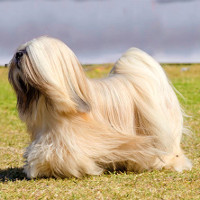
A little of the Lhassa Apso |
||
| Buddhist monks living in the Tibetan mountains developed the Lhassa Apso as sentinels for temples and monasteries. Some believe the dogs are descended from Tibetan Terriers, while others think the breed may have been influenced by dogs from the North. After studying the breed's DNA, it seems that one of the Lhassa Apso's ancestors could be a type of mountain wolf. The breed was developed to withstand cold temperatures, and their judgment helped them determine whether someone approaching was friend or foe. Dogs of the breed were never sold, although the Dalai Lamas occasionally gave a pair to imperial families and visiting dignitaries. In 1933, the breed arrived in the United States when the 13th Dalai Lama presented a group of small dogs to Mr. and Mrs. Suydam Cutting. The beginning of the breed in the USA came from these dogs, and the breed was recognized by the American Kennel Club in 1935. | ||
 |
||
| Standard of the Lhassa Apso | ||
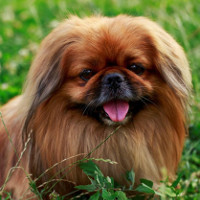
A little of the Pekingese |
||
| The Pekingese is known as the Lion Dog of China. Legend has it that various animals fell in love and, with Buddha's blessing, the Pekingese was born. Experts believe it to be around 2,000 years old. It belonged strictly to the nobility until the dog became a war prize for Great Britain. Queen Victoria was given a Pekingese, whom she named Looty. The Pekingese arrived in the U.S.A. in 1906 and is one of the most popular breeds today. | ||
 |
||
| Standard of the Pekingese |
Appearance of the Lhasanese |
| The exact appearance of the Lhasanese will closely resemble that of the parent Lhassa Apso, however, its exact appearance will depend on the dominant parent breed. Generally speaking, they have long, flowing, silky hair. They are small dogs, often weighing no more than 11.5 kilos at maturity. They generally measure 28 centimetres at the withers. It can come in a variety of colors, but is often the same as its parent Lhassa Apso. These colors include honey, black, white, slate or particolored. However, it can also be golden, like its parent breed Pekingese. It will have a slender body and a long tail that curls over its back. |
Temperament of the Lhasanese |
| The Lhasanese is a friendly, affectionate dog. He is loyal and loves all members of his family, including children. He is patient with small children, but it is recommended that he be socialized with other dogs from an early age. With socialization, the Lhasanese can learn what behavior you expect from him. He can be a bit of a guard dog and is known to be wary of strangers. He's not an active dog and prefers to spend time cuddling you on the sofa. He doesn't tend to suffer from separation anxiety, but will follow you from room to room as you move around the house. |
Needs and activities of the Lhasanese |
| The Lhasanese is not a very active dog. If he's happy to accompany you on a short walk or to the dog park, he's just as happy to sit on your lap. He's happy to live in an apartment or house with a fenced-in yard, however, bear in mind that Lhasanese can suffer from brachycephalic syndrome if he inherits the flattened face of the parent breed Pekingese. With this health problem, a dog can't be allowed to overexert himself, or get too hot. It's always a good idea for a brachycephalic dog to have access to enough water. If the Lhasanese were overheated or overexcited, it might not be able to breathe properly. For this reason, Lhasanese do best in short periods of activity. |
Maintenance of the Lhasanese |
| The Lhasanese needs the same care as its parent breed, the Lhassa Apso. It will need frequent brushing, sometimes daily, to maintain its coat and avoid knots. Some owners have been known to trim their Lhasanese's coat so that maintenance can be kept to a minimum. Trim your Lhasanese's nails once every two weeks. As a general rule, if you hear the nails rattling on your floor, it's time to trim them. Brush his teeth two or three times a week to prevent bad breath. If you want to prevent tooth decay, brush his teeth daily. Bear in mind that small dogs are more likely to develop tooth decay. |



 English (United Kingdom)

Comments