
 |
Lhasalier |
|
He is not recognized by the F.C.I. |
Origin |
Tibet <> Great Britain -> U.S.A. | |
Translation |
Francis Vandersteen |
A brief presentation of the Lhasalier |
| The Lhasalier is a hybrid breed. Its parent breeds are the Lhassa Apso and the Cavalier King Charles Spaniel. The Lhasalier is an energetic, cheerful dog. It gets on well with children and is easy to train. He listens attentively to his master's commands and wants nothing more than to please his family. He is very affectionate with all members of his family. He doesn't need much exercise, but he does need regular exercise to stay healthy. He won't require excessive maintenance, but be prepared to groom him regularly. It will be a small dog, not exceeding 46 centimeters. |
History of the Lhasalier |
| The Lhasalier is a relatively rare hybrid breed. To understand its origins, we need to study the history of its parent breeds. |
A little of the Lhassa Apso |
||
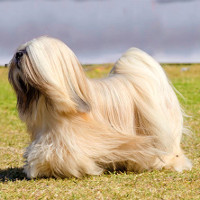
| Buddhist monks living in the Tibetan mountains developed the Lhassa Apso as a sentinel for temples and monasteries. Some believe the dogs are descended from Tibetan Terriers, while others think the breed may have been influenced by dogs from the North. After studying the breed's DNA, it seems that one of the Lhassa Apso's ancestors could be a type of mountain wolf. The breed was developed to withstand cold temperatures, and their judgment helped them determine whether someone approaching was a friend or foe. Dogs of the breed were never sold, although the Dalai Lamas occasionally gave a pair to imperial families and visiting dignitaries. In 1933, the breed arrived in the United States when the 13th Dalai Lama presented a group of small dogs to Mr. and Mrs. Suydam Cutting. The beginning of the breed in the USA came from these dogs, and the breed was recognized by the American Kennel Club in 1935. | ||
 |
||
| Standard of the Lhassa Apso | ||
A little of the Cavalier King Charles Spaniel |
||
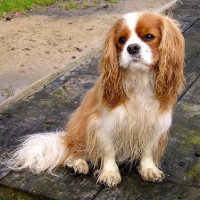
| The Cavalier King Charles Spaniel is descended from the dwarf Spaniels of the 16th century, who were the favorites of English noble families. In fact, the breed is named after Charles I and II. Legend has it that King Charles II never went anywhere without at least two or three of his Spaniels. After Charles II's death, the dog's popularity began to decline, and the toy Spaniels of his day were bred with Carlins and other short-faced breeds. The Cavalier King Charles inherited many of their traits, and they are reflected in the friendly, people-oriented dog we know today. | ||
 |
||
| Standard of the Cavalier King Charles Spaniel |
Appearance of the Lhasalier |
| The exact appearance of the Lhasalier will depend on the dominant parent breed. It is likely to have long, smooth, silky hair. It is dense and can be slightly wavy. It's a small dog, and often has a short face. He will have long, floppy ears with some feathering. He will have a medium-length tail with long hair. His legs will be small, but proportionate to his body. Colors will vary with the Lhasalier. It can be black and tan, or honey, black, slate or parti-colored. He may also be deep red. It may have the teeth of the Cavalier King Charles Spaniel. |
Temperament of the Lhasalier |
| The Lhasalier is a cheerful, energetic little dog. He loves every member of his family, but is particularly affectionate with children. He gets on well with other dogs and pets, but early socialization is preferable when introducing the Lhasalier to other animals. He may be a little independent, but he's also quite obedient. Because of his independent nature, he's not prone to separation anxiety. He can follow you from room to room while you're at home, and expects to be involved in all your activities. He may be wary of strangers at first, but generally warms up to people. He rarely barks. |
Needs and activities of the Lhasalier |
| The Lhasalier needs regular activity, but it doesn't have to be intense. It can be divided into small activity sessions throughout the day. The Lhasalier is prone to weight gain, so daily activity is essential to keep him in top shape. He may enjoy an outing to the dog park, or find great pleasure in accompanying you on a brisk walk. It's important to remember that the Lhasalier can inherit the Cavalier King Charles' short face, and may suffer from brachycephalic syndrome. This often makes him more uncomfortable than anything else, but if you allow him to get too hot, he can have a heart attack. Never let a brachycephalic dog overexert himself. |
Maintenance of the Lhasalier |
| Be prepared for a moderate amount of grooming when you own a Lhasalier. Depending on the coat he inherits, you may want to trim his coat for easier grooming. He'll need weekly, if not daily, brushing. Be sure to check his ears weekly for any redness or odor, sure signs of an ear infection. Use a cotton ball soaked in lukewarm water to wipe his ears once a week. Brush his teeth two or three times a week to prevent tartar build-up and bad breath, but if you want to prevent tooth decay, brush daily. Your dog's nails should be trimmed once every two weeks. As a general rule, if you hear his nails clicking on the floor, it's time to trim them. |



 English (United Kingdom)

Comments