
 |
Jackie-Bichon |
|
He is not recognized by the F.C.I. |
Origin |
Great Britain <> France / Belgium -> U.S.A. | |
Translation |
Francis Vandersteen |
A brief presentation of the Jackie-Bichon |
| The Jackie-Bichon is a hybrid that combines the traits of two unique parent breeds: the Jack Russell Terrier and the Bichon frise. It's a small breed that tends to resemble the Jack Russell Terrier much more than the Bichon frise when fully grown. There is no perfectly neat white coat, however, the classic white color of the Bichon frise can still be seen in the medium color pattern of the Jackie-Bichon. As a hybrid breed, the appearance and personality of the Jackie-Bichon can vary considerably, even sometimes within the same litter. Despite this fact, there is a typical standard for the breed that can be followed. The Jackie-Bichon, or Jack-Chon as some like to call it, is an active, playful dog that gets on very well with children and other animals. It's important to remember that because both parent breeds are quite active and have lots of energy, you can expect your Jackie-Bichon to be active too. This doesn't mean he won't be affectionate and gentle, just that a decent amount of exercise and training will be needed to get him behaving. Fortunately, this dog is relatively easy to train (with patience) and more than willing to learn what you have to teach him, but he does have a slight stubborn and independent streak thanks to the Jack Russell Terrier side, so make sure you train consistently and with a firm but gentle hand. All in all, if you're looking for an excellent companion dog that has a good balance between energetic and gentle, then the Jackie-Bichon may be just the thing for you. |
History of the Jackie-Bichon |
| Due to the fact that the Jackie-Bichon is a more recent hybrid breed, it hasn't yet had the chance to build up a well-detailed origin story. Fortunately, we know a great deal about its parent breeds, the Jack Russell Terrier and the Bichon frise, which allows us to grasp a glimpse of the Jackie-Bichon's past. |
A little of the Jack Russell Terrier |
||
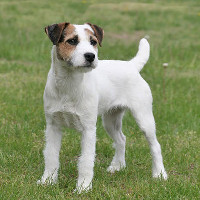
| The Jack Russell Terrier was the brainchild of an Oxford student who loved foxhunting. His name was Jack Russell and when he bought his first Terrier, named Trump, he realized he was hooked. Using Trump, Russell created a new line of Fox Terrier that was created for the sole purpose of diving into foxholes with great flexibility and agility. That's why the Jack Russell Terrier has an extremely supple chest and an excellent nose. Its long body is decorated with short, weather-resistant fur in a patchwork pattern of white and tan. Originally a very popular breed, they were adopted by the Jack Russell Terrier Club of America. They had high standards for their beloved breed, and when the American Kennel Club wanted to recognize the breed in 1997, it was not well received. Despite the opposition, the AKC recognized the Jack Russell Terrier and called it the "Parson Russell Terrier", as Jack Russell Terrier was already a registered trademark. The breed is now used as a hunting companion and family dog throughout the United States. | ||
 |
||
| Standard of the Jack Russell Terrier | ||
A little of the Bichon frise |
||
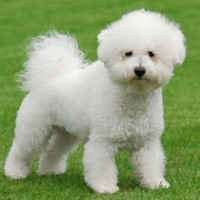
| The Bichon frise is one of those dogs that have always existed. The first Bichon frises are thought to have originated around 2,000 years ago in the Mediterranean, and may have traveled the world as trade goods. Although the Bichon is extremely popular due to its adorable appearance and personality, by the 19th century it had slowly fallen down the list of most beloved dogs. They no longer occupied the courts of France, and more often accompanied street performers and organ players. While this may seem sad, given the Bichon's cheerful, clownish personality, it was probably just as happy to be a performer as it had once been a court animal. Finally, in the 20th century, the Bichon frise once again became a popular family dog and made its way to America in the arms of a French family who moved to Michigan in 1965. The Bichon Frise Club of America was founded shortly afterwards, and the breed was subsequently recognized by the American Kennel Club in 1973. The dogs are now used as show animals and companions all over the world. When these two interesting breeds are combined, we end up with the Jackie-Bichon, an adorable little dog with a great personality. He's extremely intelligent, energetic and optimistic, but he also makes a wonderful cuddly companion and does well with children and other animals. There's no doubt that the Jackie-Bichon is there to steal the show wherever he goes. | ||
 |
||
| Standard of the Bichon frise |
Appearance of the Jackie-Bichon |
| As the Jackie Bichon is a hybrid breed, its appearance will vary greatly depending on which traits of the parent breed are most important. Typically, the Jackie-Bichon is a small dog with a very fine, thin coat that most closely resembles that of the Jack Russell Terrier. Because of this finer coat, the Jackie-Bichon fares better in warmer climates and tends to get cold quite easily. To accentuate the face, its ears are folded into small triangles that fall just below the eyes, which are a very dark brown or black and full of intelligence. The nose is always black, whatever the coat color, and sets delicately at the end of a well-shaped muzzle. Although the Jackie-Bichon is small, it is not delicate, as its structure is robust and well built like the Jack Russell Terrier. |
Temperament of the Jackie-Bichon |
| The Jackie-Bichon is an energetic, cheerful dog that loves the limelight. He's easy to train and loves to please, but due to his hyperactivity, it can sometimes be difficult to get him to focus properly. If you have patience and a firm but gentle hand, you should have no problem teaching your Jackie-Bichon the behavior you're looking for. Thanks to its loving nature, this breed is great with children and other pets, although when it comes to very young children, it should always be supervised, as its high energy can be a little too much for small children to handle. He should never be aggressive and doesn't bark often, even when surrounded by strangers. This makes the Jackie-Bichon an excellent choice for anyone looking for their first dog, or who wants an active, but not overwhelming, companion. |
Needs and activities of the Jackie-Bichon |
| Because the Bichon frise and Jack Russell Terrier are rather hyperactive and active dogs, it's important to remember that your Jackie-Bichon won't want to cuddle all day long. A few times a day, you'll need to take him outside to expend his energy, whether it's with a jog, a long walk, a workout, a game of fetch or a run in the park. Training is going to be a key feature during your interactive time due to the fact that this is a very intelligent breed. The Bichon frise performed in circuses, while the Jack Russell Terrier knew exactly where a fox was and how to flush it out. It's not hard to believe that the Jackie-Bichon will also have some of this keen instinct passed on to him. So, to teach him good manners and exhaust him mentally, training is essential. Although an active breed, the Jackie-Bichon's small size and affectionate behavior allow it to live in any size of home, as long as it has a space where it can use its energy productively. |
Maintenance of the Jackie-Bichon |
| Although this breed doesn't tend to shed often, it's important to brush your Jackie-Bichon weekly to prevent its fur from matting. He has a very fine, thin coat that can tangle easily, so using a simple comb and bristle brush a few times a week should be more than enough to keep his fur knot free and beautiful. Bathing should take place every few weeks or so to keep this dog's white fur nice and clean. If you don't have an all-white version of the Jackie-Bichon, bathing should only take place when your dog is particularly dirty, as this breed by no means has a bad dog smell. In addition to brushing and bathing, there are two other essential steps for this breed. It's important to clean your dog's ears often, and to dry them thoroughly after bathing. This is because Jackie-Bichons have folded ears that can easily trap any remaining moisture, leading to irritation and ear infections. By cleaning the ears often, you can reduce the risk of these problems occurring. Finally, be sure to trim your dog's nails every few weeks or so to keep the paws healthy and reduce the amount of scratching that will occur if your dog jumps on someone. |



 English (United Kingdom)

Comments