
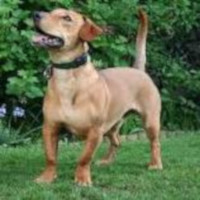
 |
Jackshund |
|
He is not recognized by the F.C.I. |
Origin |
England, Australia <> Germany -> U.S.A., England and Germany | |
Translation |
Francis Vandersteen |
A brief presentation of the Jackshund |
| The Jackshund was deliberately created by crossing the feisty Jack Russell Terrier with the intrepid Dachshund. This small dog with sparkling brown eyes and an affectionate personality makes an excellent addition to virtually any home. However, caution is advised when dealing with small animals, who may be too tempted to resist. While Jackshunds have bundles of energy, often their conformation means they're not meant for excessive exercise and should do well with short walks and play each day. Failure to exercise them, or to create a stimulating and interesting environment, can lead to undesirable behaviors, such as inopportune barking or chewing on furniture. |
History of the Jackshund |
| Although the official name of the Jack Russell Terrier-Dachshund cross is the Jackshund, we certainly prefer their unofficial name, Jackweenie. Both the Jack Russell Terrier and the Dachshund are extremely popular and well-known companion dogs. So it was inevitable that they would be crossed at some point. Specific crossbreed dogs have been fashionable for several decades, and every year we seem to have more appearances. We don't know which country Jackshunds originated in, and they are now found in several countries internationally, including the USA, England and Germany. Most agree that they have probably been around since the 1990s. Although the information available on the Jackshund is very limited, we can ask their parents to make educated predictions about their appearance and behavior. |
A little of the Jack Russell Terrier |
||
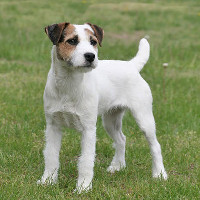
| The Jack Russell Terrier is sometimes affectionately called a terror by Jack Russell because it can have a big, fierce personality. Although these dogs originated as Fox Terriers in England in the 1800s, the Jack Russell was quickly exported to Australia, where the breed was developed. Traditionally bred to hunt foxes and rabbits, the Jack Russell was never a pocket dog and would have had to work for its supper. This has resulted in a tenacious breed with a strong character. As these dogs are extremely energetic and intelligent, they are frequently kept on farms and as working dogs. | ||
 |
||
| Standard of the Jack Russell Terrier | ||
A little of the Dachshund |
||
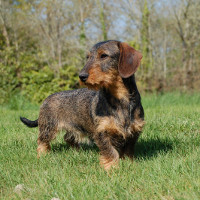
| The Dachshund is a less athletic breed, but one with a lot of personality. These fragrant, short-legged dogs originated in Germany around 100 years before the Jack Russell Terrier. They too tracked and hunted animals such as foxes. They are much appreciated for their gentle nature and long, unusual gait. Their small size makes them a popular apartment pet. | ||
 |
||
| Standard of the Dachshund |
Appearance of the Jackshund |
| Although the split is rarely 50/50, the Jackshund will display the physical characteristics of both parents, often resembling each other more closely. Most dogs are relatively small, measuring between 20 and 38 cm. Males tend to be larger than females. When fully grown, most will weigh between 7 and 12 kg. Their head is triangular with a fairly long muzzle, ending in a prominent black nose. Their eyes are dark brown with a lively expression. Their ears are pendulous and often less triangular than those of the Jack Russell. The Jackshund's body is moderately long and vigorous, tapering noticeably at the waist. Their limbs, although longer than those of the Dachshund, are generally shorter than those of a dog of comparable size. Given the great variability of coat types within the Dachshund breed, there are a large number of potential coat colors and textures. Jackshunds can have straight, straight or curly coats, and can have a single or double coat. Coat color can be white, cream, brown and black, with frequent spotting. |
Temperament of the Jackshund |
| Since both parents have characteristic, larger-than-life personalities, the Jackshund will certainly have a lot to say. No one will wonder whether they'll act more like the outgoing, independent Dachshund or the brave, animated Jack Russell. Most have a good mix of both personalities and prove to be energetic, playful dogs. An affectionate pet that thrives in the company of people, Jackshunds are closely bonded to their families and enjoy making friends with children of all ages. Full of mischief, they'll never turn down a game, whether with another dog or a person. Although they can get along with other dogs and some cats, it's essential that they are socialized as early as possible to ensure a successful cohabitation. Their hunting instinct remains and they are not suited to living with small pets, such as rabbits or rodents, which would only be considered game or dinner. Their distrust of strangers and their barking make Jackshunds good watchdogs, although their small size means they tend to be lacking in the watchdog stakes. |
Needs and activities of the Jackshund |
| This specific crossbreed is lively and energetic, but does not have a high activity level. For the Jackshund to be healthy and fit, it needs to be exercised for at least 30 to 45 minutes every day, which can be a combination of several short walks and some playtime in the yard. These dogs enjoy exercises such as hunting, tricks and racing. They are also suitable guardians and watchdogs. |
Maintenance of the Jackshund |
| As this dog's coat type can vary considerably from one individual to another, it's hard to say how much grooming will be needed for the whole breed. Dogs born with longer coats will need to be groomed and trimmed more often than those with shorter coats. If the coat is stiff, the dog may need regular trimming by a professional. Even if the Jackshund has a short coat, it should still be brushed at least a few times a week. For all coat types, bathing should only be carried out when necessary. The rest of the care requirements are the same as for any other breed. Ears should be cleaned and examined weekly, and teeth should be brushed several times a week, at least two or three times, unless you can't do it every day. Nails should also be trimmed regularly. |



 English (United Kingdom)

Comments