 |
Italian Daniff |
|
He is not recognized by the F.C.I. |
Origin |
Italy <> Germany -> U.S.A. | |
Translation |
Francis Vandersteen |
A brief presentation of the Italian Daniff |
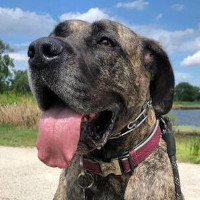
| The Italian Daniff is a specific cross between the Italian Corso dog and the Great Dane. This massive dog measures 89 to 91.5 centimeters at the shoulders and weighs 52 to 59 kilos. The sheer size of the dog makes it less than ideal for a small house or apartment. However, for a homeowner with lots of space, the Italian Daniff is a loyal, loving and protective companion. He's a gentle giant who adores children and other animals. His great intelligence and willingness to please make him easy to train. |
History of the Italian Daniff |
| The Italian Daniff combines the good characteristics of its two parent breeds to create an exceptional breed. |
A little of the Italian Corso dog |
||
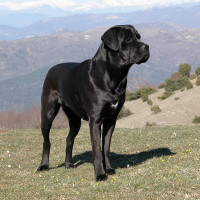
| The Italian Corso dog is a direct descendant of the great war dogs of the Romans. Historically, they were used as guard dogs, farm workers and game hunters. Its name reflects its abilities as a guard dog. Cane is Latin for "dog" and Corso is derived from the word "cohors", which translates as "bodyguard". The breed began to decline dramatically as many people left conventional farms. In the 1970s, breed enthusiasts worked to bring it back from the brink of extinction. In 2010, the breed was recognized by the American Kennel Club and included in the working group. | ||
 |
||
| Standard of the Italian Corso dog | ||
A little of the Great Dane |
||
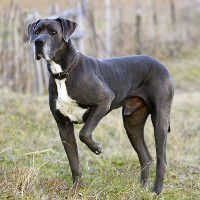
| Great Danes were originally ferocious wild boar hunters. They were also used as guard dogs. The breed dates back to 3000 BC, when it was depicted in Babylonian drawings. The ancient Assyrians exchanged their giant dogs with the Romans, who also favored the breed and continued to breed them. Originally, big dogs were called Boar Hounds because they were used to hunt wild boar. By the 1600s, the dogs had become a favorite pet of the nobility throughout Germany. In the 1700s, the breed became known as the Great Dane. German breeders are thought to have created the stable, affectionate dog that is common today. Modern Great Danes have none of the fierce, aggressive characteristics of their ancestors. In 1889, the Great Dane was officially recognized by the American Kennel Club and admitted to the working group. | ||
 |
||
| Standard of the Great Dane |
Appearance of the Italian Daniff |
| The Italian Daniff is a massive, muscular dog. Its coat is short and rarely falls. They are very similar in appearance to Great Danes. The width of their chest is much wider than that of the Great Dane, and more like that of the Italian Corso dog. Their hindquarters are also muscular and broad. The dog's general appearance is that of pure size and very intimidating to strangers. Their head is large, with a pronounced muzzle and long, floppy ears. Their feet are very large and they have a bouncy gait that is unique from other dogs of similar size. |
Temperament of the Italian Daniff |
| The Italian Daniff is protective but gentle towards its beloved owners. It is a gentle dog that adores children and gets on well with other pets. He's highly intelligent and a quick learner. This dog's personality is very relaxed and easy-going. He rarely gets excited. If you're looking for a dog that barks when it hears noises, then you'll have to look elsewhere, as the Italian Daniff rarely barks unless it encounters a sudden intruder. |
Needs and activities of the Italian Daniff |
| The big, muscular Italian Daniff needs a daily thirty-minute walk to keep his tone up. However, despite his large size, he doesn't require excessive exercise. He's not a good jogging partner and rarely likes to run. Despite his aversion to running, he's an excellent dog to take to the dog park, as he loves other dogs and people. He jumps badly because of his large size. This big boy loves going for walks with his owner because it's a chance to interact with his beloved person. When he warms up, he may drool a little, so it's a good idea to bring a washcloth to clean his face. |
Maintenance of the Italian Daniff |
| The Italian Daniff's short coat rarely sheds. It requires very little care, but can be brushed every few days to keep its coat shiny and remove loose hairs. Some owners brush their dog's teeth to remove plaque and keep the dog's breath acceptable. Long, soft ears should be cleaned of debris every week. His nails may wear naturally, but if they don't, you can use dog nail clippers to keep them short. He rarely has a physical dog smell, but some owners choose to bathe their dog once a month to keep him smelling fresh. |



 English (United Kingdom)

Comments