
 |
Hava-Wheat |
|
He is not recognized by the F.C.I. |
Origin |
Western Mediterranean <> Ireland -> U.S.A. | |
Translation |
Francis Vandersteen |
A brief presentation of the Hava-Wheat |
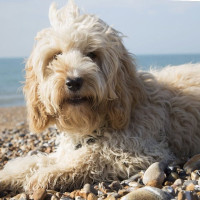
| The Hava-Wheat is a hybrid dog that is a specific cross between a Havanese Bichon and a soft-coated Irish Terrier. A Havanese Bichon is much smaller, weighing between 3 and 6 kilos, compared with a Soft Coated Irish Terrier, which can weigh from 13.5 to 18 kilos, so it will depend on which breed's parents are more dominant in terms of the hybrid's size. Common colors are likely to include white, black, red, brown and wheaten. The coat of the soft-coated Irish Terrier is silky, vaguely wavy or curly, while the Havanese Bichon has a thick, silky, soft, long, straight or curly coat and will be a little easier to maintain. Neither parent breed sheds much, and both are hypoallergenic. The Hava-Wheat is likely to be an excellent family dog, playful and affectionate, who will need plenty of exercise. |
History of the Hava-Wheat |
| The Hava-Wheat is a hybrid breed made up of a combination of a Havanese Bichon and a soft-coated Irish Terrier. |
A little of the Havanese Bichon |
||
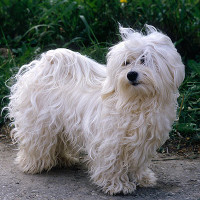
| Although now Cuba's national dog, the Havanese Bichon was once almost extinct there during the Cuban revolution in 1959, when many fled. The cute white dogs with long, silky hair are thought to be related to the Bichon Frise, and arrived in Cuba on ships from Tenerife. They were adored by Spanish settlers and the Cuban aristocracy, often living a life of luxury in palaces and country estates. They were also known as Havana Silk Dogs and are "Habaneros" in Spanish. In the mid-1800s, they became popular in Europe, with Queen Victoria owning two and Charles Dickens having a male named Tim. It is said that only a handful of dogs arrived in the United States with refugees fleeing the Cuban Revolution. They quickly became popular and were officially recognized by the American Kennel Club in 1996. | ||
 |
||
| Standard of the Havanese Bichon | ||
A little of the Irish Soft Coated Terrier |
||
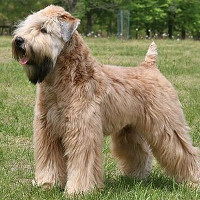
| The Irish Soft Coated Terrier, sometimes called the Wheatie, was bred in Ireland as a farm dog capable of herding sheep, guarding livestock and killing rats. They share common ancestry with the Kerry Blue Terrier and Irish Terrier, but didn't have their status and were often called the "Poor Man's Wolfhound" Wheaten's, dating back over 200 years, used to have their tails docked to avoid taxes. The Irish Soft Coated Terrier was recognized as a breed by the Irish Kennel Club in 1937, on St. Patrick's Day. The first Irish Soft Coated Terriers arrived in the USA in November 1946 and were officially recognized by the American Kennel Club in 1973. Today, they are prized for their obedience, agility and tracking. Some are used in therapy as working dogs. | ||
 |
||
| Standard of the Irish Soft Coated Terrier |
Appearance of the Hava-Wheat |
| Hava-Wheat dogs are hybrids made up of two very different-sized dogs, a toy-sized Havanese Bichon and a medium-sized Soft Coated Irish Terrier, so your pet is likely to be a combination of the two. Common colors are likely to include white, black, red, brown and wheaten. The facial expression is often proud and perky, and your Hava-Wheat's coat will be soft and silky, straight, vaguely wavy or curly, and may be quite thick. It will have dark brown or dark hazel, almond-shaped eyes that are often watery, and secretions may leave tear stains on the coat. Tails may be docked or carried over the back, ears may drop and fold or be small and carried in front. |
Temperament of the Hava-Wheat |
| Hava-Wheats are likely to be happy and affectionate, and make excellent pets like both parent breeds. They are likely to get on well with children and most other dogs, although soft-coated Irish Terriers are known to chase small animals, including cats. They are generally easy-going dogs, but Terriers can be a little stubborn. Both parent breeds are quite responsive when it comes to training. The Havanese Bichon is very energetic for a small dog and needs almost as much exercise as a much larger dog. They don't like to be left alone for any length of time and can suffer from separation anxiety. So they'll be better off with an owner who works from home, or an active senior who's retired. Soft-haired Irish Terriers also prefer company, and if left for any length of time, are likely to dig in or develop other bad habits. Your Hava-Wheat can be quite chased by prey and should therefore be kept on a leash. On walks, he'll welcome a hello from anyone as he's friendly with strangers. |
Needs and activities of the Hava-Wheat |
| A Hava-Wheat probably needs a little exercise to stay fit and happy. Your pet will enjoy walks or hikes and is likely to enjoy games. The Hava-Wheat needs plenty of exercise and loves dog sports like agility, flyball and obedience training. Keep obedience sessions short so your hybrid can build on his concentration skills. He won't do well in extreme cold or heat, so make sure he lives indoors and is never left outside for any length of time in extreme conditions. |
Maintenance of the Hava-Wheat |
| The Hava-Wheat is likely to be hypoallergenic like both parent breeds, so it will be good for allergy sufferers. Neither parent breed sheds much, but the Havanese Bichon is considered easier to groom, as soft-coated Irish Terriers can look scruffy if not brushed daily. They also tend to collect food in their beards, which needs cleaning. Your Hava-Wheat's requirements will depend on whether its coat is more like that of the Havanese Bichon, which may need frequent clipping, or the soft-haired Irish Terrier, which will need daily brushing and sometimes beard trimming with scissors. The teeth of small breeds are prone to disease, so keep them clean between visits to the vet. Your Hava-Wheat may naturally wear out its nails depending on the terrain it travels through, so keep an eye on the nails for tears or breaks and trim if necessary. |



 English (United Kingdom)

Comments