 |
Hava-Welsh |
|
He is not recognized by the F.C.I. |
Origin |
Western Mediterranean <> Great Britain -> U.S.A. | |
Translation |
Francis Vandersteen |
A brief presentation of the Hava-Welsh |
| The Hava-Welsh is a specific cross between a Havanese Bichon and a Welsh Terrier. A Havanese Bichon is a toy-sized breed weighing between 3 and 6 kilos compared to a Welsh Terrier which is a robust medium breed generally between 9 and 10 kilos, so it will depend on which parental breed is more dominant as to the size of the hybrid. Common colors are likely to include white, black, black and tan, sable and gray. The Welsh Terrier has a hard, wiry outer coat and a soft, short undercoat, while the Havanese Bichon has a thick, silky, soft, long, straight or curly coat. Both parent breeds are hypoallergenic and don't shed much, so the Hava-Welsh is also likely to be. Your pet is likely to be energetic, fun-loving, intelligent and exercise-loving. |
History of the Hava-Welsh |
| The Hava-Welsh is a hybrid breed made up of a combination of a Bichon havanais and a Welsh Terrier, the latter being considered the oldest existing dog breed in the UK. |
A little of the Havanese Bichon |
||
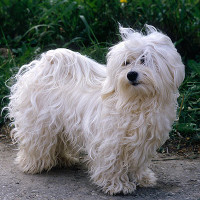
| The Havanese Bichon is Cuba's national dog, although it was almost wiped out during the Cuban Revolution in 1959. Once known as the Havana Silk Dog, the Havanese Bichon is thought to have been developed by crossing the now extinct Blanquito de la Habana with other types of Bichon. It is thought that they were brought to Cuba on ships during the Spanish Empire and taken in by Cuban aristocrats. They were kept as pets and adored by their owners, who often gave them as gifts to other noblemen. In the mid-1800s, they became popular in Europe and were kept by royalty, including Queen Victoria, who had a pair. The two world wars and later the Cuban revolution led to the near-extinction of the breed. A handful of dogs arrived in the United States and were officially recognized by the American Kennel Club in 1996. | ||
 |
||
| Standard of the Havanese Bichon | ||
A little of the Welsh Terrier |
||
| Also known as the Welshie, the Welsh Terrier originated in Wales, but also lived in several parts of the UK in the 19th century. It is thought that the breed may have been one of the first Terriers and was bred for hunting foxes, otters and badgers. The Old English Black and Tan Terrier is thought to be one of the ancestors of the Welsh Terrier. The breed was originally billed as an Old English Terrier, but in 1885 was classified as a Welsh Terrier by the Kennel Club of England. The breed arrived in the United States in 1888, the same year it was officially recognized by the American Kennel Club. Caroline Kennedy loved the breed and had a Welsh Terrier named Charlie. | ||
 |
||
| Standard of the Welsh Terrier |
Appearance of the Hava-Welsh |
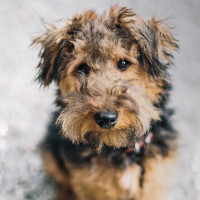
| The Hava-Welsh is a hybrid dog that is a specific cross between a Havanese Bichon and a Welsh Terrier. Appearance will depend on the more dominant parent breed, but common colors can include white, black, black and tan, sable and gray. The Welsh Terrier has a hard, wiry outer coat and soft, short undercoat, while the Havanese Bichon has a thick, silky, soft, long, straight or curly coat. Havanese Bichon have dark brown, almond-shaped eyes and are fairly robust dogs. They are usually completely white and their tails curl over their backs. Ears tend to droop and fold. The Welsh Terrier has a brick-shaped face with whiskers and beard, and is also solidly built. The eyes are dark brown or black and the ears small and V-shaped, while the tail is sometimes docked. Your Hava-Welsh may lean more towards one parent's appearance than the other, but it will look brave and intelligent, turning heads wherever it goes. |
Temperament of the Hava-Welsh |
| The Hava-Welsh is probably an energetic, affectionate dog that likes to be surrounded by family and is very good with children. As a Terrier, the Welshie is a little stubborn when it comes to training, but they are intelligent dogs, so a little patience will be needed, a trait that can be passed on to your hybrid. The Havanese Bichon is fairly easy to train, and both parent breeds are suitable for new owners. The Havanese Bichon is very energetic for a small dog and is often called a Velcro dog because it doesn't like to leave its owner's side. They also don't like to be left alone for any length of time and can suffer from separation anxiety. So they'll do best with a family that's home a lot. The Welsh Terrier has a very strong personality and an enormous zest for life. They have boundless energy and will therefore suit a very active family. Hava-Welsh Terriers are likely to get on well with other dogs and strangers. Based on the parental temperament, your hybrid will love to be by your side, accompanying you wherever you go. |
Needs and activities of the Hava-Welsh |
| A Hava-Welsh probably needs plenty of exercise to stay fit and happy. Your pet will enjoy walks or hikes, and is likely to enjoy games. Despite its size, the parent Havanese Bichon needs plenty of exercise and enjoys dog sports such as agility, flyball and obedience training. Welsh have enormous energy and will also thrive in dog sports. They are also used in search and rescue and as therapy dogs. If your Hava-Welsh doesn't get enough exercise, it will be prone to digging and barking. Your hybrid can live in an apartment as long as it has a good exercise regime. Your pet won't do well in extreme cold or heat, so make sure it lives indoors and is never left outside for any length of time in extreme conditions. |
Maintenance of the Hava-Welsh |
| The Hava-Welsh is likely to be hypoallergenic like both parent breeds, so it will be good for allergy sufferers. Neither of the parent breeds sheds much, so the Hava-Welsh is unlikely to do so. The Havanese Bichon is often cut short, which makes grooming easier, but if the coat is left long, it needs more regular brushing. Welsh also need regular brushing to get rid of any tangles, and should have their coat stripped, usually by a professional groomer. Daily to weekly brushing may be necessary to prevent matting of the coat. Try to brush your dog's teeth as often as possible to avoid any dental problems, and check ears for dirt or tangles. Nails should be checked to see if they need trimming. |



 English (United Kingdom)

Comments