
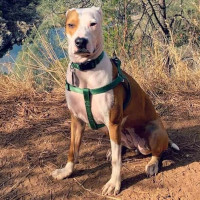
 |
Greybull Pit |
|
He is not recognized by the F.C.I. |
Origin |
Great Britain <> U.S.A. -> U.S.A. | |
Translation |
Francis Vandersteen |
A brief presentation of the Greybull Pit |
| The Greybull Pit is a sensitive, intelligent hybrid breed. With a gentle smile that defines its face, this dog is always eager to show its best side. Agile and fast, this solid hybrid needs an experienced owner. The Greybull Pit likes to be part of the family and is not destined to be left alone outside. It can have an intense prey drive, so it should be in a home that has no cats or smaller animals as family members. Your Greybull Pit will provide all the entertainment and companionship you need. |
History of the Greybull Pit |
| The Greybull Pit hybrid is a new breed of dog with no detailed history. However, each of the hybrid's two parent breeds has a long history: the Greyhound and the American Pit Bull Terrier. |
A little of the Greyhound |
||
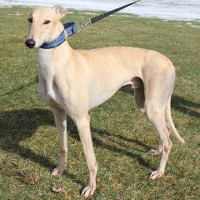
| The Greyhound parent is an ancient breed that appeared in Egyptian art, the Bible and Roman poetry. During the Dark Ages, the Greyhound arrived in Europe and has always been extremely fast as well as an incredible hunter. Coursing and racing led to the Greyhound's growing popularity in England. The breed eventually made its way to the Americas when it was brought by British settlers and Spanish explorers. In 1885, the dogs were recognized by the American Kennel Club. | ||
 |
||
| Standard of the Greyhound | ||
A little of the American Pit Bull Terrier |
||
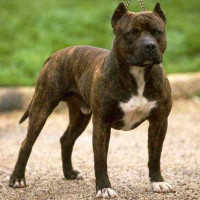
| In the early 19th century, the Bull and Terrier breeds were developed in England for the sport of bull and bear baiting. As these sports became illegal in 1835, a sport was sought to replace them, leading to dog fighting and aggression among the dogs. Dogs were also bred not to bite people, so the breeds are known for being strong, protective and gentle. The Bull and Terrier breeds arrived in the USA with those who immigrated and began working on farms, taking on the responsibility of hunting wild game and protecting the land from animals. Breeding efforts focused on increasing the dog's size. These dogs were named American Pit Bull Terriers by the UKC in 1898. In the early 1930s, the breed was recognized by the American Kennel Club as the American Staffordshire Terrier to separate the present form from its fighting past. | ||
 |
||
| Presentation of the American Pit Bull Terrier |
Appearance of the Greybull Pit |
| Although much information is not available on the appearance of the Greybull Pit, we can consider the appearance of the hybrid's parent breeds. The American Pit Bull Terrier's head is broad and its neck muscular. The breed's dogs are stocky and strong for their size, yet agile. The American Pit Bull Terrier's eyes are round and its teeth generally form a scissor bite. The breed's coat will be made up of thick, short hair and the dog can be seen in a variety of colors. The Greyhound is tall and lithe, with long legs and a slender body. The Greyhound's head is long and narrow, and will be topped by small ears that, although usually folded back, stand up when excited. A Greyhound's eyes are generally dark and the breed's neck will be arched. The Greybull Pit is most often seen with the longer body of the Greyhound, but the hybrid's resemblance is very similar to the Pit Bull. Typically with a square head and thick neck, it has a long nose like the Greyhound. |
Temperament of the Greybull Pit |
| The Greybull Pit will inherit its temperament from its parents. The American Pit Bull Terrier is a confident, courageous dog that loves people. A dog of this breed will let you know that a stranger is approaching because of its excitement at greeting the visitor. The American Pit Bull Terrier can be stubborn, so early obedience training is important to your relationship. Very loyal to his family, an American Pit Bull Terrier risks his life to defend those he loves. Greyhounds are generally social and non-aggressive. Dogs of this breed are independent and intelligent, often sensitive to any tension in the home. Having been bred to hunt, the Greyhound may seek out any small animals it encounters. The Greyhound can be stubborn during training, but will generally respond better to food rewards due to its sensitive nature, rather than hard training efforts. The Greyhound will do well with children, and will calmly withdraw if their play doesn't suit him. Your hybrid will be a wonderful combination of its parents, sensitive to those around it but with a mind of its own. Firm, consistent instructions will be necessary, with which the Greybull Pit can become reliable and a pleasure to own. |
Needs and activities of the Greybull Pit |
| The Greybull Pit is very active, with high energy levels. About an hour a day of walking, playing or participating in some form of exercise is essential. It's important to keep him busy; if he gets bored, he can misbehave. As the Greybull Pit will chase small animals thinking they are prey, it is necessary for him to be walked on a leash or to play in a secure, fenced area. Ideally, a home with a large yard is best for the Greybull Pit. This is the type of dog that needs to run around every day. He worries about the cold, but should never be left outside for long periods. This dog wants to be with the family, so he'll need company when he's out in the yard and can enjoy a game of fetch as part of his exercise routine. Your Greybull Pit will be a strong dog with an independent spirit, so obedience classes are essential so that he learns commands and understands that you are the leader. |
Maintenance of the Greybull Pit |
| The Greybull Pit's coat is easy to care for. It will shed, and daily brushing with a smoother brush is recommended to keep loose fur under control. This hybrid should not need to be bathed often as a doggy smell is not typical. The Greyhound parent is prone to weight gain and poor dental health. A good-quality diet is essential, as is daily tooth brushing. An active dog like the Greybull Pit should have its nails checked weekly for signs of damage or injury. |



 English (United Kingdom)

Comments