
 |
Greyador |
|
He is not recognized by the F.C.I. |
Origin |
Great Britain <> Canada -> U.S.A. | |
Translation |
Francis Vandersteen |
A brief presentation of the Greyador |
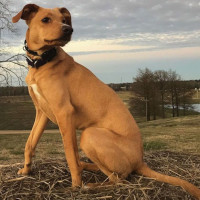
| The Greyador is a hybrid breed where the graceful Greyhound is crossed with the athletic Labrador Retriever. Tall and slender, your Greyador can match the exceptional speed of its Greyhound parent, who is capable of running at 25 kilometers an hour. Adorable and strong, the Labrador Retriever will add power to the mix. Known for being intelligent and independent, the Greyador is a sensitive dog that will listen to the moods of its humans. |
History of the Greyador |
| Put his two parents together and you get the magnificent Greyador. Breeders wanted to mix the two parent breeds to create a graceful, athletic, strong family dog. They continued to create Greyadors as demand for puppies grew. Although Greyadors started out as a specific crossbreed, some ended up in shelters or taken in by rescue groups. Consider adoption if you decide this puppy is right for you. Check your local shelters, look for Greyador rescues or check out breed-specific Labrador Retriever and Greyhound rescues, as they'll often help bring them home. |
A little of the Greyhound |
||
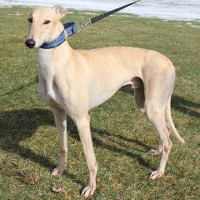
| The Greyhound parent is an ancient breed that appeared in Egyptian art, the Bible and Roman poetry. During the Dark Ages, the Greyhound arrived in Europe and has always been extremely fast as well as an incredible hunter. Coursing and racing led to the Greyhound's growing popularity in England. The breed eventually made its way to the Americas when it was brought by British settlers and Spanish explorers. In 1885, the dogs were recognized by the American Kennel Club. | ||
 |
||
| Standard of the Greyhound | ||
A little of the Labrador Retriever |
||
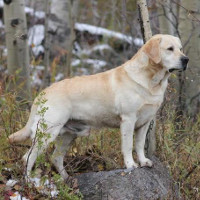
| The Labrador Retriever was known as the St. John's Water Dog after the capital of Newfoundland. In the 1700s, this athletic breed was useful to fishermen, helping them to haul in their nets and scoop up any fish that fell from them. The breed's name was later changed to Labrador Retriever after the Labrador Sea, where it thrived, swimming in the cold waters. Records show that the Labrador Retriever was brought to England in the 1820s, where the second Earl of Malmesbury was one of the breed's first owners. The dogs became popular for their ability to retrieve waterfowl while hunting. As the breed neared extinction in the 1880s, the Malmesbury family and other English breeders worked to save it. Unfortunately, the breed disappeared in Newfoundland due to strict government restrictions and tax laws. In the 1920s, Labrador Retrievers were brought to the United States, where the breed established a presence. | ||
 |
||
| Standard of the Labrador Retriever |
Appearance of the Greyador |
| Often seen with a Greyhound face, the Greyador will have long ears that can reach the jaw. The eyes will be dark and have an inquisitive look that shows his work experience. A long neck is typical, and the body, though slender, will have muscle and shape. Teeth are well defined and the jaw strong. The tail may be narrow or broad, but will most often be carried high and may become straight when excited. The coat will vary according to the genetic dominance of the parent. It will be short, although the density may vary from dog to dog. It is unlikely that the water-resistant characteristic will prevail. |
Temperament of the Greyador |
| The Greyador will inherit its temperament from its parents. The Greyhound parent is generally friendly and non-aggressive. They are often sensitive to any tension in the home. Having been bred to hunt, the Greyhound may be likely to chase small animals it encounters, making caution necessary when introducing your Greyador to small creatures. He can be stubborn during training, although due to his sensitive nature, food rewards are recommended rather than harsh training. Your Greyador will get on well with children and tolerate their antics, but may calmly walk away if play doesn't suit him. Your Greyador won't like to spend long periods outside in a garden on his own; when he gets bored and lonely, he can get into trouble. |
Needs and activities of the Greyador |
| Around 60 minutes of activity a day is enough for the Greyador's physical and mental health. As a dog who likes to be busy, he'll love going for walks and playing games with his humans. Since he can go hunting, it's important that he's walked on a leash or plays in a secure, fenced-in area. Your Greyador will probably love swimming in a lake or river, and will enjoy chasing a stick or playing fetch. The Greyador can do well as a service or therapy dog. |
Maintenance of the Greyador |
| Greyadors are above-average excretors, so daily brushing will help keep this under control. Prone to becoming overweight, you'll need to keep a close eye on his diet to make sure you don't overfeed your dog. Regular brushing is particularly important for this hybrid, as he can have poor dental health. His nails should be trimmed once or twice a month. A good fence is necessary for a Greyador that spends time outdoors, as it will probably chase away any small animals it encounters. He'll want your company outdoors as he doesn't like to be left to his own devices. |



 English (United Kingdom)

Comments