 |
Great Dasenji |
|
He is not recognized by the F.C.I. |
Origin |
Germany <> Democratic Republic of Congo -> U.S.A. | |
Translation |
Francis Vandersteen |
A brief presentation of the Great Dasenji |
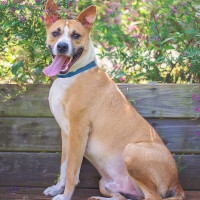
| The Great Dasenji is one of the most active and independent of the Great Dane mixes. They are very affectionate towards their owners and love to be active. Great Dasenjis have an average lifespan of 6 to 14 years, weigh 27 to 38.5 kilos and stand 56 to 61 centimeters tall. They have a short, fine, smooth coat that comes in many combinations and patterns common to both parent breeds. In terms of large, specific crossbreeds, the Great Dasenji is unusual and little recognized. Most owners will say that the Great Dasenji is fun and easy to train, but has a reserved side when meeting someone new. |
History of the Great Dasenji |
| The Great Dasenji takes its name from its parent breeds: Great Dane and Basenji. Each parent breed has its own unique history. The combination of these two parent breeds is unusual, and Great Dasenji is not a well-known hybrid. |
A little of the Great Dane |
||
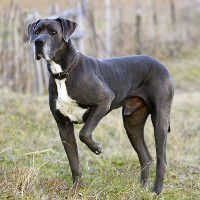
| The Great Dane is thought to have originated around 3000 BC. Historians speculate that the breed belonged to Assyrian traders who took the dog with them on their journeys to Rome and Greece. Originally known as Boar Hounds for their talent at hunting wild boar, Great Danes were later known as English Dogges in England, and Kammerhunde in Germany. In Denmark and France in the 1700s, they became known as the Great Dane, which later became the Great Dane. Despite its Danish namesake, this majestic breed has developed thanks to the work of German breeders. Giant, yet gentle and gentle, the breed gained popularity in North America in the 1800's. They were registered with the American Kennel Club in 1887. | ||
 |
||
| Standard of the Great Dane | ||
A little of the Basenji |
||
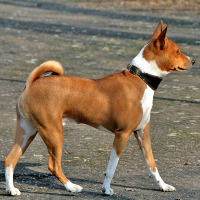
| The history of the Basenji is shrouded in mystery, but it's possible that the breed existed as far back as ancient Egypt and spread throughout Central Africa over time. In fact, its name is derived from the ancient Congolese and Sudanese languages and roughly translates as "bush thing". It was originally used to hunt small game, but was imported to England and the United States in the 1930s as a show dog, pet and later Greyhound. The Basenji Club of America was formed in 1942 and the AKC recognized the breed shortly afterwards in 1943. | ||
 |
||
| Standard of the Basenji |
Appearance of the Great Dasenji |
| Like a Basenji, this elegant hybrid has a tapered muzzle with a scissor bite, dark almond-shaped eyes and erect, slightly hooded ears. Like a Great Dane, however, this breed has round, compact feet with highly arched toes. Great Dasenjis have a short, fine, smooth coat that comes in solid or multicolored combinations of blue, fawn, black, white, beige and red with a harlequin pattern, merle coat or brindle, with brindle, black or white markings. They are agile, graceful animals with an alert, inquisitive expression. |
Temperament of the Great Dasenji |
| The Great Dasenji can be fierce, but make no mistake. This dog is gentle, affectionate and curious. They're not as needy as Great Danes, but they do expect a lot of attention. Great Dasenjis will seek out hugs and kisses from their owners whenever possible. However, Great Dasenjis may not warm up to other adults, children or pets without a little time and encouragement. As such, it's best for Great Dasenji owners to supervise their pets with strangers. Nevertheless, Great Dasenjis are playful and will enthusiastically engage in games and activities if they're comfortable. Because this breed is so intelligent, it will become restless if it doesn't receive sufficient mental and emotional stimulation. This breed also inherits some of the Basenji's stubbornness. As a result, it may not be as easy to train as other Great Dane hybrids. Still, many dog fans appreciate the Great Dasenji's sequence of independence and sense of mischief. |
Needs and activities of the Great Dasenji |
| Depending on Great Dasenji's temperament, he may enjoy vigorous fun in the park with other furry friends. Otherwise, they'll be content to take long walks with their owner. This breed is suitable for all types of environment, although it should never be over-exercised in extremely hot or cold conditions. What's more, because of this breed's activity requirements, it can do best in a suburban or rural environment where it has access to large outdoor spaces. Note that Great Dasenjis have a strong urge to hunt and chase small animals, so it's best to keep this dog in a fenced area. |
Maintenance of the Great Dasenji |
| Great Dasenjis are ideal for owners who aren't interested in a high-maintenance dog. This breed requires no brushing, has a short, neat coat and sheds only moderately throughout the year. What's more, Great Dasenjis only need to be bathed once a month. They should, however, have their teeth cleaned daily. Beyond that, Great Dasenjis should have their nails trimmed at least twice a month and their ears checked regularly for wax build-up and excess moisture, which can at least be detrimental to yeast proliferation. In addition, this dog is quite slobbery, so its mouth and muzzle need to be wiped regularly. Please note that Great Dasenjis are not hypoallergenic and therefore not suitable for owners of allergic dogs. |



 English (United Kingdom)

Comments