
 |
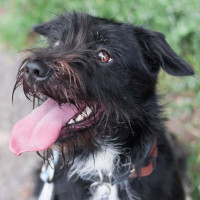
Giant Border Schnollie |
|
He is not recognized by the F.C.I. |
Origin |
Great-Britain <> Germany -> U.S.A. | |
Translation |
Francis Vandersteen |
A brief presentation of the Giant Border Schnollie |
| The Giant Border Schnollie is a cross between a Border Collie and a Giant Schnauzer. The common colors of the parent breeds are black, salt and pepper and black with white markings. The Border Collie can be bicolor or tricolor. A Giant Schnauzer has a stiff, hard, dense coat and the Border Collie can have a rough or smooth coat, but both are double coats, with a coarser outer coat and a soft undercoat. The Giant Border Schnollie probably needs moderate maintenance and sheds a little but not excessively. Both parent breeds make good pets, although the Border Collie is best with children. They are also very energetic and need plenty of exercise and stimulation to keep them happy. They are also better with other dogs than the Giant Schnauzer, which can be somewhat aggressive with other dogs and cats. Both parent breeds are good pets and working dogs, with the Giant Schnauzer used in the police or army and the Border Collie as a sheepdog. Your Giant Border Schnollie will have an excellent combination of two energetic parents, making it an active addition to the family. |
History of the Giant Border Schnollie |
| As a relatively new breed, Giant Border Schnollie doesn't have an elaborate history to discuss. But we can look to their parents' history to find out more. The Giant Border Schnollie is a combination of a Giant Schnauzer and a Border Collie. |
A little of the Border Collie |
||
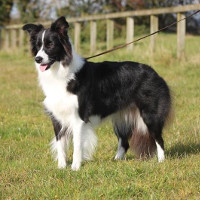
| Considered by many to be the most intelligent breed of dog, the Border Collie was developed to herd sheep in the border country between Scotland and England, and is still considered a workhorse today. The word "collie" is derived from the Scottish dialect used to describe sheepdogs. They were originally classified as Scottish sheepdogs, but were later renamed Border Collies. Queen Victoria is said to have been a fan of the breed after seeing one on a trip to Balmoral. A Border Collie starred in the hit film Babe, about a young pig who wants to become a sheepdog. The breed is highly prized today as a sheep herding dog and excels in various dog sports such as agility. The Border Collie was recognized by the American Kennel Club in 1995. | ||
 |
||
| Standard of the Border Collie | ||
A little of the Giant Schnauzer |
||
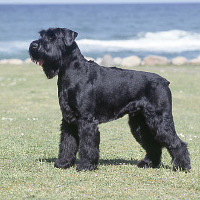
| The Giant Schnauzer was developed in Germany as one of three distinct Schnauzer breeds, Miniature, Standard and Giant. It is thought that the Giant Schnauzer was created by crossing the Standard Schnauzer with the Black Great Dane and possibly the Bouvier des Flandres. They were bred as farm dogs and later used as guard dogs, often in breweries. In Germany, they were used by the police and as military dogs during both World Wars, and are still used today as working dogs. Giant Schnauzers first arrived in America in the 1930s and were registered by the American Kennel Club in 1930. The Giant Schnauzer Club of America was founded in 1962. | ||
 |
||
| Standard of the Giant Schnauzer |
Appearance of the Giant Border Schnollie |
| Common colors of the Giant Border Schnollie's parent breeds include black, salt and pepper, gray, brindle, red, white or fawn. Your hybrid's coat is likely to be wiry, rough, hard, smooth and dense. The rough coat often has feathers on the legs, chest and belly, while the smooth variety is coarser with very few feathers. Border Collies are strong and agile, with well-spaced oval brown eyes. Your hybrid will be muscular with a distinct beard and eyebrows. They will also have oval-shaped eyes inherited from the Giant Schnauzer, which are dark brown and sunken. Your dog will probably have a low tail when working, but raised when excited or happy. |
Temperament of the Giant Border Schnollie |
| A Giant Border Schnollie is probably an intelligent, energetic dog who will make an excellent pet, but should be supervised in the presence of young children. Border Collies get on well with other dogs, whereas Giant Schnauzers can be aggressive with other dogs and cats. A Border Collie needs to be kept busy most of the time, so it needs an owner who can spend a lot of time with it. If not exercised and stimulated, they can become quite destructive. They are sensitive dogs who respond well to praise, but can become shy if not socialized early. They tend to be somewhat reserved with strangers. The Giant Schnauzer is very protective of its family and wary of strangers, but is a playful, energetic dog. They are also sensitive and aware of their owner's moods. Your Giant Border Schnollie will need firm guidance and is recommended for owners with some dog experience. |
Needs and activities of the Giant Border Schnollie |
| The Giant Border Schnollie will need plenty of exercise to stay fit and happy. He'll need at least an hour of intense exercise every day, and can become very destructive if he doesn't get enough. He'll love long runs and daily walks, and games like fly ball or Frisbee will be particularly popular. Activities such as dog trials, agility and obedience classes are a good opportunity to socialize your pet. A Border Collie can adapt to life in an apartment, provided it gets enough exercise, but a Giant Schnauzer is best suited to a home with a fenced-in yard. Giant Schnauzers tolerate cold better than heat, and Border Collies are happy in most weather conditions as long as they're kept busy. With these parenting facts in mind, your Giant Border Schnollie will be an easy-going dog with energy to burn. |
Maintenance of the Giant Border Schnollie |
| The Giant Border Schnollie will probably require moderate maintenance, but is unlikely to shed excessively. Unlike the Giant Schnauzer, the Border Collie is not hypoallergenic and is considered a low-maintenance breed. They shed all year round, but not excessively, so weekly brushing will prevent matting. They don't need many baths unless they get very dirty playing or working. Giant Schnauzers need trimming around the eyebrows, beard and on the body and, in keeping with this trait, your hybrid will probably need brushing around three times a week and shaping of the coat when it becomes too long. Try to brush your dog's teeth every day to avoid any dental problems, and check his ears for dirt. If necessary, wipe them gently with damp absorbent cotton. Nails should also be checked to see if they need trimming. |



 English (United Kingdom)

Comments