
 |
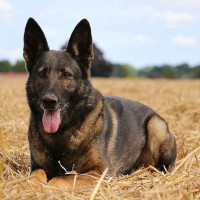
German Malinois |
|
He is not recognized by the F.C.I. |
Origin |
Germany <> Belgium -> U.S.A. | |
Translation |
Francis Vandersteen |
A brief presentation of the German Malinois |
| The German Malinois is a specific cross between two large, imposing sheepdogs developed in the late 1800s, one native to Germany, the German Shepherd, and the other, the Belgian Malinois, very close to the German Shepherd's birthplace too. These dogs can be highly intelligent and easy to train, but can inherit an extremely high prey count from the Belgian Malinois Shepherd, making the pursuit of smaller animals, other dogs and sometimes even children, irresistible. They are large, active dogs that need plenty of space to run around, and will not generally thrive in an apartment. |
History of the German Malinois |
| The German Malinois is a deliberate cross between two dogs similar in both appearance and purpose, the German Shepherd and the Belgian Malinois. |
A little of the German Shepherd Dog |
||
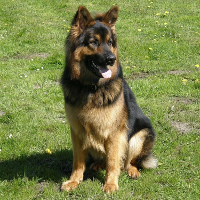
| The German Shepherd breed was originally developed in the late 1800s as a large shepherd dog that was able to bring sheep back to the fold without frightening them by nipping at their heels, while being used to help move livestock from farm to town, or city to city. German Shepherds were originally developed with structural efficiency, temperament and intelligence in mind, and you'll still find these traits in a good proportion of modern German Shepherds. Today's German Shepherds differ somewhat from the German Shepherds of the late 1800s and early 1900s, as breeding choices have resulted in a more streamlined, slimmer dog than the line's founders. German Shepherds have become the 2nd most popular breed in the USA since they were recognized by the AKC in 1908. | ||
 |
||
| Standard of the German Shepherd Dog | ||
A little of the Belgian Shepherd Dog |
||
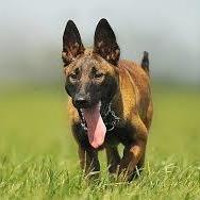
| The Malinois Belgian Shepherd has existed since around the same time, although it is one of four dogs that were all known as a single breed, the Belgian Shepherd. Although there have been four varieties of Belgian Shepherd, based mainly on the coloring and length of their coats, all four varieties were often born in the same litter. The Belgian Shepherd was recognized by the AKC in 1911, but in 1959 it abandoned the Belgian Shepherd and divided the dogs into three breeds. The fawn then became known as the Berger belge Tervuren, and the shorthaired fawn was registered as the Berger belge Malinois, both listed as recognized in 1959 and completely dropped the fawn-colored rough-coated variety from the register. | ||
 |
||
| Standard of the Belgian Shepherd Dog |
Appearance of the German Malinois |
| The German Malinois is a cross between two very similar-looking dogs, but there are a few differences. It's a tall, well-balanced animal, but it can have the square, solid back of the Malinois or the straight, sloping back of the German Shepherd, or somewhere in between. They have a clean, noble head, strong but elegant, and a powerful, tapering muzzle. Their dark brown eyes are almond-shaped, and their rather large, triangular ears are carried upright and open forward. The tail can extend straight from the back of the dog or be raised with a curve, and the legs tend to be long and strong, with oval rather than round bones. They have a double coat with a thick, dense undercoat that is usually covered by a short, straight weather-resistant outer layer, but can be born with the rough four-inch coat instead. |
Temperament of the German Malinois |
| This crossbreed is an active, intelligent dog with a strong desire to please and an overall serious, aloof attitude. They can sometimes be difficult to train due to their stubbornness or exuberance, but for the most part, this dog's strong desire to please and active, intelligent mind make it a breeze to train, excelling in advanced training situations such as agility classes, protection, tracking and even competitive obedience and free dancing. Although German Shepherds are generally quite good with children, the Belgian Malinois can be less tolerant and has a strong, almost irresistible prey drive that can lead them to chase or nip at young children, who can be unpredictable and quick and the hybrid could inherit this temperament. The German Malinois is generally aloof towards other dogs, although it can become territorial and aggressive on occasion, especially if the interaction is between two males, and their strong herding instinct and prey drive can lead them to chase smaller animals. |
Needs and activities of the German Malinois |
| Belgian Malinois and German Shepherds are highly athletic and motivated animals, and they need plenty of exercise to focus this drive on something that isn't destructive. They need at least two hours of vigorous activity a day to be at their happiest and healthiest, and mental stimulation throughout the day is an absolute must. In addition to brisk walks or jogging, this dog can also expend its considerable energy with alternative activities, such as protection, competitive obedience, breeding and even free dancing. Although these dogs may be able to adapt to an apartment environment if sufficiently active, they are generally better suited to larger homes with room to run around. |
Maintenance of the German Malinois |
| Grooming requirements for the German Malinois are fairly straightforward, but can also be a little time-consuming. Excessive bathing will make this dog's skin flaky, dry and irritated, so bathing should be limited to a few a year, but thorough brushing should take place several times a week during normal shedding and daily when the dog "blows its coat" during seasonal changes. It will usually take some effort to ensure that this dog's coat remains shiny and healthy whatever the season, but it's well worth the effort to remove dead hairs and avoid tangles and mats. It's also important to ensure that this crossbreed has its ears checked regularly, as they are known to develop wax in their ears if left untended. |



 English (United Kingdom)

Comments