
 |
German Pointeraner |
|
He is not recognized by the F.C.I. |
Origin |
Germany -> U.S.A. | |
Translation |
Francis Vandersteen |
A brief presentation of the German Pointeraner |
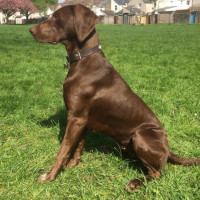
| The German Pointeraner is a beautiful dog that was developed by combining the noble Weimar Pointer with the powerful German Shorthaired Pointer. Two working breeds originally developed for hunting, this cross has produced a fine specimen of a dog capable of becoming quite athletic. They are incredibly muscular and well built. Courageous and adventurous, German Pointeraners love to be outdoors and discover new things. They don't like being cooped up indoors for hours on end. Requiring at least 90 minutes of moderately intense exercise every day, lazy owners need not apply. |
History of the German Pointeraner |
| Two German athletic dogs, the Weimar Pointer and the German Shorthaired Pointer, have a lot in common. Not only do they look alike, but it's thought that the German Shorthaired Pointer and the Weimar Pointer share many of the same genes and were developed from similar breeds at the same time. Reciprocal breeding of these two species seems to be a natural process, and the German Pointeraner was first bred in the USA, probably at the beginning of the 21st century. To better understand this new hybrid, let's take a closer look at each parent breed. |
A little of the Weimaraner |
||
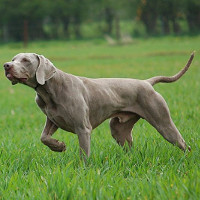
| The Weimaraner is an incredibly attractive dog that is probably best known for its unusual silver-gray coat and regal demeanor. Most experts agree that they are descended from the now extinct French Chien-Gris dog, which was used for hunting in medieval times. The breed first took off in the mid-1800s in the German city of Weimar, hence its name. These long-limbed dogs were highly respected hunters, pursuing pursuits such as deer and wild boar. Not usually kept by ordinary people, they generally belonged to royalty and the upper classes, and have always been a prestigious breed. A major distinction between Weimar Hounds and other hunting dogs of the time was that they were never kept outdoors, but rather were considered family dogs and always well cared for. This certainly contributed to their development, creating a well-adjusted pet that got along well with others. | ||
 |
||
| Standard of the Weimaraner | ||
A little of the German Shorthaired Pointing Dog |
||
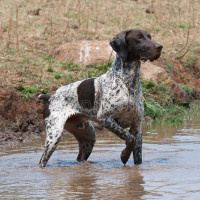
| The German Shorthaired Pointer is a breed that was developed in Germany with the aim of hunting on all terrains and in search of prey of all sizes, a versatile hunter that would never turn down a job. In addition to this, breeders wanted an obedient dog that would make a good companion, a true all-rounder. As a pointing dog, they instinctively freeze and point their muzzle and legs at their prey once detected, to alert humans with the sound of its position. Today, many dogs of this breed continue to be used for hunting, although it's not uncommon to keep them as pets. | ||
 |
||
| Standard of the German Shorthaired Pointing Dog |
Appearance of the German Pointeraner |
| A fine example of a dog, the German Pointeraner has a large, sturdy body, built to good proportions and suitable for work and exercise. They have a long face with a broad, long muzzle that ends in a fairly broad nose, which can be black or brown. They have piercing eyes that can be blue, amber, gray or brown, and represent a character that is both honorable and intelligent. Their ears are large and floppy, framing their face and often extending to the chin. They may have wrinkles and furrows above the eyebrows and below the neck, which only makes them more attractive. Their limbs are straight and muscular, and their bodies are deeply lean and supple. Although some may have a docked tail, it should be long and fine, reaching to the hock. The German Pointeraner has a close coat that can be the solid silver characteristic of the Weimaraner or completely brown. Many dogs will have patches in the coat, combining brown and white or gray and white. When fully grown, German Pointeraners reach a height of 53 to 68 cm and will weight between 25 and 37 kg. |
Temperament of the German Pointeraner |
| While both ancestors were mainly kept as hunting dogs, the German Pointeraner is not necessarily so devoted to its work and is capable of making a good pet. Indeed, this breed makes a wonderful companion, whether for work or not. Generally an easy-going dog that's happy to follow whatever's going on, they're adaptable and tend to be well adjusted. A dog that loves the company of humans, they do best when kept at home and don't want to be kept in kennels or left alone in the garden for long periods. An undeniably intelligent dog, the German Pointeraner will need plenty of mental stimulation to keep him happy. This is not a dog to sleep lazily on the sofa all day, and they're always eager to get in on the action and be involved in what's going on. They enjoy the opportunity to take part in canine activities and are quick to solve problems. Not keeping their minds engaged can lead to boredom, which leads to frustration and bad behavior. Lively and active with a strong sense of smell, this is not the breed to keep in a small home or around small animals. Ideally, they should have access to plenty of space in which to roam, and be housed among dogs of a similar size. |
Needs and activities of the German Pointeraner |
| The German Pointeraner is a fairly active dog. It's recommended that they get enough exercise to maintain their weight and health. He may tend to put on weight if not exposed to regular physical activity. He tends to do best in a home with a large yard in which he can be allowed to run and play. He may also enjoy joining you for a leisurely stroll. The dog park is a great place for the German Pointeraner, he'll appreciate the ability to get out, run and play with other dogs. He needs regular exercise so he doesn't chew or bark excessively. He may tend to chew or be destructive in other ways if not properly exercised. Some experts recommend two hours of exercise to bear the German Pointeraner's mischief. It's important to remember that the German Pointeraner does best with plenty of space to play, but a space of its own inside your home. |
Maintenance of the German Pointeraner |
| There isn't a lot of information available on the German Pointeraner, but we can study its parent breeds to determine the type of maintenance required by this hybrid breed. The German Pointer has a short, thick, water-repellent coat. It is slightly longer on the underside of the tail and hips. The hair on the head is softer, finer and shorter. The German Shorthaired Pointer's coat is easy to care for. It does not shed excessively. The Weimaraner has a short, smooth, elegant coat. It is one of the easiest breeds to groom. Dirt seems to fall off the German Pointer. Brush your German Pointeraner with a smooth brush once a week. Bathe him only when necessary. It's also important to check his feet if he's gone hunting to make sure they're in perfect condition. His hanging ears will need regular cleaning. Use a damp washcloth to wipe the inside of your dog's ears. Check for odors or redness. These are signs of infection. You should brush his teeth at least three times a week and trim his nails as necessary, depending on how quickly he wears them down. |



 English (United Kingdom)

Comments