 |
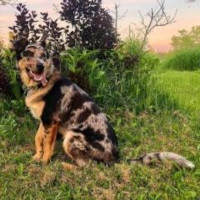
German Australian Shepherd |
|
He is not recognized by the F.C.I. |
Origin |
Germany <> U.S.A. -> U.S.A. | |
Translation |
Francis Vandersteen |
A brief presentation of the German Australian Shepherd |
| The German Australian Shepherd is a deliberate cross between two popular sheepdog breeds, the German Shepherd and the Australian Shepherd. While the Australian Shepherd is still widely used to work with livestock in this century, the German Shepherd is now more commonly associated with military and police work. With responsible breeding, the result is an intelligent dog with an athletic build and strong work drive that makes a good working dog, companion at home or therapy animal. Irresponsible breeding of these two dogs can produce an anxious, fearful animal that is prone to several disorders with a genetic component, including epilepsy, hip dysplasia and hemophilia. |
History of the German Australian Shepherd |
| The German Australian Shepherd is a specific cross between two different types of popular sheepdog, the German Shepherd and the Australian Shepherd. |
A little of the German Shepherd Dog |
||
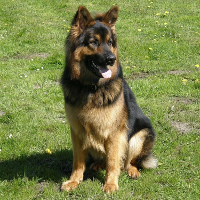
| The German Shepherd breed was initially developed in the late 1800s in Germany, and was designed to be able to bring sheep back to the fold without nipping at their heels and trot long distances alongside them to protect them from predators. German Shepherds were originally bred for structural efficiency, stable temperament and intelligence, and you'll still find these traits today in the German Shepherds of responsible breeders. Modern German Shepherds differ somewhat from the German Shepherds of the late 1800s and early 1900s, as breeding choices have resulted in a dog that is more streamlined and slimmer than the original German Shepherd, often with an obvious slope to the rear. German Shepherds were recognized by the AKC in 1908 and became the 2nd most popular breed in the USA. | ||
 |
||
| Standard of the German Shepherd Dog | ||
A little of the Australian Shepherd |
||
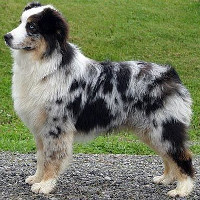
| The Australian Shepherd as we know it today is also a more recent breed, having been developed in the farmlands of the USA in the late 1800s rather than, as its name suggests, in Australia. This breed was developed to herd cattle and sheep. Thought to be descendants of the Basque sheepdogs that traveled to Australia in the early 1800s, these capable sheepdogs are considered the foundation stock of the modern Aussie, which was then crossed with other hard-working herding dogs once they reached America, creating an agile, hardy herding animal with incredible work drive. German Australian Shepherds make good sheepdogs, family companions and even therapy dogs. | ||
 |
||
| Standard of the Australian Shepherd |
Appearance of the German Australian Shepherd |
| The German Australian Shepherd is a medium to large dog with a slightly rectangular outline. Some dogs that prefer the German Shepherd side of the family have a noticeable slope to the back, while dogs that prefer the Australian Shepherd are more likely to inherit a missing tail or half-tail. They have a clean, somewhat chiseled head with a medium to long muzzle that tapers slightly and is rounded at the tip. Their eyes are almond-shaped, medium-sized and can be brown, blue or a combination of the two, with an intelligent, alert expression, and their ears are high to moderately high on the head and can stand straight or break forward and over. They have long, straight legs with oval rather than round bones, and compact, oval-shaped paws with well arched toes. Their coat is double-layered, with a thick, dense undercoat covered by a short to medium weather-resistant layer that can be straight or slightly wavy. This crossbreed comes in many possible color combinations, including several varieties of robin, which slightly increases the risk of developing hearing loss in this dog. |
Temperament of the German Australian Shepherd |
| The temperament of this crossbreed can vary considerably, depending mainly on the breeding practices used during the animal's development. A well-bred German Australian Shepherd should be highly intelligent, with a protective nature and plenty of energy, as well as a high work ethic. These dogs may be reserved for strangers but should be good with most children, although it's important to remember that small children should never be left with unsupervised dogs, for their protection and that of the dogs. The German Shepherd, in particular, has an extremely powerful bite; this dog has the ability to break any bone in the human body, and this trait can also be passed on to the German Australian Shepherd. Fortunately, German and Australian Shepherds are also extremely trainable and work-oriented dogs, and when properly socialized and kept busy, they make enthusiastic and reliable companions. Unfortunately, some lines of these breeds can also lean towards fearful or hyperactive temperaments, and a fearful, unhealthy or downright unmanageable dog can be the result of poor breeding practices. |
Needs and activities of the German Australian Shepherd |
| This hybrid is a cross between two energetic, athletic working dogs and, as such, requires a great deal of exercise to maintain fitness and prevent destructive or neurotic behavior. These dogs are happiest and healthiest with at least two hours or more of vigorous exercise and training activities a day, and as well as being physically active, these dogs are very active mentally. German Australian Shepherds that don't receive enough mental stimulation in the form of puzzle toys, new experiences or training routines can become anxious and destructive, both to their environment and to themselves. The German Australian Shepherd needs plenty of space to run around and tends to be far too active to live in an apartment, preferring a house with a large, secure yard to run around in. |
Maintenance of the German Australian Shepherd |
| Although German Australian Shepherds only need to bathe a few times a year, they have a very thick undercoat and tend to shed a lot all year round. This hybrid requires thorough brushing at least two to four times a week to remove dead hairs and prevent the dense undercoat from matting. German and Australian Shepherds shed more actively on a seasonal basis, a phenomenon known as "blowing the coat". The German Australian Shepherd is also likely to inherit this quality, and will require more frequent brushing and bathing when the seasons change. This crossbreed can also be somewhat prone to ear infections, especially those whose ears fold forward, so their ears should be cleaned and examined at least once a week. |



 English (United Kingdom)

Comments