 |
German Anatolian Shepherd |
|
He is not recognized by the F.C.I. |
Origin |
Germany <> Turkey -> U.S.A. | |
Translation |
Francis Vandersteen |
A brief presentation of the German Anatolian Shepherd |
| The German Anatolian Shepherd is an unusual dog design to date, a specific cross between the popular shepherd and protection dog, the German Shepherd, and the Kangal Shepherd Dog, a large Turkish dog that has been guarding livestock for thousands of years. Although devoted to their charge or flock, these dogs can be less tolerant of strangers and may require a firm hand for successful training. These dogs are not prone to separation anxiety, but they are prone to boredom and can develop obsessive, anxious and destructive behaviors if they don't get enough mental and physical exercise. |
History of the German Anatolian Shepherd |
| The German Anatolian Shepherd is a hybrid of two large, long-legged dogs designed to work with sheep. The Kangal Shepherd Dog was primarily a herdsman, while the German Shepherd did both herding and breeding. |
A little of the German Shepherd Dog |
||
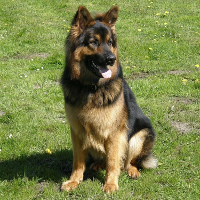
| German Shepherds were originally bred for structural efficiency, temperament and intelligence, and you'll still find these traits in many German Shepherds today, although unscrupulous or careless breeders can end up producing sickly or aggressive dogs that may not be structurally sound. Modern German Shepherds differ somewhat from the German Shepherd dogs of the late 1800s and early 1900s, as breeding choices have resulted in a more streamlined, leaner dog. German Shepherds were recognized by the AKC in 1908 and became the 2nd most popular breed in the USA. The German Shepherd breed was originally developed in the late 1800s as shepherd dogs that could herd sheep back to the fold without nipping at their heels and could trot long distances. | ||
 |
||
| Standard of the German Shepherd Dog | ||
A little of the Kangal Shepherd Dog |
||
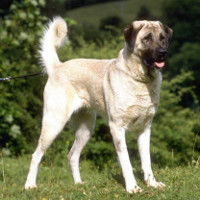
| The Kangal Shepherd Dog isn't as well known as the German Shepherd, but it's actually a much older breed. They developed in Turkey at some point in the distant past, most believed to be over 6,000 years ago, and it is thought that they were originally used to fight and hunt big game before being used to protect livestock. It was at this time that the Kangal Sheepdog changed size and color, enabling it to blend in more easily with sheep and confusing predators. | ||
 |
||
| Standard of the Kangal Shepherd Dog |
Appearance of the German Anatolian Shepherd |
| The German Anatolian Shepherd is a very large and powerful dog, developed to protect sheep from large predators such as lynx, wolves and even the occasional bear. The silhouette of this dog is somewhat rectangular, although some may have the more sloping back of the modern German Shepherd. They have a large, chiseled head, but not so large as to appear disproportionate, and a long, strong muzzle that can be square like the Kangal Sheepdog or tapered like the German Shepherd. They have medium-sized almond-shaped eyes of light amber to dark brown, although black is more likely to predominate with this crossbreed, and their medium-length triangular ears should be set moderately high on the skull and will either stand up like the German Shepherd or fold to the side like the Kangal Sheepdog. The coats of the two parent breeds are quite similar, both passing a thick, soft undercoat protected by a dense outer coat that is generally straight, although some dogs have a slight wave to the outer layer that can come in a smooth variety of around 2.5 centimeters or rough of around 10 centimeters. |
Temperament of the German Anatolian Shepherd |
| Hybrid dogs can inherit their temperament or part of their temperament from either parent breed. In many cases, their temperament can therefore vary considerably from one dog to another. Kangal Shepherd Dogs tend to be rather serious, patient and even submissive dogs with family children and other pets, although they are not particularly playful. However, they are naturally territorial and may not show the same patience with children or animals they don't consider part of their pack. They are independent dogs, with powerful instincts and their own ideas about who is friend and who is foe. The German Shepherd can have a variable temperament, ranging from the self-assured if somewhat aloof temperament for which it has been bred, to an angry and pragmatic attitude, to a hyperactive or nervous animal with possible fear and aggression issues. For this reason, it's imperative to understand the temperament of the parent animals if you're getting a German Anatolian Shepherd as a puppy. The German Shepherd is one of the easiest dog breeds to train, but the Kangal is more independent and can become downright defiant during training, so this particular cross may be more suited to households with experienced dog owners. |
Needs and activities of the German Anatolian Shepherd |
| This hybrid is a cross between two athletic working dogs that also have great strength and will need an intensive exercise routine to stimulate them mentally and allow them to expend energy. These dogs need at least two hours or more of vigorous exercise and activity a day to work their bodies and minds. Accompanying you on a run, socializing at the dog park and obedience training are just some of the outings your hybrid will enjoy. The German Anatolian Shepherd will thrive with room to run, because it tends to be too noisy for your average apartment building, it does best when it has a large, secure yard to run and explore. |
Maintenance of the German Anatolian Shepherd |
| Although bathing is only necessary a few times a year, Kangal Shepherd Dogs have very thick undercoats and tend to shed a lot all year round, requiring thorough brushing two to four times a week to remove dead hair and avoid dense undercoat tangles and mats. German Shepherds also shed more actively on a seasonal basis, a phenomenon known as coat blowing. If your German Anatolian Shepherd inherits this quality, it may require more frequent brushing and bathing as the seasons change. This crossbreed can also be somewhat prone to ear infections, so its ears should be cleaned and examined at least once a week. |



 English (United Kingdom)

Comments