
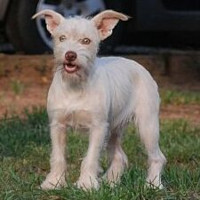
 |
Eskimo Schnauzer |
|
He is not recognized by the F.C.I. |
Origin |
U.S.A. <> Germany -> U.S.A. | |
Translation |
Francis Vandersteen |
A brief presentation of the Eskimo Schnauzer |
| The Eskimo Schnauzer is a hybrid of the American Eskimo Dog and Schnauzer breeds. Schnauzers belong to three breeds: miniature, standard and giant, while the American Eskimo Dog includes the toy, miniature and standard within the same breed. As a rule, the Eskimo Schnauzer is bred to be a smaller dog and mixed with the miniature-sized American Eskimo Dog and the miniature Schnauzer. However, larger dogs using standard parents can be used. A standard hybrid generally measures over 46 centimetres and weighs over 14 kilos. The Eskimo Schnauzer is a specific crossbreed dog bred as a companion. Determining the potential characteristics of this hybrid can be difficult given the lack of detailed information, and many owners have to turn to the parent breeds for more details. |
History of the Eskimo Schnauzer |
| The Eskimo Schnauzer is a hybrid of the American Eskimo Dog and the Schnauzer. The mix is a specific modern crossbreed designed as a companion dog and does not have a long or well-known history. As such, owners need to examine the history of the breed's parents to understand the history of this hybrid. Today, the Eskimo Schnauzer is not a well-known hybrid, and little documentation exists on the mix. However, the parents American Eskimo and Miniature Schnauzer are a well-known and beloved breed. The Dog Registry of America recognizes the Eskimo Schnauzer as a hybrid breed. |
A little of the American Eskimo Dog |
||
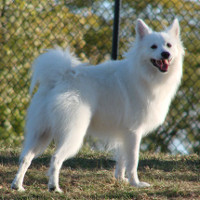
| The American Eskimo Dog is neither American nor Eskimo, and was formerly known as the German Spitz, descended from the Northern Spitz. Anti-German sentiment after World War I prompted a name change in the German Spitz, which is affectionately known as the American Eskimo Dog, or Eskie. It's thought that the kennel that first bred the dog, the American Eskimo Kennel, lent its name to the breed. The American Eskimo Dog is a famous performer of the last two hundred years and can learn to walk a tightrope, thanks to its great agility, intelligence and desire to please. The American Kennel Club officially recognized the American Eskimo Dog in 1994. | ||
 |
||
| Presentation of the American Eskimo Dog | ||
A little of the Miniature Schnauzer |
||
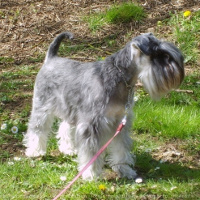
| The Schnauzer is thought to have developed in medieval Germany, dating back to the 15th century, when the breed was often depicted in Albrecht Dürer's carved wooden works of art. Originally bred to help on the farm and hunt vermin, the Schnauzer also provided protection for farmers on their way to market. The name Schnauzer is a literal German translation of moustache, and the German name, Mittelschnauzer, translates as bearded muzzle. Breeding programs help standardize the black, salt and pepper coat color for this breed. The Schnauzer is further separated into three breeds, but varies mainly only in size and certain physical traits. Health and personality traits show little variation in the three breeds. | ||
 |
||
| Standard of the Miniature Schnauzer |
Appearance of the Eskimo Schnauzer |
| The Eskimo Schnauzer has a robust body thanks to its two parent breeds and is generally seen with a white coat, similar to that of the Schnauzer. The head of an Eskimo Schnauzer is square-shaped with a longer muzzle than other American Eskimo Dog mixes, and the eyes are dark brown, oval-shaped and carry a curious, feisty expression. The ears are triangular and erect. The body appears slightly longer than it is tall, and the tail is set high with a curve over the back but can be docked. |
Temperament of the Eskimo Schnauzer |
| The Eskimo Schnauzer is an active dog, friendly and affectionate with its family. This hybrid is a robust dog, making it an excellent companion for children. The parent American Eskimo Dog can keep the Eskimo Schnauzer away from strangers, and you can expect it to alert you when strangers approach. However, with early and appropriate socialization, the Eskimo Schnauzer can easily adapt. The Eskimo Schnauzer can be adapted to dogs if it leans more towards the parent American Eskimo Dog. However, the Schnauzer can diminish this quality in the mix. Early and consistent socialization is essential for living and interacting with other dogs. They love to play and may chase the family cat for a few minutes, and will be more aggressive towards small animals and cats that are not part of the family. The Eskimo Schnauzer is an intelligent and trainable mix, and this hybrid needs plenty of mental and physical stimulation on a daily basis to lead a healthy life. |
Needs and activities of the Eskimo Schnauzer |
| The Eskimo Schnauzer is a high-energy mix of two breeds and needs 60 minutes of daily exercise to spend its energy happily. The intensity of exercise doesn't need to be high, a few 30-minute sessions and a light walk or game of ball will keep this hybrid well exercised. It's a smart mix, and mental stimulation is equally important to prevent boredom vices from developing. If the Eskimo Schnauzer can do all its daily physical and mental exercise, it's well suited to apartment living. This mix also has a high tolerance to hot and cold weather, but its interior design allows it to live anywhere. |
Maintenance of the Eskimo Schnauzer |
| The Eskimo Schnauzer can be a hypoallergenic hybrid if its coat matches that of the Miniature Schnauzer. This breed may not shed much, but if the coat more closely resembles that of the American Eskimo Dog, you can expect more shedding from this hybrid. The coat requires frequent grooming and brushing to keep its medium-length hairs mat-free and healthy. While brushing your Eskimo Schnauzer, clean its ears and watch out for redness, indicating the presence of yeast or bacteria in the ear. As a potentially hypoallergenic mixture, avoid bathing your Eskimo Schnauzer and stick to frequent brushing to distribute the natural oils, remove dead and loose hairs and remove dirt and debris from the coat. Routine brushing and cleaning of teeth is also recommended, and annual check-ups with the vet can provide an assessment of dental hygiene. |



 English (United Kingdom)

Comments