
 |
English Toy Cocker Spaniel |
|
He is not recognized by the F.C.I. |
Origin |
U.S.A. <> Great Britain -> U.S.A. | |
Translation |
Francis Vandersteen |
A brief presentation of the English Toy Cocker Spaniel |
| The English Toy Cocker Spaniel is a hybrid breed that can be a mixture of English Cocker Spaniel or American Cocker Spaniel and King Ckarles Spaniel. These breeds were originally bred as sporting and hunting dogs. However, over the course of history and popularization, they have become more commonly known as pets. The English Toy Cocker Spaniel is a friendly breed that can have bursts of energy. They need an active home with people capable of keeping them company. As both parent breeds are Spaniels, appearance may vary only slightly. Your hybrid will have the soft, silky feathery coat of the Spaniel lineage, while the facial structure will depend on which parental line it adopts most. |
History of the English Toy Cocker Spaniel |
| Let's take a look at the 3 pure breeds that make up the English Toy Cocker Spaniel, for want of knowing more about this new breed. |
A little of the American Cocker Spaniel |
||
| The name American Cocker Spaniel was given to dogs that were smaller. Many American Cocker Spaniel were imported to Canada and the USA, where they were used to hunt and retrieve many types of birds. Meanwhile, the English Cocker Spaniel was beginning a career in show competition. Two other lines of Spaniels emerged later in the century. These new breeds were the Field or Cocker Spaniel and the Marlborough Cocker. 1936 saw the founding of the Cocker Spaniel Club of America. The American Cocker Spaniel Club of America followed closely behind and was founded in 1936. This group's aim was to discourage the interbreeding of English and American varieties. | ||
 |
||
| Standard of the American Cocker Spaniel | ||
A little of the English Cocker Spaniel |
||
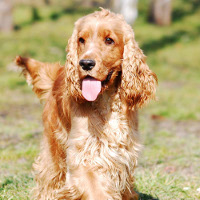
| The English Cocker Spaniel takes its name from the woodcock they flushed out for hunters to shoot. Looking back to their earliest roots, Spaniels were hunting dogs, used to hunt birds and waterfowl. Some Spaniels naturally became more adept at waterfowl and diverged to become Spaniels, while others excelled on land and gave rise to breeds such as the Springer Spaniel and Cocker Spaniel. The English Cocker Spaniel is said to have crossed to America in 1620, aboard the Mayflower. Once again, they were used for hunting. Later, however, selective breeding produced a variant, which is the American Cocker. These dogs were primarily intended for parade and had a slightly different conformation with a more domed head and even longer ears. | ||
 |
||
| Standard of the English Cocker Spaniel | ||
A little of the King Charles Spaniel |
||
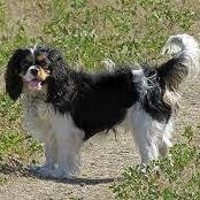
| The King Charles Spaniel originated in England as a hunting dog, although it is thought that they may have originated in Asia, where they were mostly given as gifts to Japanese royalty. They may have been mixed with Carlins in the early 1900s, resulting in the short, slightly flattened muzzle. Once classified by four colors, this Spaniel was reclassified in 1904 by the American Kennel Club as the King Charles Spaniel. Known separately as the King Charles, Prince Charles, Blenheim and Ruby, this breed makes a wonderful show dog under the King Charles Spaniel classification. | ||
 |
||
| Standard of the King Charles Spaniel |
Appearance of the English Toy Cocker Spaniel |
| The English Toy Cocker Spaniel is a breed that will often have a compact, strong, muscular body. The head is often of medium length, and they may have a square muzzle. Their eyes are round and almond-shaped. Their coats are often short to medium length, with lots of feathering towards the belly of the dog. The English Toy Cocker Spaniel has a similar body structure and is also fairly solid, but they tend to have a shorter muzzle and more feathering on the ears. Both parent breeds will have large, floppy ears with silky feathers. Because of their similarity, your hybrid may have characteristics intermediate to those of its parent breeds. Colors can vary considerably, as can the bulge of the eyes and the length of the muzzle. |
Temperament of the English Toy Cocker Spaniel |
| The English Toy Cocker Spaniel is a very gentle, loyal and affectionate dog. They tend to be quite docile and playful. Because of your hybrid's gentle demeanor, they make excellent companions for homes with children. These dogs get on well with other pets, however, they need to be trained from an early age not to chase small animals and to be introduced to other pets when young. Owners need to be realistic, however, as the prey instinct is quite ingrained in the Cocker Spaniel. This hybrid can have separation anxiety and should not be left alone for too long. They often do quite well when meeting new strangers because of their friendliness. |
Needs and activities of the English Toy Cocker Spaniel |
| These hybrids have average activity needs, and for the most part are very laid-back and lazy. When they get their exercise "bursts", they'll need a good place to run or play for 20 to 40 minutes. The English Toy Cocker Spaniel itself is not a breed that likes to swim, however, the English Cocker Spaniel side can make your hybrid more eager to swim. The English Toy Cocker Spaniel is an agile breed that loves long runs and walks. The American Cocker Spaniel line will encourage your hybrid to participate in retrieving balls and toys for you. |
Maintenance of the English Toy Cocker Spaniel |
| The English Toy Cocker Spaniel is a high-maintenance hybrid. Their coats can often become matted and dirty if not groomed often. You'll need to take your hybrid to a groomer every 4 to 6 weeks to maintain coat shape. For the most part, your hybrid will need its fur trimmed around the ears, eyes, elbows and hindquarters. Their large, floppy ears will need to be cleaned and checked regularly, as the fur over the ears often blocks airflow to the inner ear. They also need their eyes and face cleaned, as their fur can trap food particles and dirt. As with all dogs, you'll need to trim his nails and brush his teeth regularly. |



 English (United Kingdom)

Comments