
 |
English Bullweiler |
|
He is not recognized by the F.C.I. |
Origin |
Great Britain <> Germany -> U.S.A. | |
Translation |
Francis Vandersteen | |
This breed is also known as |
Bullweiler
|
A brief presentation of the English Bullweiler |
| Cuddly but stubborn, the English Bullweiler is often described as an adorable dog with a keen sense of humor. This humorous dog likes to spend time in the company of others, so as not to feel lonely. Although he may bark out of boredom, barking can be kept to a minimum with effective training from the very beginning of his life. The history of the English Bullweiler is vague and poorly documented. Its parent breeds are the English Bulldog and the Rottweiler. Considered a giant breed, this clumsy dog doesn't let its size slow it down. The English Bullweiler weighs an average of 32 to 50 kilos and measures between 45.5 and 63 centimeters. They make excellent companions and efficient watchdogs. Its short coat makes it easy to groom. This breed has moderate energy levels that can be maintained with daily exercise requirements. |
History of the English Bullweiler |
| The history of the English Bullweiler is vague and poorly documented, creating confusion as to its origins. It's just as important to look at its parent breeds: the English Bulldog and the Rottweiler. |
A little of the English Bulldog |
||
| The English Bulldog can be traced back to the ancient Mastiff through works of art and writings. However, the breed was developed entirely in England. Originally bred to be aggressive, it was bred to win bull-baiting matches that were supposed to yield tenderized meat for humans. His physique was designed to be short and stocky, allowing easy access to bulls. In 1835, bull-baiting was officially banned and the aggressive English Bulldog was left untouched. Breeders worked to modify the breed and reinvent its purpose by eliminating aggression. In the end, the English Bulldog was a docile, friendly dog with an affectionate side. In 1890, the breed was officially recognized by the AKC. | ||
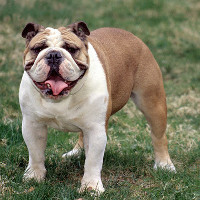 |
||
| Standard of the English Bulldog | ||
A little of the Rottweiler |
||
| The Rottweiler is descended from the Romans, who wanted a dog capable of driving the herds that fed the itinerant army. Over time, these dogs bred with local dogs in Rottweil, resulting in a powerful breed used by butchers to drive cattle to market. The Rottweiler was used for protection and to guard the butcher's profits. The breed was also used to pull carts and deliver meat and milk. When the Rottweiler almost became extinct and its purpose was no longer needed, German breeders reinvented the breed and saved it from extinction. In 1931, the American Kennel Club officially recognized the Rottweiler. | ||
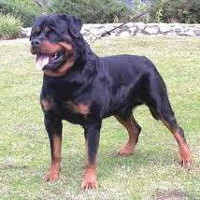 |
||
| Standard of the Rottweiler |
Appearance of the English Bullweiler |
| The English Bullweiler is a giant hybrid breed developed from the English Bulldog and the Rottweiler. Its face strongly resembles the Rottweiler, with its curious expression. Its tail is generally long and short-haired. His face will generally inherit the top wrinkles seen in the English Bulldog. The ears are floppy and hang over the sides of the face. The muzzle is relatively short, like that of the Rottweiler. The head is stocky and the body muscular and athletic. The eyes are dark with a dark nose. Its straight legs contain powerful, huge paws. His coat can be short and slightly wavy or short and thick. Color combinations can be black, brown, beige, red and white. |
Temperament of the English Bullweiler |
| The English Bullweiler is a gentle giant who longs to be your cuddly partner. He can be clumsy with a keen sense of humor. There's never a dull day with your affectionate Bullweiler. Families generally describe this breed as a family companion ready to go anywhere with them. Always on the lookout, this alert dog is sure to protect against unwanted intruders. This breed is excellent with families and young children. Extra care should be taken in the presence of young children due to its massive size. Early training and socialization will teach them boundaries and caution. The English Bullweiler is a lover of other dogs and small animals. Because of his natural instinct to protect, early training is recommended to help him distinguish between friendly and hostile strangers. Although your English Bullweiler can be stubborn, he's still capable of learning new techniques with plenty of time and patience. His moderate energy levels will require daily exercise to ensure he doesn't lounge around all day. |
Needs and activities of the English Bullweiler |
| The English Bullweiler contains moderate energy levels that will require around 30 to 40 minutes of exercise a day. This exuberant dog will enjoy swimming, running, walking and agility. Two walks a day are generally the minimum recommended for optimum health and to avoid boredom. An ideal environment for your English Bullweiler would be a large rural home with a fenced yard and a warm climate. Because of his massive size, apartment living is not recommended, as he may lack the space to move around and expend energy. Don't leave him alone too often; it's essential to keep him engaged and happy throughout the day. |
Maintenance of the English Bullweiler |
| The English Bullweiler is not considered a hypoallergenic breed and can shed moderately. To reduce shedding, it's important to brush his smooth coat with a rubber curry brush for 10 to 15 minutes a day. Your dog should be bathed every 6 to 8 weeks. Special attention should be paid to his head folds to ensure that bacteria are not trapped. This breed is known to drool moderately, which will require cleaning its mouth several times a day with a damp cloth. This breed generally has no significant odor. Nails should be trimmed or filed every 2 to 3 weeks. Ears should be wiped and cleaned weekly to prevent wax build-up, and teeth should be brushed daily to prevent tartar build-up. |



 English (United Kingdom)

Comments