 |
Dusky |
|
He is not recognized by the F.C.I. |
Origin |
Germany <> Siberia -> U.S.A. | |
Translation |
Francis Vandersteen |
A brief presentation of the Dusky |
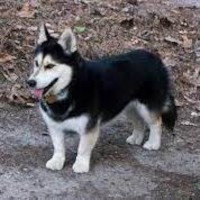
| A Dusky is a hybrid breed and is a cross between a Dachshund and a Siberian Husky. This will depend on which parent breed is more dominant, as a Dachshund is a small dog weighing between 7 and 15 kilos and a Siberian Husky is a medium-sized dog averaging 16 to 27 kilos. A Dusky's colors are likely to include black, black and tan, chocolate, cream, blue, white, silver, copper, brown, agouti, sable and gray. A Siberian Husky has a thick coat with a dense undercoat and a longer topcoat of short, straight guard hairs, while a Dachshund can have a smooth or stiff, rough coat. Both parent breeds are intelligent, affectionate dogs, but if you have young children in the family, it would be a good idea to take the dog along for socialization and training while he's still young. Both parent breeds are fairly easy to train and require moderate maintenance, so a Dusky is likely to be the same. |
History of the Dusky |
| A Dusky is a hybrid breed, a cross between a pure-bred Siberian Husky and a pure-bred Dachshund. |
A little of the Dachshund |
||
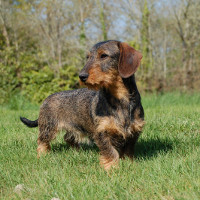
| Dachshunds date back to the 15th century and were developed in Germany to hunt badgers. The name "Dachshund" means "badger dog", from Dachs "badger" and Hund "dog". Small but powerful, Dachshunds were bred to have strong paws that could dig into burrows and dens. After their hunting days in Germany, many were transported to England, where they became pets and were popular in the royal courts of Europe. Often called weiner dogs and sausage dogs in reference to their shape, they arrived in America in the 1800s and were officially recognized by the American Kennel Club in 1885. | ||
 |
||
| Standard of the Dachshund | ||
A little of the Siberian Husky |
||
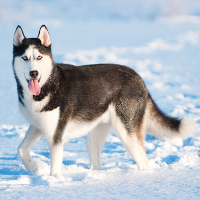
| The Siberian Husky originated in northeastern Siberia, where it was bred by the Chukchi, a tribe of Siberian nomads, who used it for transportation and as a family dog. The breed belongs to the Spitz genetic family and can be recognized by its thick double coat and erect triangular ears. In 1908, they were imported to Alaska as sled dogs by a Russian fur trader named William Goosak. They are said to have been called "Siberian Rats" because of their size compared to the Malamute. A team of Siberian Huskies won the Alaska 400-mile contest in 1910, a 408-mile race by dog sled, and continues to be an active contestant in the competition even today. The Siberian Club of America was founded in 1938, and the Siberian Husky was recognized by the American Kennel Club in 1930 and the Canadian Kennel Club in 1939. | ||
 |
||
| Standard of the Siberian Husky |
Appearance of the Dusky |
| Duskies are small to medium-sized dogs that vary according to the parent breed they most closely resemble. Dachshunds are available in three sizes: toy, miniature and standard, so the size of your pet can also vary, and is likely to be larger with the Siberian Husky side. A Dusky's colors are likely to include black, black and tan, chocolate, cream, blue, white, silver, copper, brown, agouti, sand and gray. A Siberian Husky has a thick coat with a dense undercoat and a longer topcoat of short, straight guard hairs, while a Dachshund can have a smooth or stiff, rough coat. A Siberian Husky may have blue eyes, brown eyes, a little of both or one of each color, while a Dachshund has round, dark eyes. Depending on the parent breed, a Dusky may have erect or floppy ears and a medium-length muzzle. |
Temperament of the Dusky |
| A Dusky is likely to draw inspiration from its parent breeds and be a friendly, energetic companion. A Dachshund loves nothing more than to be the center of attention, and won't hesitate to be a one-of-a-kind dog as long as it's showered with affection. They are alert little dogs with a tendency to bark, and can be quite possessive of their toys, unlike the larger Siberian Husky, which is not considered a good watchdog because it is too pleasant and friendly with strangers. They do howl from time to time. The Siberian Husky is eager to please but can become more aloof as it ages. Both breeds can be quite stubborn but are fairly easy to train and both will suit new pet owners, so a Dusky will do. Small children are not recommended with either parent breed, but both go well with other dogs, although Siberians have a strong predatory tendency and may therefore chase other dogs and cats. |
Needs and activities of the Dusky |
| The amount of exercise a Dusky will need will depend on which parent breed it's most after, as a Siberian Husky will need a little more than a Dachshund. But it's important to walk your Dachshund, as the breed tends to put on weight to keep it strong and healthy. Siberian Huskies have a reputation for being escape artists, so they need an environment in which they can't escape. An apartment isn't the best place for a Siberian Husky, but they can live there as long as you take them out every day for walks and play sessions. They also like to dig, so it's best to keep them happy and content so they don't become destructive. It will be best to keep your Dusky on a leash when out in public, as both parent breeds have hunting instincts, so he may take off and not return when called. |
Maintenance of the Dusky |
| A Dusky is prone to shedding and will need moderate maintenance like the parent breeds. Wire-haired Dachshunds need more regular brushing to keep their coats free of mats and debris than the smooth-haired variety. They also need more baths. Siberian Huskies shed more and throughout the year, but like a cat, they take the time to clean themselves and therefore don't need many baths. A Dachshund's ears can be prone to infection, so check them often and clean out any dirt. Try to brush your pet's teeth two or three times a week to avoid dental problems. Check the nails regularly and trim them if they are too long. |



 English (United Kingdom)

Comments