
 |
Doxle |
|
He is not recognized by the F.C.I. |
Origin |
Germany <> Great Britain -> U.S.A. | |
Translation |
Francis Vandersteen | |
This breed is also known as |
Doxie
|
A brief presentation of the Doxle |
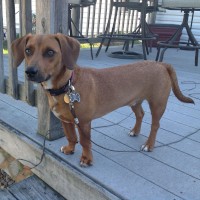
| The Doxle is a hybrid dog that is a cross between a Beagle and a Dachshund. They are small to medium-sized dogs weighing up to 13.5 kilos and are sometimes called Doxies or Beaschunds. Common colors for a Doxle are tan, black, gold, chocolate, white and brown, and their coats vary but can be fine, hard, stiff and straight. They are affectionate, friendly dogs that make excellent pets and are good with children. Doxles are good with other pets, but due to parental breeds, hunting ancestry can make them hunters, so early socialization would be a good idea. Despite their size, they make good watchdogs and can be quite protective. They will need moderate maintenance to keep their good looks. |
History of the Doxle |
| There's not much information on the origins of Doxles, which are a combination of a Beagle and a Dachshund, but both parent breeds were bred as hunting dogs. |
A little of the Dachshund |
||
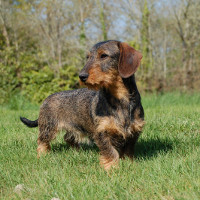
| Dachshunds date back to the 15th century and were developed in Germany to hunt badgers. The name Dachshund means "badger dog", from Dachs "badger" and Hund "dog". They were also used to hunt foxes, and deer and wild boar in packs. In the 1800s, they began to be bred mainly in England as pets, and were popular in the royal courts of Europe. They arrived in America in the 1800s and were officially recognized by the American Kennel Club in 1885. Because of their long, narrow shape, they are often called sausage dogs. | ||
 |
||
| Standard of the Dachshund | ||
A little of the Beagle |
||
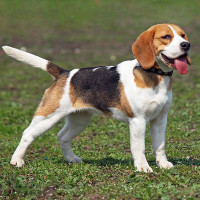
| A Beagle is a hound developed primarily for hunting hares, but its origins are not so well documented. Greek documents from 400 BC describe Beagle-like dogs, and it is thought that the Romans may have brought similar dogs to England, which may have been crossed with local dogs. Talbot's dogs, considered the ancestor of the Beagle, are thought to have been brought to England by William the Conqueror in 1066. Other ancestor breeds would probably have been the Northern Beagle, the Southern Hound and the Harrier. English farmers bred the dogs in the mid-1800s as hunting dogs and they were exported to America a few decades later, where some breeders developed them to be smaller for rabbit hunting. The American Kennel Club began registering Beagles in 1884. The most famous Beagle in popular culture is probably Snoopy, who belongs to Charlie Brown in Charles M. Schulz's Peanuts comic strip. | ||
 |
||
| Standard of the Beagle |
Appearance of the Doxle |
| Doxles are small to medium-sized dogs that vary according to the parent breed they most closely resemble. Dachshunds are available in three sizes: toy, miniature and standard, so your pet's size can also vary. A Doxle's colors are usually beige, black, gold, chocolate, white and brown, and their coat varies but can be fine, hard, stiff and straight. Doxles tend to have fairly long, Dachshund-like bodies and short legs. They are likely to have a long muzzle and long, floppy ears. Their eyes are generally dark, large and round. |
Temperament of the Doxle |
| Doxles are friendly, affectionate dogs that make excellent pets, especially those with children. But they can also be suitable for older or less active people, and adapt quite well to their environment. They're good with other pets, but because the parent breeds were developed as hunting dogs, they may like to chase small animals, so start training them early and make sure your dog is on a leash when out in public. They don't need a huge amount of exercise to stay in shape. But they are known to chew and bark, so tire them out with regular walks and play sessions to avoid the formation of bad habits. The Doxle is fairly easy to train, although it can sometimes be a little stubborn, but in general it likes to please its human family. They are very alert and loyal dogs who are quite protective of their family and make good watchdogs. |
Needs and activities of the Doxle |
| The Doxle doesn't need much exercise to stay in shape, so it's suitable for less active people. But a daily walk and a few play sessions will be necessary to keep your pet happy and avoid any misbehavior. They will enjoy playing ball in an enclosed yard, but will adapt very easily to life in an apartment, provided they get out regularly. Doxles like to chew, so be sure to supervise your dog when he has toys to prevent choking. They're good for new pet owners, but socialization and training will be a good idea for this breed. They tend to tolerate heat more than cold, so don't leave them outside for too long in winter. |
Maintenance of the Doxle |
| A Doxle will need regular grooming to keep it looking good, which will include brushing about three times a week. They don't shed much, and brushing will remove any loose hairs and keep the skin healthy. Doxles don't need to bathe much, unless absolutely necessary. None of the parent breeds are hypoallergenic, so it's unlikely that a Doxle will be either. Try to brush your dog's teeth two or three times a week to avoid dental problems. This breed is prone to ear infections, so check the ears regularly and wipe them with damp absorbent cotton. Check the nails regularly and trim them if they are too long. |



 English (United Kingdom)

Comments