
 |
Doxiemo |
|
He is not recognized by the F.C.I. |
Origin |
Germany <> U.S.A. -> U.S.A. | |
Translation |
Francis Vandersteen |
A brief presentation of the Doxiemo |
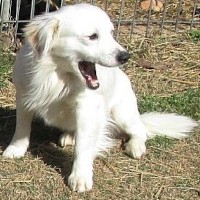
| The Doxiemo is a hybrid of the Dachshund and the American Eskimo Dog. The size of a Doxiemo will vary according to which parent breed the mix most closely resembles. Larger hybrids tend to look more like the American Eskimo Dog, while smaller dogs resemble the Dachshund. Not much is known about the Doxiemo, but the two parent breeds have a long history. Doxiemo owners should examine the characteristics and health issues of the parent breeds to better understand the potential temperament and health problems of their hybrid dog, but owners have found them to be busy, highly intelligent dogs eager to learn. Active families suit this hybrid, and it loves to be on the move. |
History of the Doxiemo |
| The Doxiemo is a new 21st-century hybrid mix that is generally smaller than a standard American Eskimo Dog but not as low as a Dachshund. The Doxiemo is currently recognized by the American Canine Hybrid Club and the Dog Registry of America. Little is known about the current hybrid, but the Dachshund and American Eskimo Dog have a long history and were first developed in Germany. |
A little of the Dachshund |
||
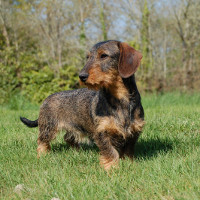
| The Dachshund is thought to have originated in Germany in the early 1600s, bred as a skilled hunter to bring game out of its dens. A keen scent hound with powerful legs, this breed was a useful companion for the hunter. The ancestors of the smooth variety are thought to be the Braque, the French Basset Hound and the Pinscher. The wire-haired and longhaired cousins were developed by crossing the Dachshund with Spaniels and Terriers. The first American Dachshund Club was founded in 1881, and the breed was registered with the American Kennel Club in 1885. Still a hunting companion in some parts of Europe, Dachshunds living in North America are mainly family companions. | ||
 |
||
| Standard of the Dachshund | ||
A little of the American Eskimo Dog |
||
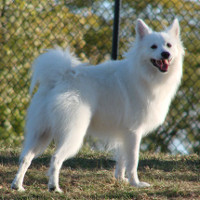
| The American Eskimo Dog is neither American nor Eskimo, and is thought to be descended from the Northern Spitz. Vocalization and the ability to alert people to potential threats made the Spitz, and later the American Eskimo Dog, the ideal companion for farmers. Many American Eskimo Dogs were also featured in traveling circuses as tightrope walkers. Anti-German sentiment after World War I and throughout World War II encouraged a name change for the German Spitz, which became known as the American Eskimo, or Eskie. | ||
 |
||
| Presentation of the American Eskimo Dog |
Appearance of the Doxiemo |
| The Doxiemo can lean towards either parent breed in appearance, but is generally smaller than the American Eskimo Dog, reaching a maximum height of 48 centimeters. The Doxiemo's body is generally close to the ground with an elongated body, but the parent American Eskimo Dog helps balance some of the body disproportion. A Doxiemo's head is round with a fine, long muzzle that is proportional to the head, and the ears are set low and slightly larger than the ears of the parent American Eskimo Dog. The eyes can vary in color from light to dark brown and are round to slightly oval and expressive and cheerful. The coat can vary in color but is usually light or includes variations of two white or cream colors, although black and tan are visible if the Doxiemo coat resembles a Dachshund. A Doxiemo's coat is always soft and glossy, but may be flatter against the body in the hybrid than in the parent American Eskimo Dog. |
Temperament of the Doxiemo |
| The American Eskimo Dog parent makes the Doxiemo a friendly, intelligent hybrid that's eager to please. Any stubbornness you'll find in your Doxiemo will certainly come from the Dachshund parent, but the Doxiemo is considered an outgoing, loving and trainable hybrid. As far as children are concerned, the Doxiemo is a remarkable, patient and loving companion, but may not be suitable for small children who don't understand how to play with this slightly disproportionate dog. The American Eskimo Dog parent makes the Doxiemo more resilient, and teaching children how to interact with dogs will help with proper socialization. The Doxiemo gets along very well with other dogs and cats with good socialization, but the Dachshund parent can interfere with true harmonization if not well socialized. The Doxiemo can be slightly wary of strangers and a little shy, but early socialization will help develop its friendliness towards unfamiliar, non-threatening people. Energy levels in the Doxiemo are high with moderate intensity, but they are small enough to get daily exercise indoors, which will keep their minds sharp and their bodies healthy. |
Needs and activities of the Doxiemo |
| The Doxiemo is a hybrid of two breeds with different energy levels. The Dachshund is calmer and needs less intense activity, while the American Eskimo Dog can be high-energy and require slightly more daily activity. Your Doxiemo will love to run and jump and requires between 30 minutes and an hour of regular exercise. However, the small size of this mix means that Doxiemo can generally meet all his exercise needs indoors. Doxiemo is remarkably well adapted to apartment and city living, and both parent breeds achieve a perfect balance in climate tolerance. The Doxiemo is able to live in both hot and cold climates, and is ideally suited to temperate environments. However, during the warmer months, watch out for any signs of overheating, as your Doxiemo inherits its coat from its American Eskimo Dog parent. |
Maintenance of the Doxiemo |
| Descended from two non-hypoallergenic breeds, the Doxiemo is not hypoallergenic and is considered a medium-to-high excretor. The Doxiemo's medium to long, soft hair should be brushed daily to prevent matting and keep the coat free of dirt. Frequent brushing will also help evenly distribute the natural oils that keep the skin and coat healthy. These dogs are not known to develop the odor typical of many dogs, but regular brushing will help prevent odors from developing. While brushing your Doxiemo's coat, also check the ears and remove any build-up of wax, dirt or debris with a vet-approved cleaning solution. Doxiemo's ears are larger and the long hair means that extra dirt and debris can get trapped inside. |



 English (United Kingdom)

Comments