
 |
Dogue de Boxer |
|
He is not recognized by the F.C.I. |
Origin |
France <> Germany -> U.S.A. | |
Translation |
Francis Vandersteen | |
This breed is also known as |
Bordeaux Boxer |
A brief presentation of the Dogue de Boxer |
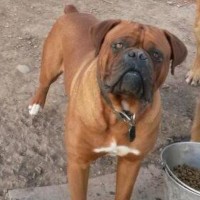
| The Dogue de Boxer is a cross between the Boxer and the Dogue de Bordeaux. The Boxer is a large breed and the Dogue de Bordeaux is a giant breed, so your Dogue de Boxer will probably be large to giant. They generally measure around 61 centimetres and weigh an average of 41 kilos. Because of their size and courage, they are considered excellent guard dogs, but they are also very endearing and make excellent pets too. Although they tend to be sensitive and stubborn, they are generally quite easy to train and can learn things quite quickly. |
History of the Dogue de Boxer |
| Not much is known about the birth of the Dogue de Boxer, but there is documentation on the parents. The Dogue de Bordeaux and the Boxer were recently reunited to create the hybrid Dogue de Boxer. |
A little of the Dogue de Bordeaux |
||
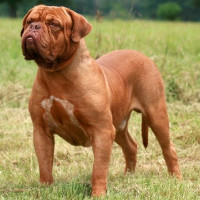
| The Dogue de Bordeaux originated in France in the Middle Ages from the Mastiff, where it was used for hunting, fighting, guarding and as a military dog. Like the Boxer, they are thought to be the ancestors of the Molossus breed of ancient Rome. This breed is also known as the French or Bordeaux Mastiff, but was registered as the Dogue de Bordeaux in 2008 by the AKC, where it is the 63rd most popular dog breed. | ||
 |
||
| Standard of the Dogue de Bordeaux | ||
A little of the Boxer |
||
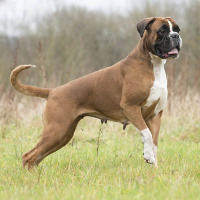
| The Boxer originated in Germany in the 1800s and was used as a guard dog, bull baiter and in dog fighting. They are thought to be descended from the Tibetan Mastiff, a 16th-century fighting dog. Others claim they are European and related to the Dogue de Bordeaux of France. However, most people agree that the Boxer is related to the Bulldogs of the Molossus dog breed, which were used as war dogs by the Romans. These dogs were seen in the art of hunting deer and wild boar as early as the 16th and 17th centuries. The modern Boxer is thought to be descended from Bullenbeissers, Brabanters and Danzigers mixed with Mastiffs and Bulldogs. Their name comes from the way they tend to stand on their hind legs and box with their front legs. In the 1900s, dog fighting was illegal and the Boxer became popular as a police dog, military dog, show dog and pet. In 1904, the breed was recognized by the American Kennel Club, won its first show in 1915 and is the 10th most popular breed in the USA. | ||
 |
||
| Standard of the Boxer |
Appearance of the Dogue de Boxer |
| Because the Boxer and the Dogue de Bordeaux are so similar, their appearance is not too much of a mystery. They are generally large to giant breeds, measuring 58.5 to 66 centimeters in height and weighing around 32.5 to 58 kilos. They have a very short, fine, thin coat that is usually brown, beige or black with white patches on chest, feet and face. Many of these dogs are brachycephalic, which means they have shortened heads and flattened muzzles that make them sensitive to cold and heat. Your vet can tell you if your dog has this problem. |
Temperament of the Dogue de Boxer |
| Although the Dogue de Boxer is a large, fierce-looking dog, it is exceptionally affectionate and family-oriented. However, because they're so strong, you need to make sure you socialize them well to ensure they'll get on well with other pets and children. You should have no trouble training your Boxer Spaniel, but you do need to be vigilant and patient, and not use physical discipline. They are good watchdogs, very brave and big enough to scare off any predator. This breed generally doesn't mind being on its own for a while, as long as it gets enough physical and mental exercise every day. |
Needs and activities of the Dogue de Boxer |
| Boxer Dogs love to run and jump, making them excellent candidates for discipline and agility training. Many people take their Dogue de Boxer hunting with them, and they also love to swim. Hiking, jogging and biking with your dog are also excellent ways to make sure he gets enough exercise. Your Boxer needs at least 60 to 90 minutes of physical activity a day to be healthy. Dogs that don't get enough exercise tend to have behavioral problems such as excessive chewing and barking. If your dog gets on well with other dogs, a trip to the dog park once a week is also an excellent activity. |
Maintenance of the Dogue de Boxer |
| The Dogue de Boxer has a fine, short coat that requires minimal maintenance. Brushing your dog two or three times a week with a soft bristle brush or a smoother brush is usually enough to keep his coat healthy and prevent excessive shedding. We also recommend brushing your dog's teeth with a toothpaste specially designed for dogs a few times a week to prevent periodontal disease. In addition, you should clean their ears with absorbent cotton and check for any redness that may be caused by yeast or bacterial invasion. Finally, trim your dog's nails as needed, or you can have them done by a groomer or your vet. |



 English (United Kingdom)

Comments