
 |
Docker |
|
He is not recognized by the F.C.I. |
Origin |
Germany <> Great Britain <> U.S.A. -> U.S.A. | |
Translation |
Francis Vandersteen | |
This breed is also known as |
Doxie Spaniel
|
A brief presentation of the Docker |
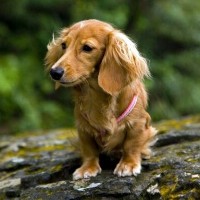
| The Docker is a mix of a Dachshund, an English Cocker Spaniel and an American Cocker Spaniel. They range in size from small to medium, weighing an average of 11 kilos and measuring around 30.5 centimeters. Their coats can be short or medium, smooth or stiff, depending on whether the Dachshund is a short-haired, long-haired or wire-haired variety. This breed is a wonderful, gentle pet that will do anything to please you, but can sometimes be stubborn. Therefore, when training them, you'll need to be diligent and supportive. They are good with other pets and children as long as they are socialized early. The Docker is intelligent, funny, loyal and will make an excellent addition to your family. |
History of the Docker |
| Let's take a look at the 3 pure breeds that make up the Docker, for want of knowing more about this new breed. |
A little of the Dachshund |
||
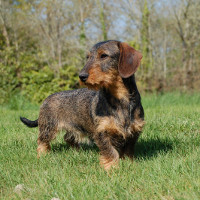
| The Dachshund was originally found in Germany in the 1500s, where it was used to hunt small game. Known for their long torso and short legs, they were considered a cross between the Pinscher, Braque and possibly Basset Hound. This breed was used to hunt badgers, as they could dig into badger holes and catch the prey. Once they had the badger, they used their loud bark to alert the hunter so he could come and get the badger from the hole. In the 1800s, the Dachshund began to become popular as a pet rather than a hunting dog. Queen Victoria's European royal court took a particular interest in the little dog. To make the Dachshund smaller and have other varieties such as the long-haired and wire-haired variety, they were mixed with Terriers and Spaniels. They were accepted into the American Kennel Club in 1885, where they are the 13th most popular dog breed. | ||
 |
||
| Standard of the Dachshund | ||
A little of the English Cocker Spaniel |
||
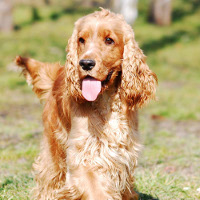
| The English Cocker Spaniel takes its name from the woodcock they flushed out for hunters to shoot. Looking back to their earliest roots, Spaniels were hunting dogs, used to hunt birds and waterfowl. Some Spaniels naturally became more adept at waterfowl and diverged to become Spaniels, while others excelled on land and gave rise to breeds such as the Springer Spaniel and Cocker Spaniel. The English Cocker Spaniel is said to have crossed to America in 1620, aboard the Mayflower. Once again, they were used for hunting. Later, however, selective breeding produced a variant, which is the American Cocker. These dogs were primarily intended for parade and had a slightly different conformation with a more domed head and even longer ears. | ||
 |
||
| Standard of the English Cocker Spaniel | ||
A little of the American Cocker Spaniel |
||
| Spaniels are also generally classified as a type of hunting dog, but they've been helping hunters since long before the invention of the gun. Initially, these dogs were bred to hunt game from deep brush for bowhunters and, in some cases, to retrieve birds from where they had fallen. The first Spaniels were divided into two groups according to where they worked, the Water Spaniels and the Land Spaniels. It was in the 17th century that a distinction was first made between types of land Spaniel, and they began to be classified as Springer or Cocker Spaniel, based entirely on the size of the dog. The larger Spaniels were used to bringing game out for hunting and were therefore called Springers, where the smaller dogs were particularly adept at flushing out woodcock and other such birds for their owners, earning them the name Cocker Spaniel. In 1902, the Cocker Spaniel Club was founded in England. As Cocker Spaniels began to develop in America, they changed considerably, their backs became longer, their heads more domed and their prey considerably smaller. The change was so great that in 1935 a group was formed for those who preferred the traditional look of the English Cocker Spaniel and intended to discourage interbreeding between the original English Cocker Spaniel and the new Americanized version of the Cocker Spaniel. In 1946, the Cocker Spaniels that had developed in America were recognized as a distinct breed, the American Cocker Spaniel. | ||
 |
||
| Standard of the American Cocker Spaniel |
Appearance of the Docker |
| Your Docker's coat will vary according to the variety of Dachshund used in breeding. There is the short-haired variety, the long-haired variety and the wire-haired variety. Docker color can also vary considerably, with colors ranging from tan to black, brown, white, cream and gold. They can be small to medium-sized, measuring around 30.5 centimeters and weighing an average of 11 kilos. They have long bodies, short legs, deep chests, floppy ears, long tails and large feet. The Docker has a friendly, alert expression, with a smile often found on its face. |
Temperament of the Docker |
| The Docker is an excellent pet, loyal and friendly, but may need patience to train and socialize early to get along with other animals and children. They need to be supervised with young children and small pets, as they have the preyiness of the Cocker Spaniel and the vivacity of the Dachshund. Dockers love lots of attention, but they also have an independent streak that makes them want to do things their own way. This can make them a little difficult to train, so you may need to use puppy pads or practice crate training until they're able to get the hang of it. Otherwise, this is a very intelligent, affable breed that learns quickly. |
Needs and activities of the Docker |
| Dockers have a wide range of prey and love to hunt, so they'll enjoy chasing rabbits and squirrels around the yard or park as part of their daily exercise routine. They also like to play fetch, go for walks, go to the dog park and even take a hike in the woods. They're also great at agility training if you like that sort of thing. They need at least 45 to 60 minutes of vigorous activity every day to avoid becoming anxious or bored. If they don't get enough exercise, they can develop behavioral problems. |
Maintenance of the Docker |
| The amount of maintenance your Docker needs depends on their parent breed and the coat they end up with. If their parent breed was a long-haired Dachshund, this, combined with the Cocker Spaniel's fine coat, can create a coat that is easily matted and needs daily care. If this is the case, you may want to trim their fur to make their coat shorter and easier to groom. You need to clean his ears regularly and watch out for mites, rashes, wax build-up and other debris. Trim nails as needed and brush teeth several times a week. |



 English (United Kingdom)

Comments