
 |
Dalmador |
|
He is not recognized by the F.C.I. |
Origin |
Croatia <> Canada -> U.S.A. | |
Translation |
Francis Vandersteen | |
This breed is also known as |
Labradal Retriever
|
A brief presentation of the Dalmador |
| The Dalmador dog is a hybrid breed resulting from the crossing of a purebred Dalmatian and a purebred Labrador Retriever. Variations in appearance, coloration and personality traits can be extensive, even within the same litter. Some dogs will inherit more genes from one parent than the other, so the results can be unexpected. What owners have discovered is that, generally speaking, the Dalmador is a family dog who loves children and other pets. They also love people and are very friendly, which means they're probably not the best watchdog. They will bark when people arrive on the property and probably lick them to death. The Dalmador is an attractive medium to large dog that is easy to train, can be trusted to behave when left alone, and is a passionate companion and affectionate, loving dog. |
History of the Dalmador |
| The Dalmador is said to have originated in the 1980s, when it became popular to mix purebred dogs to create hybrids. While this dog is still building its history for the Dalmador name, its lineage goes back a long way thanks to its parent breeds. So, with such an exceptional lineage behind them, the Dalmador can't help but be a very special dog. |
A little of the Dalmatian |
||
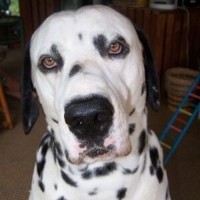
| The origins of Dalmatians are unknown. Spotted dogs traveled with nomadic bands of Roma (Gypsies). The name comes from their stay in Dalmatia, a province of Croatia. These dogs were used as guard dogs in Dalmatia, shepherds, ratiers, retrievers, circus dogs and training dogs. England developed the Dalmatian in the role of trainer, they were used to make their way ahead of the horses and ran alongside the trainer. They guarded the horses and carriage when they were at rest. The Dalmatian took on a new role when it arrived in the United States of America, where they became a fire station dog, running with the horses to the fire, then guarding equipment or even rescuing people. After the fire, they would return to the station and their duty as watchdogs. These dogs are now companion dogs, but many fire stations across the country still have Dalmatians as mascots. | ||
 |
||
| Standard of the Dalmatian |
A little of the Labrador Retriever |
| The Labrador Retriever originated on the island of Newfoundland off the coast of Canada and was used to help local fishermen in the 1700s. The Labrador's heritage is unknown, but may come from cross-breeding the St. John's dog with the Newfoundland dog and other smaller dogs. The Labradors' usefulness and gentle nature were noted, and soon they were imported to England around 1830 for English sport hunters. The breed came close to extinction in 1880, but the Earl of Malmesbury and other breeders are credited with saving the breed. In 1917, the American Kennel Club recognized the Labrador Retriever as a distinct breed. After World War II, the Labrador Retriever became the most popular dog registered with the AKC. Today, loyal Labradors work in drug and explosive detection, search and rescue, therapy and as retrievers for hunters. |
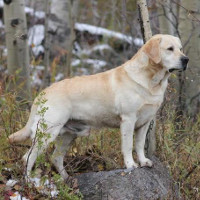 |
| Standard of the Labrador Retriever |
Appearance of the Dalmador |
| The Dalmador will display some of the famous Dalmatian spots. Some coats will have more spots than others, usually in patches on a dark, solid coat. Labrador heritage means that not all coats will be the classic white and black of the Dalmatian. The Dalmador has a strong, muscular, perfectly proportioned body, a deep chest and strong, straight front legs with compact, rounded hind legs. The tail is long and pointed. Their head is slightly rounded at the top and their ears are folded and stretched to the side of their head. Their long snout features a black nose with wide nostrils, and their teeth come together in a scissor bite. Their wide, dark eyes are wide and edged in black, and give the Dalmador an intelligent, expressive expression. |
Temperament of the Dalmador |
| The mix between the Dalmatian and the Labrador Retriever can produce a dog of variable personality, but often the sensitive nature of the first parent is counterbalanced by the friendly, outgoing nature of the Labrador. The Dalmador's high intelligence makes training easy. For the slightly sensitive dog, reward his efforts with praise and an occasional treat. These dogs are active animals who will happily accompany you on a run, run tirelessly alongside your bike and join in any games the family wants to play. They may have a tendency to bark or howl, but proper training will help prevent this from becoming a problem. They love children, but their size and energy can knock a small child over, so it's advisable to supervise play. Dalmador will make good companions for other pets, often having a protective instinct towards them. These dogs make ideal pets and are content to snuggle up with their families, but can get too big for your lap even though they'll always try to adapt. They are affectionate, caring and good-natured dogs that make ideal family pets. |
Needs and activities of the Dalmador |
| The Dalmador is an active dog and will love to accompany you for a walk, hike in the countryside, run alongside your bike or simply race along a beach while you watch. Ideally, these dogs should be walked daily, or better still, twice a day to satisfy their need for exercise. A bored dog without outings and exercise can become a vicious dog, getting into things he shouldn't and barking at any movement along your street. In summer, trips to the beach or river are perfect for your Dalmador. They can cool off and get some exercise at the same time. Once they're tired, they'll simply want to curl up and doze beside you. They make devoted, affectionate pets that deserve extra care. |
Maintenance of the Dalmador |
| Dalmador can be quite soft, so it takes a little extra effort to groom them and remove the hair before covering the house. Often, the coat explodes with the onset of spring and handfuls of hair can be pulled out. A firm bristle brush used three times a week will help maintain its coat. Bathing the Dalmador will help eliminate loose hair and prevent doggy odors. Just be sure to use a shampoo designed for dogs to avoid any allergic reactions. Your Dalmador will benefit from all your attention, and if you start when he's very young, it will become a precious moment of complicity. Don't forget to check inside their ears as infections can become a problem; wiping the ear will help remove debris. Their nails may need trimming unless they're active enough to wear them out themselves. Ask your dog groomer to show you how to do it properly if you've never done it before, to avoid cutting too low and hurting your dog. And finally, if you brush your dog's teeth regularly, you can prevent breath and any tooth and gum problems. |



 English (United Kingdom)

Comments