
 |
Coton Chin |
|
He is not recognized by the F.C.I. |
Origin |
Madagascar <> China -> U.S.A. | |
Translation |
Francis Vandersteen |
A brief presentation of the Coton Chin |
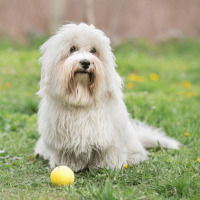
| The Coton Chin is a cross between a Japanese Spaniel and a Coton de Tulear and as such will adopt the appearance and characteristics of the parent breeds. Coton is the French word for Coton de Tulear and describes the coat of the parent breed, which is generally dense and long, although it can be of medium length. These dogs can be white or black and can be tricolored. They are intelligent, sociable dogs that get on well with children, unlike the Japanese Spaniel, which doesn't like them. Cotons de Tuléar don't need much exercise, but are playful and love to go for walks. They don't shed much, but need to be trimmed quite often. Japanese Spaniels, on the other hand, have fine, silky coats that can be black and white, red and white or black and white with tan spots. They also need fairly regular grooming, although they don't need trimming. |
History of the Coton Chin |
| Not much is known about the Coton Chin, which is a cross between the Coton de Tulear and the Japanese Spaniel. |
A little of the Coton de Tuléar |
||
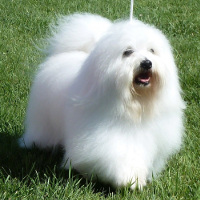
| Even the history of the Coton de Tuléar, a member of the Bichon family, is poorly documented, thought to be the descendants of dogs who survived a shipwreck off the coast of Madagascar. The Merina, Madagascar's ruling tribal monarchy, kept them as royal court pets in the 17th century. It wasn't until the 1970s that they were brought to France and North America, where they became very popular. The breed was recognized by the American Kennel Club in 2014. | ||
 |
||
| Standard of the Coton de Tuléar | ||
A little of the Japanese Spaniel |
||
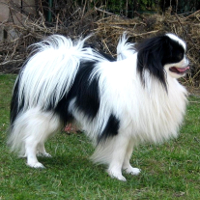
| The Japanese Spaniel was also popular with the royal family, whose origins lie in China, not Japan. Believed to have originated in the Chinese imperial palace, they were highly prized and often given as gifts. Some historians believe that the Pekingese, which also has its origins in China, was developed from the Japanese Spaniel, also known as the Japanese Chin. In Japan, dogs were restricted to those of royal blood. There is evidence that the first Japanese Spaniels were given as gifts by the Emperor of Japan to an American naval officer, Commodore Matthew Perry, in 1853, when he sailed into the port of Uraga near Edo, now Tokyo, and introduced Japan to international trade. He was apparently given seven dogs, two of which survived to return to the USA, where some of the owners included President Franklin Pierce, then Secretary of War Jefferson Davis, and Perry's daughter Caroline Perry Belmont. They were officially recognized by the American Kennel Club in 1888. | ||
 |
||
| Standard of the Japanese Spaniel |
Appearance of the Coton Chin |
| The Coton Chin is a small dog and a cross between a Japanese Spaniel and a Coton de Tulear. They will adopt many characteristics of the parent breeds, so colors may include black, white, red and white, or black and white with tan points. If the dog is inspired by the Coton du Tulear, its coat will be similar to cotton, but could also have fine, silky hair on the Japanese Spaniel side. Both parent breeds need fairly regular grooming, with the Coton de Tuléar also requiring trimming. Both parent breeds are good for new pet owners, so your pet should be too. |
Temperament of the Coton Chin |
| Both parent breeds are loving, intelligent dogs that make excellent pets. The Coton de Tuléar is best suited to families with children, but early socialization can make all the difference. Both parent breeds get on well with other dogs, although because of their small size, it's important to ensure that large dogs don't hurt them. Neither breed needs a huge amount of exercise, but enjoys walks and play sessions. The Japanese Spaniel can suffer from separation anxiety if left alone, so is best suited to people who can devote a lot of time to it. Your pet is likely to be suitable for new dog owners. The Coton de Tulear is likely to be easier to train and more responsive to commands, but the Japanese Spaniel can be trained if you're prepared to put in the time. Both respond better to positive reinforcement and rewards. |
Needs and activities of the Coton Chin |
| Your Coton Chin won't need much exercise to stay happy and healthy, but this will depend on the parent breed he chooses. Both parent breeds are lively dogs, but don't need much exercise to keep them happy and fit. Both enjoy daily walks and love to play, but are happy to do so indoors or outdoors. They're good for owners who aren't up to strenuous activities and are often home for company. Both will adapt well to apartment living, but need to be taken out daily for exercise. The Japanese Spaniel tolerates cold more than heat, but doesn't like extreme temperatures either. |
Maintenance of the Coton Chin |
| The Coton de Tuléar is hypoallergenic, but the Japanese Spaniel is not, so it depends on who your Coton Chin takes after the most. Grooming for both parent breeds isn't too difficult, although the Coton de Tuléar, also known as the "Chien Royal de Madagascar", which generally has a long, white, dry, cotton-like coat, will need to be brushed fairly regularly to continue to look good, well and to stay healthy. They also need to be trimmed and washed fairly often. The Japanese Spaniel needs less grooming, brushing once a week should suffice and he doesn't need trimming. Try to brush your dog's teeth every day to avoid any dental problems, and check his ears for dirt. If necessary, wipe them gently with damp absorbent cotton. Nails should also be checked to see if they need trimming. |



 English (United Kingdom)

Comments