
 |
Cosheltie |
|
He is not recognized by the F.C.I. |
Origin |
Great Britain -> U.S.A. | |
Translation |
Francis Vandersteen |
A brief presentation of the Cosheltie |
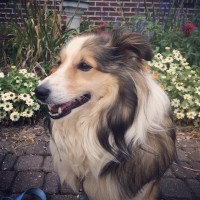
| The Cosheltie is a beautiful medium to large-sized dog that is a cross between the longhaired Collie and the Shetland Sheepdog. They have a long, rough, straight, thick coat that can be any color, but is usually a mixture of black, brown, white, red, beige, red or merle. The Cosheltie has a large, pointed muzzle, erect, pointed ears, well-proportioned legs, a long, hairy tail and a curious expression. This breed is highly intelligent and eager to please, so they're easy to train and are known for their agility and discipline training skills. They make good pets and love other animals, but it's in their blood to herd, so they may try to herd other animals and even young children. |
History of the Cosheltie |
| The Cosheltie is too recent to have a history, so the histories of the parent breeds are used for this purpose. |
A little of the Collie Rough |
||
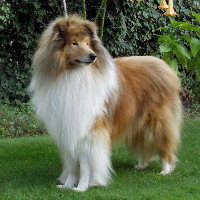
| The Collie has two varieties, which are long-haired and smooth-haired. The long-haired Collie is the more popular and common variety and is the breed of the famous dog from the TV show Lassie. The breed is thought to have originated in the 1800s as a descendant of sheepdogs from Wales and Scotland. The Scottish variety was known as the larger, more aggressive breed they used to herd upland sheep, while the Welsh variety was smaller and friendlier. The Welsh Collie was used to breed goats as well as sheep. These were bred with different varieties of sheepdog and produced both varieties. The first Collies appeared at dog shows in 1860 in Birmingham, England, as Scottish sheepdogs. In 1879, the Collie was imported to America and registered with the American Kennel Club (AKC) in 1885, where it is the 37th most popular dog breed in the USA. The Collie Club of America was formed in 1886 and was one of the oldest specialized dog clubs in the USA. | ||
 |
||
| Standard of the Collie Rough | ||
A little of the Shetland Sheepdog |
||
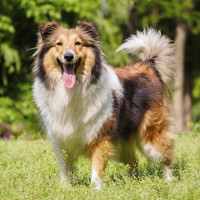
| The Shetland Sheepdog is also known as the Sheltie and is actually related to the Collie. The breed was thought to be descended from the Scottish Collie and King Charles Spaniel, which is why it is so much smaller than the Collie. In the 19th century, these dogs were commonly used to herd small Shetland sheep, hence the name Shetland Sheepdog. The breed was registered with the AKC in 1911 and is the 24th most popular dog breed in the USA. | ||
 |
||
| Standard of the Shetland Sheepdog |
Appearance of the Cosheltie |
| The Cosheltie is a medium-sized dog with a medium to long coat that is rough, thick and generally tricolored. The most common colors are black, brown and white, brown, white and tan, gold, brown and black, red, black and white, and blue merle. This breed can measure from 33 to 56 centimeters in height and can weigh from 8 to 16.5 kilos or more. They have a long muzzle, erect, pointed ears and a long, hairy tail. The Cosheltie actually resembles a medium-sized Shetland Sheepdog or a small, long-haired Collie, as they are both descended from the same Collie and Sheepdog breed. |
Temperament of the Cosheltie |
| Your Cosheltie loves to run and breeding is in his blood, so he'll try to gather everything he can. You may even find him trying to babysit young children, so don't leave them unsupervised. They're eager to please you and will do their best to learn what you're trying to teach them. They also share the Collie's protective nature, so they make excellent watchdogs and bark loudly when they want your attention. They are highly intelligent and may even seem to understand you more than you think. The longhaired Collie parent breed was the star of an old TV show called Lassie, where the dog was able to communicate with people and rescue them from all sorts of situations. |
Needs and activities of the Cosheltie |
| The Cosheltie needs at least 60 to 90 minutes of high-intensity exercise every day to keep it from getting bored and out of shape. This breed loves breeding, but is also excellent for agility and discipline competitions, frisbee and flyball. Other activities they can enjoy are swimming, jogging, hiking and the dog park. If you have a fenced-in yard, letting her run around the yard for a few hours a day is acceptable, but she also needs to spend plenty of time with her family to avoid getting bored. Behavioral problems can be avoided by making sure your dog gets plenty of exercise and attention every day. |
Maintenance of the Cosheltie |
| Because of the Cosheltie's long, rough coat, you need to brush them carefully and regularly. The best way to brush them is with a long, stiff bristle brush and a metal comb. Many owners take their Cosheltie to a professional every four to six months to make brushing easier. In addition, you should clean their ears at least once a week and look for mites, wax build-up and other debris to avoid irritation and infection. We recommend trimming nails as needed and brushing teeth a few times a week to prevent dental problems. |



 English (United Kingdom)

Comments