
 |
Cockerbull |
|
He is not recognized by the F.C.I. |
Origin |
Great Britain -> U.S.A. | |
Translation |
Francis Vandersteen |
A brief presentation of the Cockerbull |
| The Cockerbull is a cross between the English Cocker Spaniel and the Bulldog. While the English Cocker Spaniel is a high-maintenance breed, the Bulldog is not, so the Cockerbull will need a lot of grooming or minimal grooming, depending on which of the parent breed's genes is most important. Both dogs are loyal and easy-going, perfect with children of all ages and fairly tolerant of other pets. The only thing to bear in mind is that while the English Cocker Spaniel is easy to train, the Bulldog is not, so be prepared to work regularly and often on training. This is a small to medium-sized breed that seems to retain the body shape of the English Cocker Spaniel, while following the coloring of the Bulldog. The Cockerbull doesn't bark often and makes an excellent pet for households of all sizes. |
History of the Cockerbull |
| Being a new and rather unusual combination, there isn't too much information specific to the Cockerbull. Fortunately, we have plenty of information on the parent breeds so we can get a decent idea of what this dog looks like. When you combine these two breeds, you get a loving, gentle and cuddly dog breed that's loyal to its family and relatively easy to train. The Cockerbull is perfect with children and other pets, and does well in any size of home. |
A little of the English Cocker Spaniel |
||
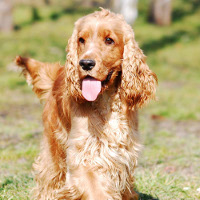
| The English Cocker Spaniel is so nicknamed to distinguish it from its close relative, the American Cocker Spaniel. This breed of dog was originally used as a hunting companion who liked to flush game from bushes and retrieve it on command. Its name, the Cocker, comes from a particular ability to hunt a type of wading bird called the woodcock. The English Cocker Spaniel is a small breed, the smallest in the Sporting Group to be exact, and can be recognized by its beautiful silky coat, intelligent brown eyes and long, velvety ears. The English Cocker Spaniel became extremely popular after being featured in Disney's animated film "Lady and the Tramp" in 1955, which was unfortunately not very good for the breed. This popularity led to reckless breeding and allowed some negative traits to emerge in subsequent litters. Despite this fact, if you find a reputable breeder, you can get a wonderful, loving and beautiful dog with the sweetest disposition you'll ever see. | ||
 |
||
| Standard of the English Cocker Spaniel | ||
A little of the English Bulldog |
||
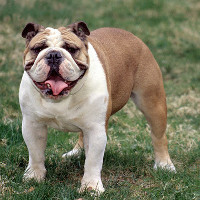
| The Bulldog is very popular in America, but it didn't make its way here until 1886. At first, it was used in England for a rather difficult sport. The Bulldog, known for its tenacious personality and strong jaw, was bred this way for a reason; the original Bulldogs were used in a sport called bullbaiting, where they were made to grab bulls by the nose and hold them firmly. Those days are over, and the Bulldog we love today is gentle and perfectly happy to nap on the sofa. They make excellent companion dogs, but that stubborn streak can still show through sometimes, especially when it comes to training. The Bulldog was recognized by the American Kennel Club in 1886 and is now used for shows, pets and even the mascot of the U.S. Marine Corps. | ||
 |
||
| Standard of the English Bulldog |
Appearance of the Cockerbull |
| The Cockerbull, as a hybrid, will have different appearances depending on the genetics of the stronger parent breed. However, the typical look of this breed tends to follow somewhat the lines of an English Cocker Spaniel body, with a longer muzzle, shorter loose ears and dark intelligent eyes. The coat is short and can have a soft texture like the English Cocker Spaniel or a short one like the Bulldog. The strong characteristics of the Bulldog are reflected in the breed, and although the Cockerbull is not a big dog, it stands firm and strong. Coat colors can vary from tan with black and white markings to white with a black nose. Females are slightly smaller than males and have a distinct feminine delicacy. The tail is generally short and the eyes are a very dark brown. This breed will shed seasonally, but grooming is relatively easy. Because of their shorter coats, Cockerbulls prefer warmer temperatures and can easily get cold. |
Temperament of the Cockerbull |
| Because the Bulldog is so tenacious, be prepared for a small dog with a big personality. Fortunately, both the Bulldog and the English Cocker Spaniel are very affectionate and gentle dogs, who do very well with families of all kinds. While the English Cocker Spaniel is a little more energetic thanks to its hunting terrain, the Bulldog balances this well with a more relaxed disposition. A long nap on the sofa is the perfect afternoon for this breed, and when it comes to the Cockerbull, you can expect him to love cuddling and playing whenever he feels like it. Cockerbulls don't tend to bark often, and because they consume less energy, they'll do just fine in apartments and small houses. Just bear in mind that training, while easy for most, can be a little frustrating with the Cockerbull. This is just because the Bulldog has a stubborn side that can shine through, but with patience and an early start to training, you'll end up with an excellent dog who respects you and knows how to behave. Early socialization is also important to ensure that your dog is at ease with strangers and other animals. |
Needs and activities of the Cockerbull |
| The Cockerbull won't need too much physical activity due to the fact that both parent breeds are relatively laid-back, the Bulldog more so than the English Cocker Spaniel. This means that a few minutes of intense exercise a day is more than enough to keep your Cockerbull happy and well behaved. Some activities that would work best to tire out your puppy would be a walk, playing in a park, working out or letting off steam in the yard. Training is a great way to tire your Cockerbull both mentally and physically, also helping to improve his manners and general behavior. Although not a hyperactive breed, boredom can still lead to destruction, so it's best to make sure your Cockerbull is active for 30-45 minutes every day. |
Maintenance of the Cockerbull |
| While the Bulldog is known for its drooling and the English Cocker Spaniel is known for its high maintenance, the Cockerbull is the best of both worlds in these categories. Because it doesn't have the same squashed face as the Bulldog, drooling isn't usually a problem. What's more, his coat won't be as long and tedious to groom as the English Cocker Spaniel. That said, the Cockerbull will tend to shed and will need to be brushed a few times a week with a rubbery curry brush and comb. This will remove any dirt and loose hair that may be on the body and limit shedding. In addition to this, your dog should receive a few baths a month with a mild shampoo to keep his coat nice and clean and avoid any doggy smell. Be sure to talk to your vet about a shampoo that will work best for your Cockerbull, as Bulldogs and English Cocker Spaniels have sensitive skin that is prone to allergic flare-ups. In addition to brushing and bathing, be sure to dry your dog's ears thoroughly after bathing or swimming to avoid infection from residual moisture, and trim your dog's nails every few weeks or so to keep feet healthy. |



 English (United Kingdom)

Comments