
 |
Cockeranian |
|
He is not recognized by the F.C.I. |
Origin |
Great Britain <> Germany -> U.S.A. | |
Translation |
Francis Vandersteen | |
This breed is also known as |
Cocker-Pom |
A brief presentation of the Cockeranian |
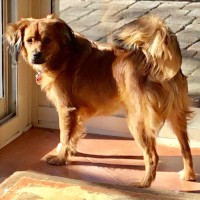
| The Cockeranian is a cross between the English Cocker Spaniel and the Spitz Toy / Pomeranian. A beautiful, high-maintenance hybrid breed that's a mix of good and bad traits, it's a high-energy companion dog that's completely unforgettable. As a small to medium-sized breed, the Cockeranian is a perfect breed to have in any size household, however, they have a lot of energy, so a garden is highly recommended to help burn off some of that energy. Both the English Cocker Spaniel and the Spitz Toy / Pomeranian are beautiful dogs that require a lot of maintenance to keep their fur fabulous, so be prepared to groom often with this breed. No matter where you live or who you live with, the Cockeranian will suit any family perfectly. Don't forget that they can have a tendency to bark and can develop bad behaviors if not properly trained and socialized. All in all, if you're looking for a cuddly companion with a bit of spunk, the Cockeranian may be the breed for you. |
History of the Cockeranian |
| The Cockeranian is a beautiful hybrid breed, and while we don't know much about its origins, we do have a lot of information about its parent breeds: the Spitz Toy / Pomeranian and the English Cocker Spaniel. |
A little of the English Cocker Spaniel |
||
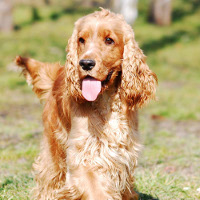
| The English Cocker Spaniel is so nicknamed to distinguish it from its close relative, the American Cocker Spaniel. This breed of dog was originally used as a hunting companion who liked to flush game from bushes and retrieve it on command. Its name, the Cocker, comes from a particular ability to hunt a type of wading bird called the woodcock. The English Cocker Spaniel is a small breed, the smallest in the Sporting Group to be exact, and can be recognized by its beautiful silky coat, intelligent brown eyes and long, velvety ears. The English Cocker Spaniel became extremely popular after being featured in Disney's animated film "Lady and the Tramp" in 1955, which was unfortunately not very good for the breed. This popularity led to reckless breeding and allowed some negative traits to emerge in subsequent litters. Despite this fact, if you find a reputable breeder, you can get a wonderful, loving and beautiful dog with the sweetest disposition you'll ever see. | ||
 |
||
| Standard of the English Cocker Spaniel | ||
A little of the German Toy Spitz / Pomeranian |
||
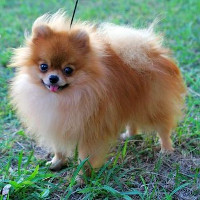
| The Spitz Toy / Pomeranian is a downy little ball of pure enthusiasm that was first imagined on the coast of the Baltic Sea, near a region of Northern Europe known as Pomerania, from which they take their name. The original Pomeranians were actually quite large, dwarfing the small, popular Poms we have today. The breed became very popular with Britain's royal family after Queen Victoria brought one home from Florence, Italy. After that, it didn't take long for their popularity to soar, and eventually the Spitz Toy / Pomeranian made its way to the USA in 1911. They are used for show dogs and companions and are available in a wide variety of colors such as black, white, chocolate, cinnamon, brown, orange, red and cream. | ||
 |
||
| Standard of the German Toy Spitz / Pomeranian |
Appearance of the Cockeranian |
| The Cockeranian is an interesting mix of both the English Cocker Spaniel and the Spitz Toy / Pomeranian. As both parent breeds are beautiful dogs, there's no doubt that the Cockeranian would have a unique beauty of its own. As a hybrid breed, the Cockeranian's appearance can vary considerably, even within the same litter. Most often, it will have a long, slender muzzle, attractive dark eyes and medium-length ears, which can appear either more erect like the Spitz Toy / Pomeranian, or long and loose like the English Cocker Spaniel. A small breed, the Cockeranian has a double-coated body. The undercoat is soft and feathery, while the coat can be smooth and slightly curly. The tail tends to curl over the back and has that characteristic Spitz Toy / Pomeranian look. |
Temperament of the Cockeranian |
| If you're looking for an excellent companion dog, the Cockeranian may be perfect for you. It's a playful, adorable and easy-to-train breed that's happiest at your side or in your arms. Despite these wonderful traits, Cockeranians can also be a little stubborn and very protective of their owners at times. They can also be extremely barky if left alone in their home, as Cockeranians don't handle separation very well. Despite this fact, if this breed is properly socialized and trained at a young age, these negative traits can easily be eclipsed by the good ones. The Cockeranian is perfectly suited to all household sizes and will adapt well to strangers and other animals if properly socialized. However, when it comes to children, an older age would be preferable. This breed is very loyal and will love you unconditionally, just make sure you stick to training so that he can prove to be a true friend and companion rather than a troublemaker. |
Needs and activities of the Cockeranian |
| Because the Cockeranian has a parent who is a hunter and one who is quite playful, it will need a moderate amount of exercise every day. Activities several times a day such as a long walk, playing in the yard, chasing toys around the house and working out are excellent ways to tire out your little friend. Early training and socialization are very important to ensure that your Cockeranian knows how to behave with other animals and people, as well as to provide a means of productive energy release. This breed is fairly easy to train, and training sessions are both physically and mentally stimulating. Although Cockeranians can sometimes be a little stubborn, patience and a firm but gentle hand will be enough to encourage them forward. Despite their playful energy, Cockeranians are also very cuddly and adorable, and will do well in any size of home. If it's too hot or cold outside for outdoor activities, you can always wear your Cockeranian out with short periods of play in the house. |
Maintenance of the Cockeranian |
| The Cockeranian is a very demanding breed of dog. This is because both its parent breeds undergo meticulous weekly grooming to ensure that their coats remain healthy and fabulous. To take good care of your Cockeranian's coat, you'll need to brush it carefully at least a few times a week to remove any knots or twists that may appear on the ears, belly, tail and legs. We recommend that you visit a professional every 6 to 8 weeks to have your Cockeranian groomed, so that any trimming that may be necessary can be touched up. In addition to brushing, this breed needs to be washed at least twice a month with a mild shampoo due to its skin allergies. If you're not comfortable with this, a professional groomer would be a good option. The groomer can also trim your dog's nails every few weeks if you feel uncomfortable doing it yourself. The Cockeranian sheds seasonally, so be prepared for this and have a good vacuum cleaner handy, regular grooming will help keep shedding manageable. This breed does best in warmer temperatures and tends to get cold quite quickly despite its double coat. |



 English (United Kingdom)

Comments