
 |
Chussel |
|
He is not recognized by the F.C.I. |
Origin |
Mexico <> Belgium -> U.S.A. | |
Translation |
Francis Vandersteen | |
This breed is also known as |
Chiffon
|
A brief presentation of the Chussel |
| Full of energy, playful and authoritative best describes this small hybrid breed known as the Chussel. The Chussel hybrid is a cross between the Chihuahua and the Brussels Griffon. This little toy dog often appears to have a stiff coat, a short muzzle with a bit of overbite, and is said to bear a slight resemblance to the famous Ewok from Star Wars. Although low-maintenance in terms of grooming, they are best suited to committed owners, because despite their size, they like to seek adventure. |
History of the Chussel |
| The Chussel is one of many newly christened designer breeds to have been created over the past 15 years. Opinions are divided about them; there are, after all, many mixed breeds already looking for homes in rescue shelters. But most breeders of these dogs maintain that there is a difference between accidental pairings and deliberate breeding using carefully selected bloodlines. The problem is finding breeders who take this kind of care, rather than funding the many puppy mills and bad breeders who have used this trend to their advantage. Chussels can be like either parent in appearance or temperament, and there can be differences even within the same litter. As we have no known origin for them, we look to the parents for a better understanding. |
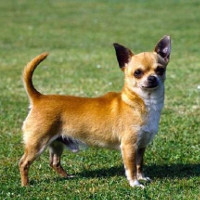
A little of the Chihuahua |
||
| The Chihuahua is an ancient breed that probably originated in 9th-century Mexico, although there is speculation that these little dogs may have originated in parts of Europe, Malta or China. There is little documented evidence of their exact origin, although it is known that the Aztec civilization cherished these dogs like kings. Called the Techichi, they were an important part of the Toltec religion. Considered to have the gift of healing, they were placed on the beds of the sick and accompanied the dead into the afterlife. In 1850, the Chihuahua made its way to the United States, where it gained in popularity and was recognized by the AKC in 1904. | ||
 |
||
| Standard of the Chihuahua | ||
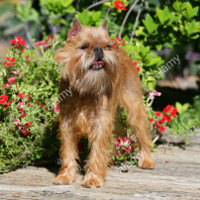
A little of the Brussels Griffon |
||
| The Brussels Griffon is a small breed of Terrier lineage said to have originated in 19th century Belgium. These small Terriers were originally kept in stables and used to catch vermin such as rats, mice and foxes. Later developed by crossing them with the English Toy Spaniel, Affenpinscher and even the small Yorkshire Terrier, this robust dog was fearless and intelligent. Around 1899, the Brussels Griffon made its way to the United States, where it was presented to the Westminster Kennel Club. Eventually, due to growing popularity, he was added to the roster of the American Kennel Club. This took place in 1910, with an addition to the Toy Group. | ||
 |
||
| Standard of the Brussels Griffon |
Appearance of the Chussel |
| The Chussel is a small dog that can weigh from 2.5 to 5.5 kilos on average and can be between 18 and 23 centimeters in height. These hybrids tend to have a broad face shape if they resemble the Brussels Griffon parent, or the face may be slightly rounded as seen in the Chihuahua. Either face shape will sport a short muzzle with a bit of underbite, a feature common to the Griffon Bruxellois, possibly with a long-furred bearded chin that can look quite endearing when properly trimmed. His nose will be perky and dark. His alert expression is due to his round brown eyes, which could have the typical Brussels Griffon look. Chihuahua-type ears can stand upright and be quite large for the size of the head. Other Chussel hybrids will have ears more proportionate to the head. It's difficult to determine the exact appearance of a hybrid due to the lack of breed standards, but it's certain that the Chussel's body is generally sturdy and well-built. The coat tends to be stiff and slightly rough, with lots of feathering and feathering on the face, especially if the longhaired Chihuahua is part of the mix, as opposed to the shorthair. |
Temperament of the Chussel |
| The Chussel is a playful, energetic dog that can have an authoritarian attitude. It can be stubborn and dominant and, as a result, can be difficult to train. However, with proper training and socialization, the Chussel can be an excellent companion for families with other pets and children. Around strangers, Chussels can be cautious, they can be really scared of strangers and new places, however, some Chussels can be friendlier when meeting people they don't know. Taking your hybrid to obedience training will give him the opportunity to practice his social skills, and will give him confidence when meeting other people in unfamiliar surroundings. He likes to play the role of watchdog, so he may bark when someone comes to the door. |
Needs and activities of the Chussel |
| The Chussel loves to walk. This activity can be the highlight of his day. Taking him out into the neighborhood will allow him to stretch his little legs and, at the same time, learn to interact with people and the dog who lives next door. He won't mind several short walks a day. Obedience classes are a good way for him to burn off energy, and you could even give him a chance at agility or flyball. He can adapt very well to an apartment and will also thrive in a home with a yard he can explore. Just make sure you keep an eye on him when you're outside, he may decide to sneak under the fence in search of a chase or adventure. |
Maintenance of the Chussel |
| Chussels are relatively low-maintenance dogs, requiring very little grooming if their fur is short, and can be brushed with a smoother brush a few times a month. If the coat is long due to a long-haired Chihuahua influence, then a pin brush is the best choice once a week. They should only be bathed when necessary, they're not known to be smelly at all. Because they are a small hybrid, they can be prone to teething problems that can lead to early decay and tooth loss. For this reason, teeth should be brushed several times a week. Check the ears every few weeks to make sure they're clean and trim the nails, which can be about twice a month or less. |



 English (United Kingdom)

Comments