 |
Chuvasz |
|
He is not recognized by the F.C.I. |
Origin |
China <> Hungary -> U.S.A. | |
Translation |
Francis Vandersteen | |
This breed is also known as |
Ku-Chow |
A brief presentation of the Chuvasz |
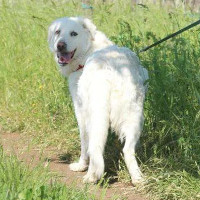
| The Chuvasz is a cross between a Chow Chow and a Kuvasz. This breed is independent, reserved and protective. However, with proper socialization, the Chuvasz can be a loyal but stubborn pet. Early training is therefore particularly important for Chuvasz. This breed is relatively gentle, but still requires moderate exercise to stay healthy. They have an average life expectancy of 8 to 12 years, weigh 27 to 41 kilos and stand 53 to 63.5 centimeters tall. Chuvasz come in many color variations, including white, black, blue, cinnamon, cream and red. The exact date of origin of this breed is unknown. As Chuvasz are relatively new, they cannot currently be registered with the American Kennel Club. |
History of the Chuvasz |
| The name Chuvasz is a combination of the names of its two parent breeds: Chow Chow and Kuvasz. It's only recently that the combination of these two breeds has been widely recognized. However, given the long history of the parent breeds, it's possible that Chuvasz were bred randomly over time. |
A little of the Chow Chow |
||
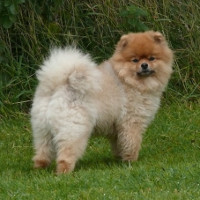
| The Chow Chow originated in China and has a long and controversial history. Nevertheless, the American Kennel Club claims that the Chow Chow is a breed 2,000 years old or more. A popular theory is that Chow Chows originated in Siberia as a cross between Tibetan Mastiffs and Samoyeds. In any case, Chow Chows have been used as temple guardians and hunting companions throughout Chinese history. The breed was also, unfortunately, used for food and clothing at certain times. Chow Chows were imported to Europe, notably England, from the 1880s and became popular when Queen Victoria took an interest in the breed. The breed was first shown in the U.S.A. in 1890, and recognition by the AKC followed shortly afterwards, in 1903. | ||
 |
||
| Standard of the Chow Chow |
A little of the Kuvasz |
| The Kuvasz is also thought to have originated in Tibet. However, the breed migrated through Asia and Europe, perhaps with refugees from the Mongol invasions around 1200 BC, to Hungary where it was developed into the dog we know today. In Hungary, Kuvasz were used as hunting, herding and guard dogs due to their large size. In fact, its name is derived from the Turkish word "kuwasz", meaning "protector". The Kuvasz became the preferred breed of Hungary's royal and elite classes in the 15th century, and its popularity subsequently spread throughout Europe. Unfortunately, its popularity declined dramatically in the 20th century, until it finally disappeared. Determined breeders strove to revive the Kuvasz population in the early 1900s, and the AKC recognized the breed in 1935. |
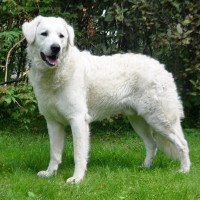 |
| Standard of the Kuvasz |
Appearance of the Chuvasz |
| A Chuvasz is a large dog that resembles a stockier Kuvasz with some Chow Chow facial features. Its average weight is 27 to 41 kilos and its average height is 53 to 63.5 centimeters. Their medium-length, soft, thick, double-coated coat comes in many colors, including white, black, blue, cinnamon, cream and red. Chuvasz also have a soft, woolly undercoat. The breed is robust and muscular, with a build somewhere between that of the Chow Chow and the elongated torso of the Kuvasz. It has a large head and the muzzle is slightly shorter than that of a purebred Kuvasz. Chuvasz that take after their Chow Chow parent may have a few wrinkles and furrows in the eyebrows. The Chuvasz has small, hanging ears, a short to medium feathered tail and round, compact, well-cushioned paws. |
Temperament of the Chuvasz |
| The Chuvasz is a stoic, intelligent dog. They are not overly attentive or playful with people, but they can be fiercely loyal to their masters, as well as gentle and patient with other family members. Although they love affection, Chuvasz don't always reciprocate. Chuvasz are generally suspicious of strangers and can even be aggressive with other dogs. For this reason, it's important to supervise Chuvasz when they encounter other animals and strangers. Similarly, Chuvasz get on better with adults and older children. In addition, this breed's intelligence makes it stubborn and relatively difficult to train. Owners can combat this undesirable trait with early and assiduous obedience training. Chuvasz bark from time to time, but are known to be rather calm in general. On the whole, this breed is a modern-day watchdog: discreet and aloof at rest, but fierce and aggressive when alerted. |
Needs and activities of the Chuvasz |
| The Chuvasz is rather active and needs regular but moderate exercise, especially as the breed has a high potential for weight gain. A daily walk and/or play session with the owners or other dogs, if the Chuvasz is friendly with other animals, will suffice. Their modest exercise requirements make them suitable for any environment, urban, suburban or rural. Chuvasz have a thick double coat. As such, they prefer to be outdoors in cool climates and should never be exercised in hot weather. This breed is relatively gentle, so it will appreciate being surrounded by family members inside the house as much as it will enjoy being outdoors. |
Maintenance of the Chuvasz |
| Chuvasz are not hypoallergenic, making them unsuitable for owners of dogs with allergies. They shed a lot, but daily brushing will reduce shedding, prevent tangles and make the coat softer and cleaner. Chuvasz should be bathed monthly, and owners should take particular care to clean any skin folds around the face or eyebrow area to avoid infection. If the coat is longer around the eyes and feet, clipping is recommended. Like all dog breeds, Chuvasz should have their teeth brushed daily and their nails trimmed once or twice a month to prevent nail breakage or cracking. |



 English (United Kingdom)

Comments