 |
Cairnese |
|
He is not recognized by the F.C.I. |
Origin |
Great Britain <> Western Mediterranean Basin -> U.S.A. | |
Translation |
Francis Vandersteen |
A brief presentation of the Cairnese |
| The Cairnese is a hybrid of two small breeds, the Cairn Terrier and the Bichon Havanais. The Bichon Havanais is a rare breed developed in Cuba before the Cuban revolution in 1959. The Cairn Terrier is an earth dog and vermin hunter, while the Bichon Havanais is a companion or Bichon family dog. Both parents are intelligent, a trait passed on to the Cairnese. The Cairnese is an affectionate family companion with a cheerful disposition, and the Cairnese reflects much of the Bichon Havanais parent in its physiognomy. |
History of the Cairnese |
| The Cairnese is a hybrid of the Cairn Terrier and the Bichon Havanais. The hybrid is a new dog and has no history outside its parent breeds, but hybrid breeders suggest that the two parents have been deliberately crossed since the 1990s. At present, there is little information on the mix and owners should review the history and traits of the parent breeds to better understand the possible dispositions and traits of the Cairnese. |
A little of the Cairn Terrier |
||
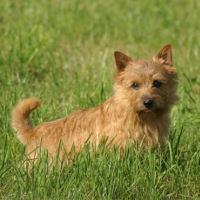
| The Cairn is an ancient breed of Scotch Terrier that was only developed as a separate breed in the 19th century and is distinguished from its other Scotch Terrier brethren by its coat color. The Cairn Terrier's ancestor, the Scotch Terrier, was first described in 55 BC by the Romans, who identified the small dogs as agile hunters who went to ground after their quarry. The Romans called these dogs Terrarii, which is Latin for earth workers. For several centuries, the Terrier group lived and thrived as land dogs in Scotland and England, also making their way to France and parts of Germany. By the 1900s, the Cairn Terrier was firmly established as the small wire-haired Terrier of the Skye group in various colors, accepting white, which was designated for its cousin breed, the West Highland Terrier. The Cairn is often confused with the Scottish Terrier, but the Scottie has a more diverse genetic make-up, having a large gene pool history while the Cairn Terrier was restricted to the Isle of Skye. The Cairn takes its name from the stone monuments of the same name that the little Terrier was known to hunt. | ||
 |
||
| Standard of the Cairn Terrier | ||
A little of the Havanese Bichon |
||
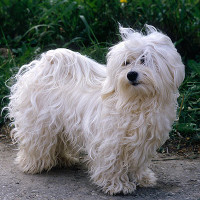
| The Havanese Bichon is a rare breed developed in Cuba. Bichon-type dogs were brought to the Cuban islands by Spanish settlers in the 15th century and developed over hundreds of years, isolated in Cuba. By the mid-1900s, the breed was popular among Cuban aristocrats and attracted the attention of Europeans, who imported the breed. The Cuban revolution threatened the breed with extinction, and all modern-day Havanese living outside Cuba can be attributed to just 11 separate dogs. The American Kennel Club officially recognized the Havanese Bichon in 1996. | ||
 |
||
| Standard of the Havanese Bichon |
Appearance of the Cairnese |
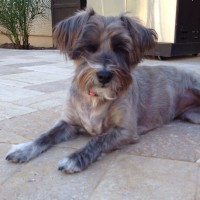
| The Cairnese is a small hybrid between the Cairn Terrier and the Havanese. Your Cairnese will measure between 20 and 33 centimeters and weigh between 4.5 and 9 kilos. The Cairnese has small but sturdy legs and small ears in the shape of a triangle that turn over. The eyes of the Cairnese are slightly larger than those of the Cairn Terrier, and are dark in color with a cheerful expression and bushy eyebrows that add to the happy expression. A Cairnese's muzzle is of medium length and the black nose is round. A Cairnese's tail is full, like the Havanese, but short, like the Cairn Terrier. |
Temperament of the Cairnese |
| Cairneses can resemble the Cairn Terrier or the Havanese, and have medium-to-high energy with moderate intensity requirements. This mix requires daily exercise of moderate intensity. They are intelligent dogs, but the Cairn Terrier parent has added elements of independence and stubbornness, making the Cairnese a little more difficult to train if it resembles the Cairn Terrier. The Cairnese is a high-energy companion dog. This hybrid is affectionate towards its family, including children, and is a moderately sensitive dog that won't tolerate being left alone for long. As far as strangers are concerned, the Cairnese is friendly and welcoming, and enjoys the company of other dogs and pets. The energy levels of the Havanese parent are lower than those of the Cairn Terrier. However, daily exercise is necessary and just as essential to stimulate the Cairnese's spirit. The Cairnese needs moderate-intensity exercise. Although the Cairn Terrier can be a stubborn breed, the Havanese parent equals independence and makes this mix easier to train. |
Needs and activities of the Cairnese |
| The Cairnese has a lot of energy and needs daily exercise. However, the parent breed Bichon Havanais is a more laid-back breed and can soften the Cairn Terrier parent genes in your Cairnese. If the Cairnese gets enough daily exercise, this hybrid is well suited to apartment living and much of its exercise needs can be met at home. This hybrid doesn't need large spaces to run around, but a small backyard is ideal. The Cairn Terrier is known for digging and rooting, so proper exercise and mental stimulation are essential to prevent destructive behavior in your Cairnese. Daily play and exercise also strengthen your bond and keep the Cairnese's mind properly stimulated. The Cairnese is a versatile dog capable of living quite well in any climate. |
Maintenance of the Cairnese |
| The Cairnese is not a hypoallergenic dog and throws lightly to moderately, depending on which parent breed it most resembles. The Havanese is not a heavy excreter, unlike the Cairn Terrier. The medium to long hair of the Cairnese requires daily brushing to avoid tangles and matting. Regular ear cleaning with a vet-approved solution will help prevent ear infections in your Cairnese, and brushing your dog's teeth at least twice a week to prevent dental disease and keep his mouth clean. The Cairnese doesn't drool much and keeps its coat and teeth clean of any "doggy" odors that may arise, although this hybrid is not known for smelling. |



 English (United Kingdom)

Comments