 |
Boxer Basset |
|
He is not recognized by the F.C.I. |
Origin |
Germany <> Great Britain -> U.S.A. | |
Translation |
Francis Vandersteen | |
This breed is also known as |
Boxset
|
A brief presentation of the Boxer Basset |
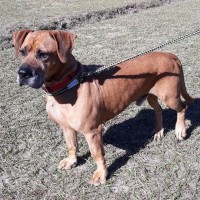
| The Boxer Basset hound makes an excellent pet because of its loving, loyal personality, fun-loving attitude and need for cuddles. They're happy curled up on the sofa with you watching TV all day, but when you take them outside, they turn into stalkers. They're capable of sniffing out any animal in their vicinity, and will do so for no other reason than to find them. The Boxer Basset is a short but stocky dog with a long body, huge floppy ears and a short coat. Although they can be stubborn and sulky, they are very gentle and friendly with everyone. |
History of the Boxer Basset |
| The history of the Boxer Basset is made up of the history of its parent breeds, the Boxer and the Basset Hound. |
A little of the Boxer |
||
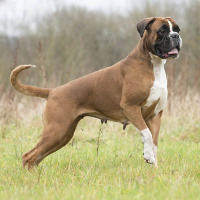
| The Boxer was first spotted in the high valleys of Tibet. At the time, they were considered Tibetan fighting dogs. In fact, the Boxer is thought to be related to all Bulldog breeds. The Tibetan Mastiff and the Mida Bulldog of France are also thought to be cousins of the Boxer. However, others in Germany believe that the Boxer is derived from a mixture of the Brabanter Bullenbeisser and the Danziger Bullenbeisser to form a robust, streamlined hunting dog. Until dog-fighting and bull-baiting were outlawed, the Boxer was used for these sports, but the breed does not appear to be aggressive. They are very popular dogs in America and were accepted by the American Kennel Club (AKC) in 1904. | ||
 |
||
| Standard of the Boxer | ||
A little of the Basset Hound |
||
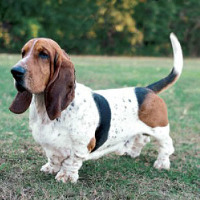
| The Basset Hound originated in France in the 1500s and was used as a scent dog for trailing rabbits. The name comes from the French word "bas", meaning dwarf or low thing. This was discovered in a hunting manual written by Count Jacques Du Fouilloux in 1560. The Basset Hound is thought to have been developed by the friars of the French abbey of Saint-Hubert, although other experts believe they were also mixed with the bloodhound to make them larger. The Basset Hound became increasingly popular when it was first shown in 1863 at a dog show in Paris. They were officially accepted by the AKC in 1935 and are the 39th most popular dog breed in America. | ||
 |
||
| Standard of the Basset Hound |
Appearance of the Boxer Basset |
| The Boxer Basset Hound is a long, muscular dog with a large head, short legs, medium-sized muzzle and long, floppy ears. In fact, their large feet and head with their short body make them comical, and some say they look like they were made by gluing bits of other dogs together. Their coat is usually light brown and white, but it can be any mixture of brown and white, black and white or black and brown. The Boxer Basset can also be tricolored with any of these color variations. With their touching looks and amusing waddles, they can make you laugh just by looking at them. |
Temperament of the Boxer Basset |
| They're great family dogs because they love spending time with people, and are happy to do nothing as long as they're with you. Because of their Basset Hound blood, they can be lazy and just want to hang out, but if they hear you talking about food or play, they usually come running. Although they're intelligent, they can take a little longer to train than most dogs. This could be because they're lazy or just stubborn. They like to pout when they get into trouble, and they can be almost annoying when they want to go out. However, they are also incredibly loving and good-humored dogs. |
Needs and activities of the Boxer Basset |
| The Boxer Basset can be a lazy dog who just wants to lie around the house when they're not playing or eating. However, to prevent them from becoming overweight, you need to give them at least 45 minutes to an hour of exercise every day. They love to investigate and enjoy sniffing around a trail, so take your Boxer Basset for a hike in your local park or for a walk around the neighborhood. It's best not to encourage them to jump because of their short legs. They tend to develop elbow dysplasia if they exert too much effort on their legs. |
Maintenance of the Boxer Basset |
| The Boxer Basset's short, hard coat makes it easy to care for. In fact, all they really need is a gentle brushing with a soft bristle brush once or twice a week. This will minimize shedding and promote circulation. Only bathe them when necessary, as this removes the skin oils they need. Brushing his teeth at least once or twice a week will prevent dental problems, and you can trim his nails if necessary. Because they have such long, soft ears, you need to check them often for dirt, debris, wax and mites. Keep them clean by wiping them with a soft cloth or cotton ball. Never use a cotton bud in your dog's ears. This can cause serious damage. |



 English (United Kingdom)

Comments