
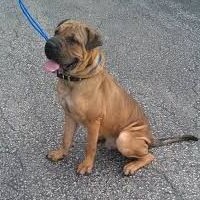
 |
Box-a-Shar |
|
He is not recognized by the F.C.I. |
Origin |
Germany <> China -> U.S.A. | |
Translation |
Francis Vandersteen | |
This breed is also known as |
Boxpei |
A brief presentation of the Box-a-Shar |
| The Box-a-Shar is a cross between a Boxer and a Shar Pei and will take on the traits of both parent breeds. They are large dogs weighing up to 29.5 kilos. They come in a variety of colors, including light brown, black, red, gold, merle and brindle, and may be spotted or speckled depending on the individual. Their coats are normally straight and thin, and of short to medium length. The Box-a-Shar needs regular grooming to stay beautiful. They are intelligent, gentle dogs and make excellent pets and are also good with children. They are also considered good watchdogs, as they will alert you to any intruders. |
History of the Box-a-Shar |
| The Box-a-Shar is a specific cross-breed of a Boxer and a Shar Pei. |
A little of the Boxer |
||
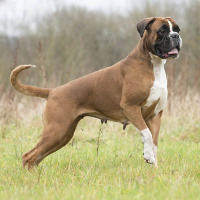
| Boxers were bred in Germany and their ancestors were the German Bullenbeisser (descended from Mastiffs) and the Bulldog. The Boxer is thought to be descended from the old fighting dog of the high valleys of Tibet, and is related to virtually all recognized Bulldog breeds. They have strong jaws and a powerful bite that were used to hold down prey such as bears and wild boar. The Boxer is considered part of the Molosser group, all descended from a large sheepdog known as Molossus. These dogs were thought to be the preferred war dogs of the ancient Romans and Greeks. Boxers were used for fighting and bull baiting until this was banned. During the First World War, they carried messages and were also used as guard dogs. The American Kennel Club registered the first Boxer in 1904. Boxers still have the strength and courage of their ancestors, but their loyalty and affectionate nature have made them popular pets, and they are also used as service and therapy dogs. | ||
 |
||
| Standard of the Boxer | ||
A little of the Shar Pei |
||
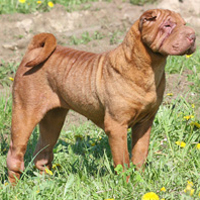
| Shar Peis originated in the southern provinces of China around 2,000 years ago, and are known for their wrinkled faces and bodies, and blue-black tongues and mouths. The name means "sandy skin" and refers to the texture of their short, rough coats. They were bred for strength and used on farms for hunting, although they later became fighting dogs. They were brought to the United States in 1973 and accepted into the American Kennel Club's miscellaneous category in 1988. In 1991, they were recognized by the club as a member of the non-sporting group. They are also known as Chinese fighting dogs. | ||
 |
||
| Standard of the Shar Pei |
Appearance of the Box-a-Shar |
| The Box-a-Shar is a large breed and its interesting coats can be of various colors, including light brown, black, red, gold, merle or brindle, and they can be spotted or speckled depending on the individual dog. Their coats are normally straight and fine, and of short to medium length. Your pet is likely to adopt the characteristics of both parent breeds, although this may vary depending on which is more dominant. Both parent breeds being brachycephalic dog breeds, Box-a-Shars are likely to have a relatively short muzzle and nose with a flat, broad skull shape. Boxer tails are generally docked, while Shar Pei tails are curly. |
Temperament of the Box-a-Shar |
| The Box-a-Shar is an intelligent, loyal and very calm dog that makes an excellent pet. Unlike the Shar Pei, which doesn't tolerate children very well and can be aggressive towards strangers, the Box-a-Shar is good with children and very protective of the family. The breed is also known to be good with other pets, but like most dogs, early socialization and training are important. The Box-a-Shar is easy to train, although it can sometimes be a little stubborn, so patience may be required. Like the two parent breeds, the Box-a-Shar is alert and generally a good watchdog. They are wary of strangers, but playful and affectionate with those they know. They need a moderate amount of exercise and can live happily in an apartment provided they are taken out daily for exercise. The breed is not known for excessive barking and will do well if left alone for a reasonable amount of time, but loves to be with family. |
Needs and activities of the Box-a-Shar |
| The Box-a-Shar doesn't need much exercise to stay happy and fit, but all dogs need daily exercise to avoid becoming bored and destructive. Regular walks should preferably be on a leash if in public. They tend to have a low tolerance for heat or cold. Your pet will also appreciate playing in the yard to keep mentally stimulated with ball games. The Box-a-Shar tends to put on weight, so exercise could also help. The breed does well in apartments as long as it's taken outside for daily exercise sessions. |
Maintenance of the Box-a-Shar |
| Box-a-Shars are not hypoallergenic dogs and require only a moderate amount of grooming to maintain good looks and optimal health. They shed more during shedding season, but otherwise not as much, so it's enough to brush the coat two to three times a week with a pin brush or a smoother brush. If the dog has wrinkles, taking more after the Shar Pei side, make sure these are thoroughly dried after a bath to avoid the formation of yeast or fungal infections. Only bathe your pet if necessary, and use a dog shampoo to avoid skin irritation. Brush his teeth regularly and trim his nails if necessary. It's also a good idea to check for dirty ears and wipe them gently with damp absorbent cotton. |



 English (United Kingdom)

Comments