Bordernese

He is not recognized by the F.C.I.

Origin
Great Britain <> Switzerland -> U.S.A.
Translation
Francis Vandersteen

A brief presentation of the Bordernese

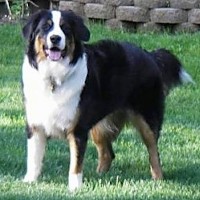
The Bordernese is a cross between the Border Collie and the Bernese Mountain Dog. It is a medium to large hybrid breed that combines the coloring and body type of a Bernese Mountain Dog with the coloring and coat type of the Border Collie. Combined intelligence and a gentle spirit come together to create a dog that is an excellent companion for any family that may have young children or other pets. While the Border Collie tends to be an active breed, the Bernese Mountain Dog is not, so the two balance well to create the Bordernese, which does well in any size of home as long as there's a way for him to get some exercise. Because the Bordernese has a thick, dark coat, cooler weather is preferable to prevent it from overheating. This hybrid breed is known for being gentle, loyal, intelligent, easy-going and friendly.

History of the Bordernese

Because the Bordernesee is a hybrid breed that hasn't been around long enough for a well-detailed origin, we don't know much about their creation. On the other hand, we do know quite a lot about their parent breeds, the Border Collie and the Bernese Mountain Dog. When the traits of these two parent breeds are combined, the end result is the Bordernese, an intelligent, mellow, loving, loyal and friendly dog that's low-maintenance and very easy to train.
        

A little of the Border Collie

        
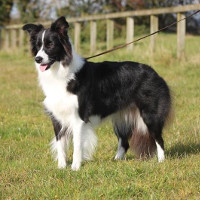
The Border Collie is without doubt one of the most intelligent dog breeds in the world. They were bred with the intention of being independent breeders, extremely intelligent and agile. Their origins begin as a classic farm dog, somewhere between the borders of Scotland and England. Their popularity grew and grew, and eventually the breed attracted the attention of the royal family, Queen Victoria in particular. The Border Collie was admitted to the American Kennel Club in 1995 and has been appreciated for its intelligence, work ethic and grace ever since.
Standard of the Border Collie

A little of the Bernese Mountain Dog

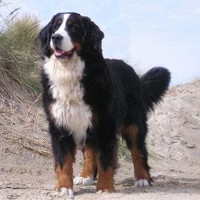
The Bernese Mountain Dog is the complete opposite of the Border Collie. Although still strong and beautiful, this breed is gentler and easier to live with. The Bernese Mountain Dog originated around the 20th century in the alpine mountains of Switzerland, where it was used as a versatile farm dog. They used their strength to pull milk carts, act as watchdogs with their deep voice and drive cattle to pasture too. The American Kennel Club recognized the Bernese Mountain Dog as a breed in 1937, and today it is used as a companion and show dog.
Standard of the Bernese Mountain Dog

Appearance of the Bordernese

Since the Bordernese is a cross between the Border Collie and the Bernese Mountain Dog, a wide variety of color combinations and body types can occur, even in the same litter. The typical appearance of this breed should be medium to large, with a long, thick coat that maintains the Bernese Mountain Dog's tricolor pattern of white, black and beige. Either big and sturdy like the Bernese Mountain Dog, or small and fast like the Border Collie, the Bordernese can vary in size. Despite this, because both parents share a similar coat type, Borderneses will always have a long, thick coat. Soft ears and dark brown eyes set against a solid muzzle complete the characteristics of this hybrid breed, creating a happy, alert appearance that will steal hearts any day of the week. There's no doubt that if your Bordernese is small like the Border Collie or well built like the Bernese Mountain Dog, you'll have a handsome dog that's an excellent mix of pet and working dog.

Temperament of the Bordernese

The Bordernese has a fantastic personality that's well balanced between energetic and temperate. It's a friendly, gentle dog that's alert and ready to protect its family without question. Although very loyal, Borderneses are not aggressive towards strangers or other animals and make a wonderful pet for any home. This breed strives to get along with just about any living thing and is gentle enough to be with very young children. You don't need to be an experienced dog owner to own the Bordernese, as it's easy to train and loves nothing more than spending time with its family. If you're looking for a good watchdog for your home, the Bordernese may be perfect for you as it doesn't bark often, it barks to alert you to any suspicious activity. Overall, this breed is intelligent, energetic, loyal, fun-loving and a big bundle of cuddle, making Borderneses a wonderful addition to any family.

Needs and activities of the Bordernese

While the Border Collie side of the Bordernese is very active, the Bernese Mountain Dog is not. This balance between high and low energy makes the Bordernese a relatively low-energy dog that only needs about an hour of very good activity a day. This activity can include training, walking, jogging, biking, pulling, playing with other dogs or letting off steam in the backyard. Don't worry if you can't live in a very big house, because even the Bernese Mountain Dog's temperate personality really helps them adapt well to any living situation. However, like most dogs, your Bordernese can get bored with too little inactivity, which can lead to bad manners and the destruction of property. Take the time to exercise your dog so he can be on his best behavior. Early socialization and training are essential for any dog, and with Borderneses, you shouldn't have much trouble getting him to listen to you. This dog is eager to please and highly intelligent, so as long as you put in the time, training shouldn't be difficult.

Maintenance of the Bordernese

Just because this breed is large doesn't mean it's high-maintenance. Borderneses are actually very easy to care for, and although their coats shed all year round, a few brushing sessions a week should do the trick to keep the hair manageable. Bathing should only be done occasionally, or if your dog is particularly dirty. Because the Bordernese folds over its ears, it's extremely important to dry your dog's ears thoroughly after bathing or swimming. Indeed, any extra moisture left inside the ear can cause inflammation and infection, so by drying the ears, this problem can be avoided. In addition to this, trim your dog's nails every few weeks, or when you hear the nails clicking against the ground, to keep feet healthy.

Comments

Latest page updates

  • Telomian

    Telomian He is not recognized by the F.C.I. Origin Malaysia Translation Francis Vandersteen A brief presentation of the Telomian The Telomian is a very rare breed of dog, and the only one native to Malaysia to have been bred outside the country. They were originally bred by the indigenous people of Malaysia to combat parasites such as snakes, rats,...
  • King Wheaten -- Cavalier King Charles Spaniel X Irish Soft Coated Wheaten Terrier

    King Wheaten He is not recognized by the F.C.I. Origin Great Britain <> Ireland -> U.S.A. Translation Francis Vandersteen A brief presentation of the King Wheaten The King Wheaten is a small dog with a heart this big and a playful disposition. Borrowing the energy and soft-coated waves of the Irish Soft Coated Wheaten Terrier and the size and...
  • Spanierd -- English Springer Spaniel X German Shepherd

    Spanierd He is not recognized by the F.C.I. Origin Great Britain <> Germany -> U.S.A. Translation Francis Vandersteen A brief presentation of the Spanierd The Spanierd is a hybrid dog. Its parent breeds are the English Springer Spaniel and the German Shepherd. They have an affable personality. He's known for entertaining family and friends with his...
  • Alaskan Goldenmute -- Alaskan Malamute X Golden Retriever

    Alaskan Goldenmute He is not recognized by the F.C.I. Origin U.S.A. <> Great Britain -> U.S.A. Translation Francis Vandersteen This breed is also known as Alaskan GoldenGoldenmuteAlaskan Gold Retriever     A brief presentation of the Alaskan Goldenmute The Alaskan Goldenmute is a descendant of two great dog breeds: the Alaskan Malamute and the Golden...
  • French pointing dog Pyrenean type

    French pointing dog Pyrenean type FCI standard Nº 134 Origin France Translation Mrs. Peggy Davis Group Group 7 Pointing Dogs Section Section 1.1 Continental Pointing Dogs « Braque » Type Working With working trial Acceptance on a definitive basis by the FCI Tuesday 18 January 1955 Publication of the official valid standard Tuesday 01 August 2023 Last...
  • French pointing dog Gascogne type

    French pointing dog Gascogne type FCI standard Nº 133 Origin France Translation Mrs. Peggy Davis Group Group 7 Pointing Dogs Section Section 1.1 Continental Pointing Dogs « Braque » Type Working With working trial Acceptance on a definitive basis by the FCI Monday 17 January 1955 Publication of the official valid standard Tuesday 01 August 2023 Last...
  • Vucciriscu

    Vucciriscu He is not recognized by the F.C.I. Origin Sicily Translation Francis Vandersteen En français, cette race se dit Vucciriscu Diese Norm ist in deutscher Sprache sichtbar Vucciriscu En español, esta raza se dice Vucciriscu In het Nederlands, wordt dit ras gezegd Vucciriscu This breed is also known as Sicilian Vucciriscu Sicilian Butcher...

© 2026 Groupe Milouchouchou ASBL. Tous droits réservés. En savoir plus

Protected by Copyright01
We use cookies

We use cookies on our website. Some of them are essential for the operation of the site, while others help us to improve this site and the user experience (tracking cookies). You can decide for yourself whether you want to allow cookies or not. Please note that if you reject them, you may not be able to use all the functionalities of the site.

Ok