
 |
Border Malamute Terrier |
|
He is not recognized by the F.C.I. |
Origin |
Great Britain <> U.S.A. -> U.S.A. | |
Translation |
Francis Vandersteen |
A brief presentation of the Border Malamute Terrier |
| The Border Malamute Terrier is a lively, alert and intelligent breed of small to medium-sized dog, originating from the Alaskan Malamute and Border Terrier. These hybrids often have dense, medium-length coats that can be rough to the touch due to their wiry texture. However, their maintenance is generally low to moderate, as they are not considered heavy excretors and do not require regular bathing. These dogs often have a high prey instinct and are not suitable for homes with cats and small animals. As little is known about this hybrid, we can assume that its current purpose may simply remain as a pet. |
History of the Border Malamute Terrier |
| Border Terriers and Alaskan Malamutes are both pure breeds recognized by the American Kennel Club. |
A little of the Border Terrier |
||
| The Border Terrier is a small breed foxhound that is thought to have originated on the border of England and Scotland in the 18th century. These small Terriers would have had incredible stamina, flexible bodies and water-resistant coats that enabled them to help hunters chase foxes out of holes. Little known beyond the border territory until the 19th century, the Border Terrier was welcomed into the England Kennel Club in 1920. | ||
 |
||
| Standard of the Border Terrier | ||
A little of the Alaskan Malamute |
||
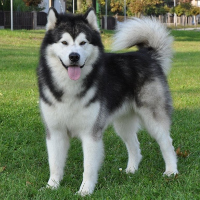
| Considered one of the oldest breeds, the Alaskan Malamute is thought to have originated in Serbia around 4,000 years ago. Crossing the land bridge between Siberia and Alaska, these hard-working dogs would have been sled dogs to the Eskimos and were therefore designed to tolerate extremely cold climates and manage limited food sources. In the gold rush of the 1800s, this breed began to lose its anonymity, with the American Kennel Club recognizing the breed in 1935. | ||
 |
||
| Standard of the Alaskan Malamute |
Appearance of the Border Malamute Terrier |
| As there is no current documentation on the Border Malamute Terrier, it is to be expected that the hybrid's appearance may take on traits of any of its parent breeds. As this hybrid is a cross between a large and a small dog, it's safe to assume that your hybrid may be a relatively small to medium-sized dog breed. Its coat may be thick and stiff with a mixture of colors such as brindle, fawn with gray, agouti (colored stripes) and white. Legs and body may be short but solid, muzzle neither long nor too short, eyes bright and alert, ears partly flexible or erect. The tail may be thick at the base, of medium length and sickle-shaped. |
Temperament of the Border Malamute Terrier |
| The Border Malamute Terrier can share traits with its parent breeds. These include a very friendly, playful and affectionate demeanor. Both parent breeds tend to be excellent for families with children. However, they are not recommended for households with cats or smaller pets. These dogs have a low protective instinct, so your hybrid may not be as careful with strangers as a dog with a high defensive instinct. |
Needs and activities of the Border Malamute Terrier |
| The Border Malamute Terrier can have bursts of energy throughout the day and would therefore require at least 35 to 45 minutes of activity a day. Like their parents who breed the Border Terrier, these hybrids, when bored, can be quite destructive and may dig up lawns or play with garbage. As such, owners are advised to provide mental stimulation for their hybrid, this can include swimming, walks, hikes, runs, lots of free time with toys and socialization with other dogs. These dogs are suitable for all climates and all types of housing, including apartments. However, owners should exercise caution when living on larger properties, as this hybrid is supposed to have a strong tendency to wander. |
Maintenance of the Border Malamute Terrier |
| It can be assumed that due to their mellow nature, small size and minimal shedding, Border Malamute Terriers are low-maintenance dogs. Owners can simply get away with bathing their hybrids once a month if the animal develops a dirty coat. Generally, owners can regularly use a damp cloth to clean their dog's coat. Brushing is always recommended on a weekly basis to remove loose fur and avoid tangles. As with all dogs, teeth and ear cleaning, nail trimming and regular brushing should be carried out consistently to not only maintain the animal's health, but also to familiarize it with the process of standing still and being patient while being touched and cared for. |



 English (United Kingdom)

Comments