
 |
Bolosilk |
|
He is not recognized by the F.C.I. |
Origin |
Italy <> Australia -> U.S.A. | |
Translation |
Francis Vandersteen |
A brief presentation of the Bolosilk |
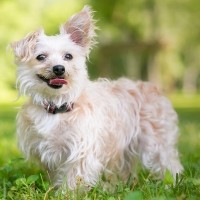
| The Bolosilk is not a recognized breed in its own right, but rather a specific cross between two other breeds, a hybrid of the Bolognese and Australian Silky Terrier breeds. The resulting dog is generally an affectionate, entertaining animal with higher energy levels but moderate exercise requirements due to its small size. They tend to do well in most environments, although their single-layer coats may not be sufficient protection against extreme cold and interactions with small or rough children and larger dogs need to be closely supervised. Bolosilks require regular grooming to look and feel their best, and as these dogs are quite intelligent, adequate mental stimulation is essential. |
History of the Bolosilk |
| The Bolosilk is a newly developed dog, a hybrid of the small white companion dog known as the Bolognese and the silky-haired Australian Terrier also known as the Silky Terrier. The resulting cross is a highly intelligent little dog with a single silky coat of medium to long hair that generally has an energetic, outgoing temperament. |
A little of the Bolognese Bichon |
||
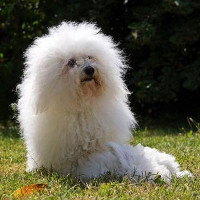
| The Bolognese breed is a small variety of Bichon dog that dates back to at least 13th century Italy. The region's ruling class appreciated the little white dogs, and they were bred by the Gonzaga and Medici families. Bolognese puppies were sometimes given as precious gifts to visiting royalty and dignitaries. The breed fell out of favor during the Industrial Revolution, and many puppies were killed with their royal families during the revolutions, but breed enthusiasts in Europe began an effort to restore the Bolognese breed in the 1970s, and Bolognese dogs were brought to the United States from Russia for breeding purposes in 1986. | ||
 |
||
| Standard of the Bolognese Bichon | ||
A little of the Australian Silky Terrier |
||
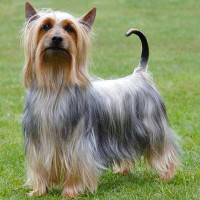
| The Australian Silky Terrier is a slightly more recent breed than the Bolognese, as it was only in the late 1800s that Yorkshire Terriers were imported to Australia in order to cross them with the larger Australian Terrier to improve the quality of their coat. By 1906, the silky-haired Australian Terrier was breeding true to type, and by 1926 a full breed standard had been established. Originally known as the Sidney Silky, these long-haired, silky little dogs are Terriers and are quite capable of hunting and killing mice, rats and snakes, and can be courageous in pursuit. | ||
 |
||
| Standard of the Australian Silky Terrier |
Appearance of the Bolosilk |
| The Bolosilk is a blend of two breeds, the Bolognese and the Australian Silky Terrier, both of which are small dogs with single-layered silky coats. Measuring just 23 to 30.5 centimeters in height, this crossbreed is slightly longer than it is tall, and can have either the long, flowing coat of the Australian Silky Terrier, the shorter, fluffier coat of the Bolognese, or anything in between. Its head shape may tend towards the oval shape of the Bolognese, or may lean more towards the wedge-shaped head of the Australian Silky Terrier. The muzzle will generally be slightly shorter than the length of the skull, and the dog's eyes will be dark and round. The ears will be of medium to long length and are likely to hang, although Bolosilk dogs that take after the Australian Silky-haired Terrier will have ears higher on the head than those resembling the Bolosilk and can sometimes stand upright. |
Temperament of the Bolosilk |
| The two breeds have similar temperaments in many respects, but may also differ in a few ways. Both breeds are affectionate, entertaining and intelligent, but the Australian Silky Terrier is more energetic and independent than the Bolognese. Both breeds tend to get along well with family members of all ages, and your Bolosilk should too, although interaction with small children or larger dogs should be supervised to avoid harming your pet. While the Bolognese is generally quite friendly towards strangers and other dogs, the Silky can be wary of strangers and may react defensively around unfamiliar or larger dogs. In most cases, your properly socialized Bolosilk should be pleasant with most animals, although they can sometimes take to their Terrier kin. Both dogs are very attentive to their owners and can be very adept at obedience and agility training, although they can get bored with repetitive commands and tend to chase small animals. |
Needs and activities of the Bolosilk |
| These dogs can be quite energetic, but much of their energy is easily spent with indoor play. Walks can be brisk, but many Bolosilks may find jogging too strenuous as most of these dogs are less than 30.5 centimetres tall, meaning that your every step is likely to be several of theirs. These dogs can be quite energetic, but much of their energy is easily spent with indoor play, and several short play sessions are often ideal for these small dogs. Although a discreet game of fetch indoors or a walk outdoors is generally well received by most dogs, they are not the only option available for the Bolosilk. Many Silky Terriers like to swim and are able to do so in a relatively small area, and your Bolosilk can relish this activity too. This hybrid can also enjoy and excel at hide-and-seek games and agility training. As well as having exercise and space requirements that are relatively easy to meet, these dogs are generally quite quiet as long as they're not bored or alone, and they tend to make excellent apartment dwellers if not left alone for long periods. |
Maintenance of the Bolosilk |
| This breed combination will certainly require regular grooming to keep its coat shiny and healthy. If the Bolosilk in question has a coat more reminiscent of the silky-haired Australian Terrier, it will need to be bathed more frequently, at least once a month, due to its human hair-like characteristics. If the Bolosilk is more similar in appeal to the Bolognese, then it will only need to be bathed a few times a year to keep it free of dirt and odor. The fur on their coat can sometimes become quite long, and it can be slightly more prone to tangling than some of the other breeds, so they will need regular brushing to remove any mats and tangles that have formed and, hopefully, to prevent further tangles from occurring. |



 English (United Kingdom)

Comments