 |
Beardoodle |
|
He is not recognized by the F.C.I. |
Origin |
Great Britain <> France -> U.S.A. | |
Translation |
Francis Vandersteen |
A brief presentation of the Beardoodle |
| The Beardoodle is a medium-sized breed that is a cross between the Bearded Collie and the Poodle. They weigh around 22.5 kilos, stand around 53 centimeters tall as adults, and have long, thick coats that are usually black, brown or blue. They can be good family companions and get on well with everyone, including other pets and children. However, they need to be socialized early to get along with other animals and visitors. They're smart, brave and easy to train, so you shouldn't have a problem with that, although they may need plenty of exercise or get bored. |
History of the Beardoodle |
| Beardoodle history is unknown because they're new hybrids, so it's important to look at the history of the Bearded Collie and Poodle breeds. |
A little of the Bearded Collie |
||
| The Bearded Collie originated in Scotland in the 1500s as a shepherd dog. They are descendants of the Magyar Komondor, also known as the Polish Lowland Sheepdog, from Central Europe. According to documents, these dogs were brought to Scotland in 1514 by Polish traders. There's also a portrait of the Duke of Buccleuch with a bearded Collie dated 1771, which is the first photograph of the breed. They were excellent sheep breeders and were also capable of driving cattle for miles over rough terrain. Initially, there were two types of Bearded Collie, which were the Border (brown and white) and the Highland (gray and white), but they were bred together to make one breed. They almost disappeared in the early 1900s when the owner of Bothkennar Kennels, Mrs. Willison, decided to breed them as show dogs. She then founded the Bearded Collie Club of Britain in 1955. The first litter was born in the USA in 1967 and they were accepted by the American Kennel Club in 1976, where they are the 126th most popular breed. | ||
 |
||
| Standard of the Bearded Collie | ||
A little of the Poodle |
||
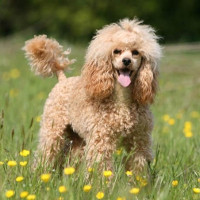
| The Poodle is one of the oldest and best-known dog breeds. They originated in Germany around the 8th century, but were perfected in France when they were mixed with a combination of European dogs such as French, Hungarian, German, Portuguese, Spanish and Russian Water Dogs. They are also thought to be related to the North African Barbet. The Poodle started out as a hunter and retriever, but continued as a show dog when it was discovered how intelligent and beautiful they were. In 1887, the Poodle was officially recognized by the American Kennel Club and they are the 7th most popular dog breed in America. | ||
 |
||
| Standard of the Poodle |
Appearance of the Beardoodle |
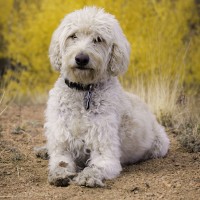
| The Beardoodle is a medium-sized dog with brown or amber almond-shaped eyes and a black or brown nose. They stand around 50 centimeters tall and weigh an average of 22.5 kilos. Beardoodles have an intelligent expression, soft ears, a long muzzle and a dense, hard, long, wavy coat that is usually black, brown or blue. They don't shed much due to their Poodle genes, but they will shed a little during the shedding season. Their legs and tail are long and hairy, their head is mainly rounded and their body is elegant but well muscled. |
Temperament of the Beardoodle |
| Beardoodles make excellent pets because they love everyone as long as they're socialized as puppies. They are also one of the most intelligent breeds and can learn to do almost any trick. Their training is generally easy and as long as you use positive reinforcement, there should be no problems with home training. Although they love attention, they're actually quite happy to be left alone too, so you don't have to worry about separation anxiety. Your Beardoodle is alert, fun-loving and enjoys playing with other pets and children. However, they must be supervised with young children under school age. |
Needs and activities of the Beardoodle |
| This breed likes to behave like a Poodle and is also a good working dog like a Bearded Collie, so it will need plenty of vigorous activity every day. In fact, you need to provide him with at least an hour to 90 minutes of exercise a day to keep him from getting bored or out of shape. Some of her favorite activities might include agility training, playing Frisbee or flyball, hiking, swimming or walking around your neighborhood. She'd also love to play with other dogs at the dog park if you have one nearby. If they don't get enough exercise, Beardoodles can become bored or develop behavioral problems. |
Maintenance of the Beardoodle |
| Your Beardoodle should be well brushed with a pin brush and metal comb at least four or five times a week, preferably every day, to prevent it from tangling. A degreasing tool should also be used when necessary to remove dead hairs and avoid tangles. Some Beardoodles will need to be groomed with clippers if their coat is too thick and becomes easily matted. In addition, you should clean your dog's ears once a week with a damp cotton ball and look for redness, irritation, dirt and debris. Trim his nails if necessary and brush his teeth once or twice a week to avoid dental problems. |



 English (United Kingdom)

Comments