
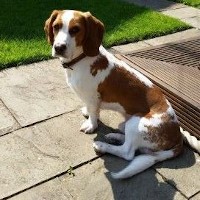
 |
Basselier |
|
He is not recognized by the F.C.I. |
Origin |
Great Britain -> U.S.A. | |
Translation |
Francis Vandersteen |
A brief presentation of the Basselier |
| Friendly, affectionate and a love at first sight, the Basselier is a hybrid breed developed from the Cavalier King Charles Spaniel and the Basset Hound. The Basselier is known as an adorable dog that loves to be with people. Depending on the litter, each puppy may develop dominant traits of one or the other breed. The Cavalier King Charles was developed from the King Charles Spaniel in England to restore some of the breed's original traits, such as a longer muzzle and less prominent eyes. Basset Hound originates from the French word bas, meaning low thing. The Basset Hound is a self-sufficient hound that is docile with its family and likes to be included in activities. The Basset Hound was developed in France and is known for its large, floppy ears, droopy eyes and loose skin. The Basset Hound has a compact body with a built form. Its coat varies from short and smooth to medium, glossy and wavy. The Basselier's purpose is to serve as a companion to its family. It is considered to have a gentle disposition with a cheerful attitude. It needs a little maintenance with the longer coat to prevent mats from growing. The Basselier is happiest in a happy home with a temperate climate. |
History of the Basselier |
| There is no well-documented date as to the birth of the Basselier, although it is thought that this hybrid was developed during the period when breeders began crossing purebred dogs to eliminate certain major health problems. The Basselier is descended from the Cavalier King Charles Spaniel and Basset Hound breeds in the USA. The Basset Hound is the ideal companion for families because of its truly gentle attitude. |
A little of the Basset Hound |
||
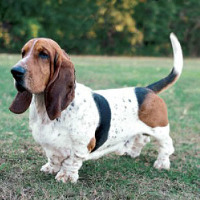
| The Basset Hound originates from the French word bas, meaning low thing. It is thought that the Brothers of the French Abbey of Saint-Hubert developed the Basset Hound to create a slow breed so they could follow it on foot. After the French Revolution, the Basset Hound gained popularity with hunters because of its slowness. The Basset Hound was originally used to track rabbits and hares. The Basset Hound is thought to be related to the Basset d'Artois and the Basset Normand. Researchers believe the Basset Hound was crossed with the Bloodhound in the late 1800s and 1930s. The Basset Hound gained popularity at the Paris Dog Show in 1863 and was exported to England in 1866. In 1935, the Basset Hound Club of America was formed. | ||
 |
||
| Standard of the Basset Hound | ||
A little of the Cavalier King Charles Spaniel |
||
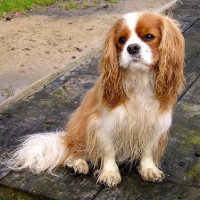
| The Cavalier King Charles Spaniel was a favorite breed of King Charles II (hence the breed's name), who decreed that the Spaniel should be allowed in any public place, even Parliament. The first breed standard for the Cavalier King Charles Spaniel was established in 1945 when it was first registered by the AKC. The breed was not officially recognized by the AKC until 1996. | ||
 |
||
| Standard of the Cavalier King Charles Spaniel |
Appearance of the Basselier |
| The Basselier has a compact body with a smaller form. Its legs are square and proportionate to its body. The tail is long, tapering and thick at the base, tapering gradually to the tip, held at a downward angle and curved. The head is rounded and the muzzle is of medium length with a medium stop. The nose is black. The eyes, which are large, round and slightly slanted, are generally dark brown and have an expression that exudes intelligence, kindness and genuine curiosity. The soft ears are covered with silky, wavy fur. The coat of this charming dog varies from short and smooth to medium, wavy and silky. Colors are tricolored, ranging from white and black to tan and fawn. |
Temperament of the Basselier |
| The Basselier is described as an intelligent, friendly breed that enjoys spending time with its family. It is an affectionate breed that gets on well with people of all ages and thrives on companionship. The Basselier is not known for excessive barking and will limit barking when necessary. The Basselier is great with children and maintains patience with those getting used to the breed. Eager to please, this curious breed is happy to follow its owners. The Basselier is able to coexist with other animals as long as it learns early on to accept others. The Basselier is easy to train and excels with consistent communication and training. Positive reinforcement techniques are a plus for the Basselier. |
Needs and activities of the Basselier |
| The Basselier is a moderately energetic breed that requires mental and physical stimulation to perform at its best. A brisk walk or run around a fenced yard is a daily must for this lively character. To avoid boredom and destructive behavior, enroll your Bassalier in obedience classes or let it try agility or flyball. He's an intelligent dog and will appreciate an activity that makes him think. Your Basselier will do best in a house with a yard, but can do well in an apartment if proper exercise is included in his daily routine. |
Maintenance of the Basselier |
| The Basselier is not considered a hypoallergenic breed and will shed moderately. The Basselier's coat can vary from short and smooth to wavy and silky of medium length. If it's smooth, a rubber curry brush to remove dead hairs will suffice. If your Basselier has a medium-length coat, it's important to brush it with a firm bristle brush and a comb to avoid the development of painful mats. Daily brushing of your Basselier is highly recommended to facilitate coat maintenance. Its long ears will need extra attention, so be sure to wipe and clean them regularly to avoid infections that can develop due to excessive humidity. It's important to bathe your Basselier every 6 to 8 weeks, if necessary, and nails should be trimmed every 2 to 3 weeks. Teeth should be brushed regularly to prevent tartar build-up. |



 English (United Kingdom)

Comments