
 |
American Pit Corso |
|
He is not recognized by the F.C.I. |
Origin |
U.S.A. <> Italy -> U.S.A. | |
Translation |
Francis Vandersteen | |
This breed is also known as |
Corso Pit Bull |
A brief presentation of the American Pit Corso |
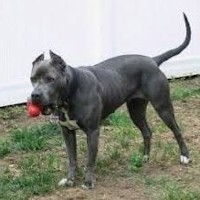
| The American Pit Corso is a cross between the American Pit Bull Terrier and the Italian Cane Corso. They are large dogs weighing around 23 kilos. The American Pit Bull Terrier was bred as a farm dog, and eventually the dog became more of a guard dog and companion. However, some people now use the American Pit Corso for wild boar hunting. The Cane Corso Italiano was bred for hunting big game, particularly wild boar. The American Pit Corso is generally even-tempered and highly trainable. The American Pit Corso is generally an excellent companion, requiring minimal maintenance and a moderate amount of exercise. |
History of the American Pit Corso |
| The American Pit Corso hybrid is the most popular in America and is a mix of the American Pit Bull Terrier and the Cane Corso. Both dogs have a similar build and personality. They make excellent guard dogs, which is one of the reasons why people started crossing the Pit and Corso. Some people use the hybrid breed as guard dogs for businesses. Unfortunately, Pit, Corso and hybrid breeds are often portrayed as fighting dogs in the media. This often gives the breed a bad reputation, but with early training and socialization, the American Pit Corso is a very gentle dog and very protective of its family. The Cane Corso is said to have its roots in Roman war dogs, while the American Pit Bull Terrier is the term given to the American Staffordshire Terrier, Staffordshire Terrier and Bull Terrier. The early Bull and Terrier breeds were associated with bull and bear baiting, which was fortunately banned in England in 1835. The Cane Corso had a different upbringing, working mainly on the farm, doing jobs like herding cattle and guarding property. The first Cane Corsos were introduced to the USA in 1988 and achieved AKC status in 2010, while the American Kennel Club recognized the American Pit Bull Terrier in the 1930s, under the name American Staffordshire Terrier, in a bid to separate the breed from its fighting past. |
A little of the American Pit Bull Terrier |
||
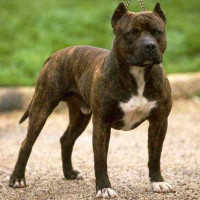
| The ancestors of the American Pit Bull Terrier arrived in the USA in the mid-1800s, brought by Irish immigrants from Boston. They were originally bred to be a fighting dog, but when bull baiting was banned in England in 1835, they were no longer bred to fight. Although there is some confusion between the American Pit Bull Terrier and the Staffordshire Bull Terrier, both being very similar, the breed flourished and became very popular. In 1898, the United Kennel Club was formed with the intention of providing registration and fighting guidelines for the breed. The AKC does not recognize the American Pit Bull Terrier, only the American Staffordshire Terrier, which was added to the list in 1936. Today, the American Pit Bull Terrier has become a wonderful companion and working dog. | ||
 |
||
| Presentation of the American Pit Bull Terrier | ||
A little of the Italian Corso dog |
||
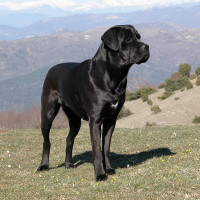
| The Italian Corso dog is a direct descendant of the ancient Roman molossus. Formerly found throughout Italy, it has only survived in Puglia and the regions bordering this southern Italian province. Its name derives from the Latin "cohors", meaning "protector, guardian of farms". Cohors are large, solid and vigorous, yet elegant dogs. Its clean contours reveal powerful muscles. Guardians of property, family and livestock, they were once used to guard livestock and hunt big game. | ||
 |
||
| Standard of the Italian Corso dog |
Appearance of the American Pit Corso |
| The American Pit Corso weighs around 23 kilos. The exact size of the adult Pit Corso is determined by the size of the dog's parents. Its coat is generally short and glossy. Often, the Pit Corso will closely resemble the Cane Corso, with the skull and muzzle of the American Pit Bull. The American Pit Corso has a muscular neck, a deep, muscular chest and is generally stocky. The Cane Corso has a short coat much like the American Pit Bull. Rarely, there may be a blue American Pit Corso. The coat is not very dense and not waterproof. |
Temperament of the American Pit Corso |
| The American Pit Corso generally has a high prey drive and will require a strict owner. Many American Pit Corso mixes often end up in shelters because the owner didn't take the time to properly socialize the dog as a puppy, the mix can be aggressive if time isn't taken when the American Pit Corso is young to properly socialize and train the dog. They will be extremely loyal to their owners, and are also very alert. Because the American Pit Bull Terrier and Cane Corso can be aggressive, it's imperative that socialization and training begin at an early age. The American Pit Corso should be around loving family and other dogs from an early age. |
Needs and activities of the American Pit Corso |
| The American Pit Corso enjoys fetch, tug-of-war, running and swimming. The American Pit Corso is a high-energy dog, and is not recommended for those who don't have a lot of quality time to spend with him. This exuberant dog does best in a rural setting with a fenced yard so he can enjoy free play. He should begin training and socialization at an early age. It's also advisable to keep him on a leash when he walks with you to avoid problems with unfamiliar dogs; this doesn't mean he'll start a fight, however, if another dog acts aggressively towards him, he won't back down. The American Pit Corso is not ideal for apartment living, and some areas will have restrictions on the American Pit Bull Terrier, so it's always best to check that these regulations don't apply to your American Pit Corso. These are not dogs for inexperienced owners. Firm, consistent training is a must for the American Pit Corso. |
Maintenance of the American Pit Corso |
| The coat of the American Pit Corso will be short and glossy, but stiff to the touch. This is not a hypoallergenic dog; in fact, it sheds much more than expected given its short coat. Unlike other bulldog-related breeds, the breed is not prone to drooling. The American Pit Corso is generally a very clean dog, so a weekly brushing with a stiff brush is probably all your dog will need. Bathe your dog only occasionally, or you risk stripping the coat of its natural oils. You should brush your dog's teeth at least three times a week, but daily brushing will help prevent tooth decay and bad breath. Nails should be trimmed twice a month. If you hear your dog's nails clicking on the floor, they need trimming. It's very important to start grooming your puppy when he's young, so he gets used to a routine. |



 English (United Kingdom)

Comments