
 |
Puggle |
|
He is not recognized by the F.C.I. |
Origin |
China <> Great Britain -> U.S.A. | |
Translation |
Francis Vandersteen |
A brief presentation of the Puggle |
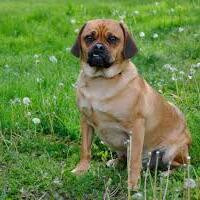
| A cross between a Pug and a Beagle, the Puggle is thought to be the result of an accidental cross between these two dog breeds. Nonetheless, it has become a popular crossbreed among dog lovers because of its playful character and playful nature, which bring together the best features of both its parents' breeds. Puggles are excellent family dogs that get on well with children and other animals. They look adorable thanks to their wrinkles inherited from the Pug parent, and they benefit from the Beagle's longer nose, which enables them to breathe better than their Pug parent. Active and gentle, the Puggle is an interesting cross for those looking for a unique dog. |
History of the Puggle |
| The Puggle is a specific cross between a Pug and a Beagle, and its origin is unclear. Some claim the Puggle is the result of an accidental cross between a Pug and a Beagle, while others say it was intentionally crossed by Wallace Havens, a Wisconsin breeder. The first Puggle was officially bred in the 1980s by Havens, although other Puggles had probably been bred before. The Puggle is not a recognized breed by the American Kennel Club, nor by any other kennel club or breed registry, although it is registered in the American Canine Hybrid Club. Over the decades, the Puggle has become increasingly popular and the first choice of many dog owners. In 2000, the Puggle began to be sold and considered a unique pet. |
A little of the Pug |
||
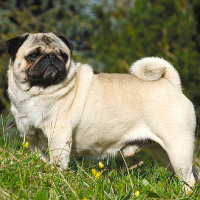
| The Pug is a breed with a long and interesting history. Their origins date back some 2,000 years to ancient China. These flat-faced dogs were a common ancestor for another instantly recognizable dog breed, the Pekingese. The Pug was introduced to Europe in the 16th century by Dutch merchants and quickly became a popular companion dog for aristocrats and royalty. Over the centuries, their appearance has changed somewhat, with the modern dog having a much flatter face than their more robust ancestors. | ||
 |
||
| Standard of the Pug | ||
A little of the Beagle |
||
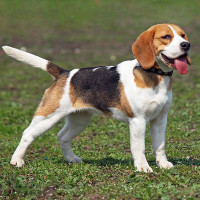
| The Beagle is the ultimate scent hound, a dog that was made to hunt and enjoys doing so. The Beagle is the result of breeding larger Foxhounds with a variety of smaller dogs to establish a breed capable of hunting low to the ground in packs and not requiring hunters to be on horseback. In fact, the Beagles of years gone by were considerably shorter than the modern Beagle. It wasn't until the mid-1800s that the Beagle was exported to the United States. They were an immediate success with American rabbit hunters and the breed was soon recognized by the AKC in 1885. | ||
 |
||
| Standard of the Beagle |
Appearance of the Puggle |
| Puggles are a mix of Carlins and Beagles. Their physical characteristics and general appearance resemble this. With a smooth double coat and short, dense undercoat with a longer mantle, the Puggle can come in a variety of colors. The most common are black, fawn and bronze. Puggles have wrinkles, just like their Pug relative. They may have a shorter or longer muzzle, as they may inherit more of the characteristics of their Pug or Beagle parents. In any case, a Puggle's nose is generally longer than a Pug's, which makes breathing much easier and makes them less prone to the respiratory problems due to a short nose, present in brachycephalic breeds such as the Pug. Puggles generally weigh between 7 and 18 kilos and measure between 20 and 38 centimeters. |
Temperament of the Puggle |
| Puggles are smart, cute little dogs that make great family companions. Because they are suitable for children and other animals, they are an excellent choice for those who already have pets or children at home, as well as for new owners. Puggles are also very affectionate and charming, always ready to play but also known for their tendency to cuddle. Because they are a mix of Carlins and Beagles, their personality and traits are also a blend of their parents' temperaments. Puggles inherited their Beagle parent's love of sniffing, as well as their ability to jump and their active, inquisitive attitude. From their Pug parent, Puggles have inherited their earthy speed and gentle, friendly nature. The Puggle is a highly adaptable dog, although it can suffer from separation anxiety if left alone for long periods. They are undoubtedly family dogs who need to be close to their people. Although their exercise requirements are low, Puggles tend to need plenty of water during their walks, as they get thirsty very quickly, perhaps due to their high internal temperature. Unfortunately, Puggles can also inherit some of the worst characteristics of their parents' breeds. Whether it's the respiratory problems known to Carlins, the tendency to wander and howl attributed to the Beagle, or the stubbornness of both, the Puggle can also exhibit one or more of these characteristics. A stubborn Puggle can be more difficult to train, requiring more patience and perseverance. Although not guard dogs, Puggles tend to bark and even howl, which could be an inconvenience if you live in an apartment. Nevertheless, Puggles are companion dogs that will delight everyone around them. |
Needs and activities of the Puggle |
| Puggles are active little dogs and need regular daily exercise. Otherwise, you'll find your garden has been dug up. They need about half an hour's exercise a day, which can include a walk as well as play sessions. They'll love ball games or going for a walk at the beach or dog park. In public, keep your Puggle on a leash, as it tends to get distracted and wander off. These dogs are suitable for apartment-dwellers, provided they are taken out every day. They can be sensitive to heat, so don't exercise them in very hot weather. |
Maintenance of the Puggle |
| Puggles have a short coat but shed a lot, so you'll need to brush them once a week to rid them of hair. Keep skin folds and wrinkles on the face and forehead clean to avoid skin problems. They don't need to be washed often, but when they are, make sure they're completely dry, especially between the folds of skin. Make sure your dog's eyes and ears are always clean. Nails should be trimmed as needed, and teeth brushed daily to prevent dental problems. |



 English (United Kingdom)

Comments