 |
Poogle |
|
He is not recognized by the F.C.I. |
Origin |
France <> Great Britain -> U.S.A. | |
Translation |
Francis Vandersteen | |
This breed is also known as |
Beaglepoo
|
A brief presentation of the Poogle |
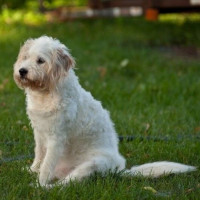
| The affectionate personality and sensitive nature of the Poogle, a cross between the Poodle and the Beagle, means they get on well with everyone they meet. They love the opportunity to mix with people and don't want to be left to their own devices. Docile and quick, Poogles make good pets for novice owners. A good mix of each parent, the Poogle has the soft hound ears and intelligent brown eyes of the Poodle. They are small to medium-sized with a well-proportioned body and a tail that curves at the end. The Poogle's coat is generally wavy and of moderate density. There are many coat colors, and white markings are frequently seen. |
History of the Poogle |
| The Poogle is a relatively popular specific crossbreed, also known as the Beaglepoo, Beagledoodle and BeaPoo. Believed to have originated in America in the 1980s, the Poogle is thought to have been one of the original hybrids created. The vast majority are Beagles crossed with Toy or Toy Poodles, rather than the Standard Poodle, and are therefore a small to medium-sized breed. Although the Poogle has only a few years of history under its belt, we still have a lot to say about each of its parents. |
A little of the Poodle |
||
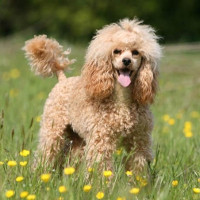
| The Poodle forms the basis of a large number of specific crossbreed dogs, as they not only have a loving, intelligent personality, but also a coat that doesn't shed and come in three distinct sizes, Toy, Miniature and Standard. Poodles are a type of utility dog traditionally used to sniff out truffles and retrieve prey, particularly ducks from water during hunting. While many people associate the Poodle with France, the truth is that they are thought to have originated in Germany. Over the years, the Poodle has contributed to many breeds, including the Bichon Frise and the Miniature Schnauzer, to prevent their extinction when population sizes were reduced. | ||
 |
||
| Standard of the Poodle | ||
A little of the Beagle |
||
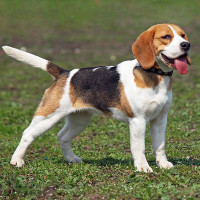
| The Beagle is the ultimate scent hound, a dog that was made to hunt and enjoys doing so. The Beagle is the result of breeding larger Foxhounds with a variety of smaller dogs to establish a breed capable of hunting low to the ground in packs and not requiring hunters to be on horseback. In fact, the Beagles of years gone by were considerably shorter than the modern Beagle. It wasn't until the mid-1800s that the Beagle was exported to the United States. They were an immediate success with American rabbit hunters and the breed was soon recognized by the AKC in 1885. | ||
 |
||
| Standard of the Beagle |
Appearance of the Poogle |
| Poogle dogs can have a wide variety of appearances, as their two parent breeds are rather different. As with other non-pedigreed dogs, there is no breed standard to go by, which means they are not currently bred for uniform appearance. The Poogle will have hanging ears that are often long enough to reach the chin. Their dark brown eyes are set apart and give them a pensive expression. Their muzzle can be relatively long, ending in a black or brown nose. Their compact body should be lean and muscular, supported by sturdy limbs. They have what is known as a sickle-shaped tail, which curves over the back and towards the head. The Poogle's coat is naturally variable, just as the Poodle's and Beagle's coats are so different. While each individual is different, as a general rule, the Poogle will have a wavy coat that falls somewhere in the middle of the dense, curly coat of the Poodle and the short, straight coat of the Beagle. Several coat colors are possible, including black, brown, gray, white and red. Many dogs will be bicolored or tricolored, and white patches are common. The adult size of the Poogle will depend on the size of the Poodle used to cross them. As a rule of thumb, a fully grown Poogle weighs from 5 to 11 kilos and measures from 25 to 40 centimeters at the withers. |
Temperament of the Poogle |
| A wonderful companion, the Poogle enjoys spending time with people and shows them a great deal of affection. They are generally at ease in the company of anyone, and don't tend to be overly suspicious of strangers. Children can generally be trusted to play in peace. Given the confident nature of the Poodle and the pack mentality of the Beagle, it's not surprising that the Poogle tends to get on well with other dogs and is typically the local VIP of the dog park. The same cannot be said of their relationships with cats, rabbits or other smaller pets, as some dogs will have a strong prey drive and feel the need to chase them away. The Poogle has earned a good reputation as a watchdog, as it is keen to patrol its territory and barks at the first sign of anything out of the ordinary. |
Needs and activities of the Poogle |
| The Poogle is an active hybrid with moderate to high energy levels and requires daily exercise. Two walks outside, an occasional trip to the dog park and yard recreation are ideal for this dog. Small backyards should always be secured with a high fence, as the Poogle may be more prey-oriented and will chase small wildlife that approaches it. The Poogle prefers warm climates and should not be left alone outside, in cold climates or otherwise. Homes with small backyards are ideal for this active dog, but if the Poogle gets enough daily exercise elsewhere, it can adapt to life in apartments and cities. |
Maintenance of the Poogle |
| The Poogle, like most Poodle hybrids, is a hypoallergenic dog that doesn't shed much. A shorter, coarser coat, like that of the Beagle parent, may be slightly more shedding and less hypoallergenic. Wavy to curly coats require weekly grooming to keep them tangle-free, and hairs can grow incessantly, requiring frequent trimming. The Poogle's ears are long and covered with long hairs that can trap dirt, debris and moisture, and require frequent cleaning to avoid infection. The Poogle is also prone to dental disease and should have its teeth and mouth cleaned at least three times a week to prevent damage. |



 English (United Kingdom)

Comments