
 |
Pekapoo |
|
He is not recognized by the F.C.I. |
Origin |
China <> France -> U.S.A. | |
Translation |
Francis Vandersteen | |
This breed is also known as |
Pekepoo |
A brief presentation of the Pekapoo |
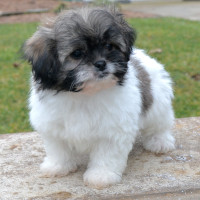
| The Pekingese-Poodle hybrid known as Pekapoo was one of the very first specific crossbreed dogs and has been bred in the USA for at least 50 years. Like many other hybrids, he was selected for his low-fall coat, but it's for his personality that he's been bred for so long. He's a courageous little dog bred for companionship and extremely affectionate, but he's also a vigilant and fearless watchdog. He needs constant companionship, but will reward this with unfailing loyalty. Hybrid dogs, by their very nature, vary in appearance and behavior between the two extremes of their parents. The Pekapoo may therefore look more like a Poodle or a Pekingese, but both breeds endow most of their offspring with fairly predictable traits. The Pekapoo is a stubborn dog that is naturally wary of strangers, as are its crossbred puppies, making them particularly good watchdogs. In addition, the Pekapoo can show this parent's sensitivity and tendency to break when in distress, so it doesn't always appreciate the attention of young children. The Poodle, on the other hand, lends its intelligence and Pekapoos are certainly easier to train than Pekingese, although they can be a little stubborn and need persuasion to succeed at their best. They are energetic dogs that require a surprising amount of exercise, but those that inherit the flat face of Pekingese are prone to respiratory distress and overheating, and may need special attention in hot weather. Most are in good health, but an unfortunate minority can develop some of the genetic conditions seen in parent breeds, and Pekapoo puppies need to be chosen at least as carefully as one would select a pedigree dog. Unscrupulous breeding practices are not uncommon in the world of specific crossbreed dogs, and future owners must ensure that both parents are good examples of their respective breeds. Because of the Pekapoo's long history, we can confidently state that its life expectancy is 13 to 15 years. |
History of the Pekapoo |
| Although the Cockapoo probably preceded it, the Pekapoo was one of the very first hybrids to be widely recognized and sought after, rather than being the result of unplanned matings. Although it has always been primarily a companion dog, it is renowned for its slightly ridiculous ferocity in the face of danger, and makes an excellent watchdog. As can also be said of many other dogs with this trait, he can be excessively vocal, and will certainly bark loudly and incessantly if left unattended. He is a dog that needs to be taken everywhere with the owner, as he pines and can develop problematic behaviors if left alone or in distress. Somewhat unusually, Pekapoo breeders don't seem to want to establish this breed as a breed in its own right, as almost all puppies are first-generation crosses. Pekapoo to Pekapoo mating is very rare. For this reason, Pekapoo puppies are very heterogeneous and have different temperaments. Their appearance is generally the norm. While both parental breeds contribute positively to the Pekapoo's characteristics, the facial conformation of Pekingese causes significant problems throughout life, with shortened and often narrowed airways restricting air circulation, and protruding eyes that are poorly protected and therefore prone to injury. For this reason, anyone choosing from a litter of Pekapoo puppies would be well advised to avoid those with shortened faces, despite the fact that these are often the cutest and most attractive at first glance. |
A little of the Pekingese |
||
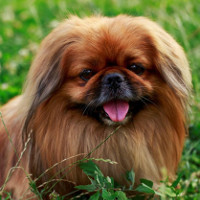
| The Pekingese, known in its Chinese homeland as the Lion Dog, was developed by Chinese royalty as a valuable companion. This breed has many contradictory characteristics, for although it is a very small dog of miniaturized breed, it is stocky and muscular, and displays a sometimes reckless courage when defending itself or its owners from any real or imagined threat. Pekingese may not be suitable for households with other pets, as they often dislike the company of other animals, with the exception of other Pekingese. | ||
 |
||
| Standard of the Pekingese | ||
A little of the Poodle |
||
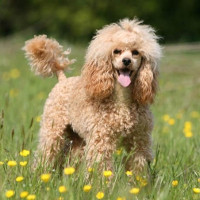
| The Poodle is one of the main players in the new world of hybrid dogs, and is renowned for its versatility. An intelligent dog that excels in many disciplines, the Poodle is not only an excellent pet, but can also compete successfully in events such as agility and flyball. The general public tends to associate the Poodle and its hairstyle with France, but the truth is that it's a German breed. Despite their glamorous appearance, they were originally bred to hunt and retrieve waterfowl and have always been fantastic swimmers. The Poodle is available in three sizes: Toy, Miniature and Standard, although it is the larger Standard Poodle that contributes to the Airedoodle breed. Poodles are recognized by the Kennel Club within their public service group. | ||
 |
||
| Standard of the Poodle |
Appearance of the Pekapoo |
| As mentioned above, the appearance of Peekapoos is highly variable, and there's nothing even close to a breed standard for this hybrid. All are small dogs, weighing an average of 4 to 9 kilos and measuring 22 to 27 centimeters. The Toy Poodle or Miniature Poodle can be used to produce a litter of Peekapoos, which is why the weight range is relatively wide. It's a rather bony dog, with a good length of leg that contrasts with the Pekingese. The muzzle is generally much shorter than that of the Poodle, but should nevertheless be at least a third of the total length of the head to minimize the risk of respiratory disorders. The coat is soft-textured and moderately long if uncut, and may be wavy or curly. The most common color patterns seen in the Peekapoo are: silver, white, cream, apricot, red, chocolate, black. |
Temperament of the Pekapoo |
| The Pekapoo is a gentle, affectionate companion that loves to be with its owner at all times. Energetic and alert, they are always aware of their surroundings and are quick to investigate and sound the alarm if something seems out of the ordinary. They are also extremely loyal dogs, highly sensitive to the moods of those around them and ready to defend them in any situation. He is naturally wary of strangers and needs to be well socialized from infancy to prevent him from becoming overly defensive or sensitive when approached by people outside the family circle. Although he's playful and active enough to get along with older children, he often has very clear limits of tolerance before biting, and rarely likes to be left in the company of younger, less attentive children. In general, he gets on well with other small pets, but smaller Peekapoos, a Poodle toy cross, are easily injured and may not be the right choice for homes with larger dogs. |
Needs and activities of the Pekapoo |
| Pekepoos are bigger than your typical Pekingese. They are quite active and need about 30 minutes of activity a day to go for walks or to the dog park. Hybrids with a Miniature Poodle parent may require less exercise. Either way, this hybrid loves to play too. They've been known to encourage fetch and other types of play with their owners indoors. Because they don't need a large yard, these pups are a great option for owners who live in apartments or urban environments. What's more, they do well in all types of climate, making them a very versatile breed. |
Maintenance of the Pekapoo |
| Pekepoos are not completely hypoallergenic. However, they do carry less dander due to the hypoallergenic coat of their Poodle parent. Nevertheless, the Pekepoo requires a fair amount of maintenance. Most importantly, their dense, medium-length coat requires daily brushing. Depending on the texture of the coat, which can vary according to the parent breed the Pekepoo takes after, owners can use a brush or smoothing comb to remove knots and braids. In addition, owners can use scissors or clippers to trim the long pieces of coat around the Pekepoo's eyes, ears, feet and tail. Because the coat can become unruly in this breed, some owners opt for professional grooming. In addition to daily teeth and ear cleaning, monthly baths and nail trimming are also recommended for this breed. |



 English (United Kingdom)

Comments