
 |
Maltipoo |
|
He is not recognized by the F.C.I. |
Origin |
Central Mediterranean Basin <> France -> U.S.A. | |
Translation |
Francis Vandersteen |
A brief presentation of the Maltipoo |
| One of the most popular Poodle hybrids to emerge in the last 20 years, the cute and cuddly Maltipoo has captured the hearts of many. The product of a cross between a purebred Maltese and a toy or miniature Poodle, this fluffy little dog is affectionate, docile and very good with children and other pets. Its small size and scaly coat, inherited from both parents, make it well suited to apartment living, but its tendency to bark persistently can create tension between neighbors. The Maltipoo has the renowned intelligence of the Poodle and is placid enough to be very easy to train. It is often recommended as the ideal choice for novice dog owners, as it is very unlikely to challenge the owner's authority. He's the ultimate companion dog, loving his cuddles and his tummy, and should never be forced to spend long periods alone, as he's prone to separation anxiety. In times of distress or boredom, this adorable bundle can be surprisingly destructive, leaving its owner in no doubt as to its misfortune. Although the coat is very light, it grows quickly and requires daily brushing to remove knots and tangles. Like all hybrids, the Maltipoo can inherit a range of health problems from parent breeds, and anyone considering the purchase of a puppy should always research the health status of both parents. Although it often retains its puppy looks into adolescence, the Maltipoo has a typical lifespan of 13 to 15 years. |
History of the Maltipoo |
| Although not officially a breed, the Maltipoo was developed in the USA from the 1990s onwards. Like other Poodle hybrids, the appeal of this cross lies partly in the creation of a dog with a low coat, supposedly hypoallergenic. However, Maltese also have a coat that isn't too thick, and we don't know how much of a factor this was. Certainly, the demand for specific crossbreed dogs was already high when the Maltipoo was conceived, and it would have been clear that the personalities of the two parent breeds would complement each other perfectly in their offspring. While both Poodles and Maltese are very affectionate dogs, Maltese can be a little too assertive and reactive in certain situations, and are known to spill over when provoked. The Poodle, on the other hand, especially the Miniature, has a gentler personality and is much more tolerant, which tends to shine through. Given that the Toy Poodle can also be a little sensitive, Maltese/Miniature Poodle crosses tend to be the most popular, rather than the tiny Maltipoos that can also be found. Temperament aside, the teacup moniker is all too often used to rename less well-bred hybrid or pedigree strains that are far more susceptible to many health problems, and puppies so labeled should be avoided wherever possible. |
A little of the Maltese |
||
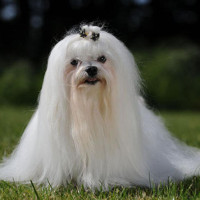
| Lively and affectionate, the Maltese is an ancient breed, recorded in the written history of Aristotle and Pliny almost 2,500 years ago. This is a small breed dog with a big personality that's playful and energetic. Maltese live very well in small spaces and are therefore ideal for indoor and apartment dogs. They thrive on human companionship, benefit from constant attention and can suffer from separation anxiety and boredom if left alone for long periods. They are considered a toy breed, although they are thought to share common ancestry with Spitz breeds. Although they appreciate physical contact and affection, Maltese can be prone to biting if overwhelmed and are therefore not considered ideal company for young children. | ||
 |
||
| Standard of the Maltese | ||
A little of the Poodle |
||
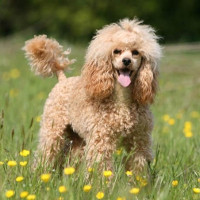
| The Poodle is one of the main players in the new world of hybrid dogs, and is renowned for its versatility. An intelligent dog that excels in many disciplines, the Poodle is not only an excellent pet, but can also compete successfully in events such as agility and flyball. The general public tends to associate the Poodle and its hairstyle with France, but the truth is that it's a German breed. Despite their glamorous appearance, they were originally bred to hunt and retrieve waterfowl and have always been fantastic swimmers. The Poodle is available in three sizes: Toy, Miniature and Standard, although it is the larger Standard Poodle that contributes to the Airedoodle breed. Poodles are recognized by the Kennel Club within their public service group. | ||
 |
||
| Standard of the Poodle |
Appearance of the Maltipoo |
| There is no breed standard for the Maltipoo, as each individual represents the random rearrangement of its parents' genes and may therefore take more after one parent than the other. Some Maltipoos will have their lives confused with either pedigree, although most mix Poodle and Maltese characteristics. The coat is very soft and fluffy, and usually develops in waves rather than tight curls. If left uncut, it can grow to 10 to 12 cm in length. It is generally a light color, but possible combinations and colors are as follows: cream, white, silver, apricot, blue, brown, parti-colored or any combination of the above. The body is well proportioned, with no lengthening of the spine or shortening of the limbs. Most are athletic, muscular dogs, although they are prone to weight gain, which should be avoided through good diet and exercise. Size varies according to the variety of Poodle it comes from, but most Maltipoos will weigh between 3 and 9 kg and stand 20-30 cm tall at the withers. |
Temperament of the Maltipoo |
| Maltipoos are affectionate, happy dogs who live to be in their owner's company. They are extremely sociable, lacking the Maltese distrust of strangers and completely lacking in aggression, which means they mix very well with other small dogs and animals. They are very playful dogs who generally enjoy the company of children, although you must take care that little Maltipoos don't fall over or get hurt by very young children. Alert and energetic, they make good watchdogs, barking at the slightest unusual noise, but this can develop into problematic behavior if left unchecked. Persistent, unprovoked barking is a common complaint with this hybrid. |
Needs and activities of the Maltipoo |
| The Maltipoo will love going for walks with you at least once a day. He loves the outdoors and walking alongside people he loves. He also likes to let off steam and play in the dog park or fenced-in backyard, playing games of fetch and Frisbee. He'll chase a toy or ball around the yard or living room for hours, or until your arm gives out, giving him every opportunity to expend his energy. Because he's also intelligent, you may also want to keep him mentally challenged to avoid the annoying destructive behaviors that accompany boredom. Activities such as obedience training and agility exercises will be effective in achieving this. Your hybrid is the ideal size for apartment living, as well as for any family home with or without a fenced yard. He can live in both urban and rural environments, and can tolerate most climates, although he's more at home in the heat than the cold. Protecting it in a healthy way will ensure adequate protection in cold weather. |
Maintenance of the Maltipoo |
| The Maltipoo is likely to require a minimum of maintenance, and will probably need brushing at least once a week. This hybrid is hypoallergenic and does not dissipate, making life easier for people with respiratory problems or asthma. Weekly ear checks and cleaning as needed will help prevent infection. Brushing teeth at least two or three times a week, if not every day, will help reduce periodontal disease and tooth loss. Gently wiping the eyes several times a week may be necessary to keep them clean and healthy. Nail trimming should be treated at least once a month, unless the dog can keep them with his normal activities. This hybrid has a low odor and saliva level, so it should only be bathed if necessary. |



 English (United Kingdom)

Comments