 |
Labrabull |
|
He is not recognized by the F.C.I. |
Origin |
Canada <> U.S.A. -> U.S.A. | |
Translation |
Francis Vandersteen |
A brief presentation of the Labrabull |
| The Labrador and the Pitbull are two of the biggest names in the canine world. So it was inevitable that they should join forces to create the Labrabull. An increasingly popular crossbreed, this dog can be seen internationally, although it's most often found in the USA. A dog of substantial size, the Labrabull tends to be broad and well-muscled with a short coat that hugs its skin perfectly. With their eager nature and loving hearts, this breed is quickly creating a name for itself, although it still has a long way to go before it matches the popularity of either of its parents. |
History of the Labrabull |
| A medium to large-sized dog, the Labrabull is a blend of two incredibly popular breeds, the Labrador Retriever and the American Pitbull Terrier. With these two-dog breeds appearing in most of the top 10 lists of most popular dog breeds internationally, it was only a matter of time before one day they would mix to form a hybrid dog. This breed is known as the Labrabull or Pitador. As with many new breed dogs, it can be difficult to predict both the appearance and temperament of the Labrabull. Indeed, even within a litter, there can be great variability. Some retain the clumsiness of their Labrador parents, while others may be more aloof and protective like their Pitbull ancestors. A breed that requires a lot of socialization and exercise, many would agree that it's not an ideal option for an inexperienced owner. Although the Labrabull's origins are foggy to say the least, we know a lot more about their predecessors. |
A little of the Labrador Retriever |
||
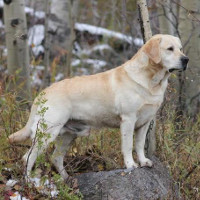
| Despite its name, the Labrador Retriever is not native to Labrador, but is thought to have originated in Newfoundland. Most agree that its ancestor is the St. John's Water Dog, an extinct breed originally from Newfoundland and anecdotally more at home in the water than on land. Historically, the Labrador Retriever was used to hunt on both dry and wet land, making it a favorite of local fishermen. Of course, many still use the Labrador Retriever for this purpose today, although the breed has developed into a multitude of other disciplines. Labrador Retrievers can be seen as therapy dogs, guide dogs for the blind and even drug detectors at airports and ferry terminals. In fact, the Labrador Retriever is such a successful breed that it now features in the top ten list of popular dogs in many countries around the world. | ||
 |
||
| Standard of the Labrador Retriever | ||
A little of the American Pit Bull Terrier |
||
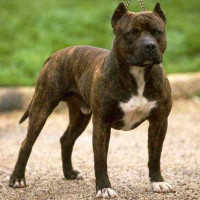
| The American Pit Bull Terrier is a misunderstood breed of dog. Loving and extremely affectionate, it is nevertheless generally regarded as dangerous and aggressive. Its bad reputation has followed it over the years, despite evidence to the contrary. Pit bulls are gentle and friendly, although unscrupulous people have taken advantage of their strength, tenacity and power to carry out criminal activities. Pit bulls were bred as fighting dogs, but were later developed as companion dogs. They are confident, intelligent dogs, eager to please and excellent pets, renowned for their love of children. Proper socialization and training are essential to prevent aggressive behavior towards other dogs and animals. | ||
 |
||
| Presentation of the American Pit Bull Terrier |
Appearance of the Labrabull |
| The Labrabull's head and body are thick, sturdy and heavy, and well proportioned. Although their bodies are muscular, they should remain lean and agile. Appearance is variable, with some dogs of the breed obviously taller and broader than others. Their ears are of medium size and fall close to their head, sometimes with a slight point, but never straight. Their almond-shaped eyes may be brown or green, while their prominent nose is brown or black. Their tail is long and straight, and may have a little fur. The Labrabull's fur is usually short and straight and can be a variety of colors, including: white, yellow, gray or brown. Many dogs will have white spots and other white markings on their fur. Mature dogs can weigh from 20 to 40 kg, and males tend to be larger and heavier. In terms of height, most dogs measure between 43 and 64 cm. |
Temperament of the Labrabull |
| While predicting the temperament of any dog can be a tricky task, it's almost impossible to try and do so in a relatively new hybrid breed. You may be able to gather clues by meeting and observing the puppy's parents and siblings from previous litters. As mistrust and guarding can be a problem, all puppies should be extensively socialized when young to ensure they become the gentle, welcoming adult dogs they have the potential to become. Many report that their Labrabull is particularly good with children, although given their size and potential strength, children should always be supervised in their company. They are full of life and mischievous, so they can make perfect playmates for older children. Often protective and territorial, Labrabulls are both good watchdogs and good defense dogs, as they tend to be wary of new inhabitants in the environment. Aggression is possible, especially if provoked on its own territory. Although most dogs get on well with other pets, precautions should be taken when interacting with unfamiliar dogs, as there is a potential risk of dog-to-dog aggression, especially between two unspayed males. Similarly, your Labrabull should not be trusted with small pets, such as rabbits and guinea pigs, which may be considered prey. |
Needs and activities of the Labrabull |
| The Labrabull is a very active dog. He'll need at least an hour, maybe more, of daily activity to dissipate all his nervous energy. Don't forget that Labradors like to chew, just like Labrabulls. Activities that stimulate his mind could also be a good idea. He'll enjoy trips to the dog park and playing with other dogs. He loves to fetch, and will play tug-of-war until you're exhausted. Realistically, he should have a big house with a big yard to play in, but he can live in an apartment as long as he gets enough exercise. |
Maintenance of the Labrabull |
| The Labrabull is generally a low-maintenance dog. It will have short hair on a dense coat. Nevertheless, it is not hypoallergenic. He should be brushed at least once a week with a brush to loosen hair and rid his coat of dead hairs. Only bathe him when necessary, but if you're worried about doggy odor, you can wash him with dry shampoo. Check his ears for odors and redness - these are signs of infection. Once every two weeks, use a damp cotton ball to wipe his ears. Clip her nails every two or three weeks - in fact, if you hear her nails clicking on the floor, it's time to cut them. Brush his teeth two or three times a week to prevent bad breath and dental disease. Start grooming him early to get him used to the process. |



 English (United Kingdom)

Comments