
 |
Havashire |
|
He is not recognized by the F.C.I. |
Origin |
Western Mediterranean <> Great Britain -> U.S.A. | |
Translation |
Francis Vandersteen |
A brief presentation of the Havashire |
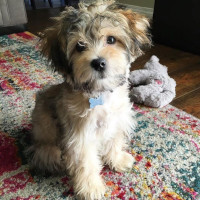
| The Havashire is an undeniably cute dog who wants nothing more than to be with his family at all times. A cross between the affectionate, loyal Havanese and the charismatic, charming Yorkshire Terrier, the Havashire is a small dog with a big personality. They have a compact body with short legs and a long, flowing coat that can be a wide range of colors, including cream, white or brown. Adaptable and fun-loving, these dogs love to be part of the action and will follow their owners from room to room in the hope that something exciting is going on. Their natural curiosity means they love to be trained, although some may need a little persuasion in the form of food. |
History of the Havashire |
| The Havashire is one of the more recent hybrid dog creations, and was probably only developed at the turn of the century. However, the two parent breeds (Havashire and Yorkshire Terrier) were developed many years ago, in the 19th century. So we can take a closer look at the background of each parent breed to better understand who the Havashire really is. |
A little of the Havanese Bichon |
||
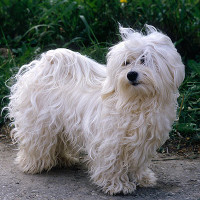
| As its name suggests, the Havana Bichon originated in the Cuban city of Havana and is known as the Little White Dog of Havana. This original breed originated from dogs brought to Havana by the first settlers, but unfortunately no longer exists. From this lineage came many of the most popular dog breeds, such as the Bichon Frise, Bolognese, Maltese and Coton de Tulear. Spanish settlers in Cuba took a liking to these affectionate little dogs and quickly exported them to Europe. The breed became an endangered species in the 1950s, but subsequently became Cuba's national dog and now enjoys healthy popularity both in their native Cuba and abroad. | ||
 |
||
| Standard of the Havanese Bichon | ||
A little of the Yorkshire Terrier |
||
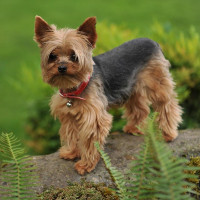
| The Yorkshire Terrier is an extremely popular breed of dog that was developed in Yorkshire, England, in the 19th century. Breeds such as the Skye Terrier and the now extinct Paisley Terrier were used in its creation. This plucky little dog was originally used as a ratter and was a remarkably efficient vermin exterminator, using its small size and quick turn of foot to hunt small vermin. Yorkshire Terriers, or Yorkies, are probably best known for their determined character and would certainly show no fear or hesitation when pursuing their prey. Nowadays, the breed is no longer an active breed, but is kept as a pet all over the world. Owners particularly appreciate the fact that these little dogs can be kept in urban areas and don't require a great deal of exercise. | ||
 |
||
| Standard of the Yorkshire Terrier |
Appearance of the Havashire |
| The Havashire can look more like a Yorkshire Terrier or Havanese parent, depending on the genes it inherits. Such a recently developed hybrid, the appearance of one dog to another still varies widely. In general, they will have a more robust rectangular body than the Yorkshire Terrier, with a more robust bone structure. Their skull is moderately rounded and their muzzle is of medium length and not too stunted. Their ears can either stand upright or hang to the side of their face. Every Havashire will have dark brown eyes full of character. Their tails are not particularly long and may or may not have a plume of fur. The Havashire is a small dog that tends to be larger than the Yorkshire Terrier and about the same size as the Havanese. At maturity, the Havashire will measure between 20 and 28 cm and weigh between 3 and 6 kg. The Havashire's coat should be long and silky, a real sight to behold when properly styled. There are many possible color combinations, including black and bronze, white, cream, red and brown. Most will have an adorable moustache and beard that only serve to make them more attractive. |
Temperament of the Havashire |
| Best known for their dependence on people, Havashires really rely on their owners for their happiness. They can't be left alone for long periods, and separation anxiety can become a real problem for some. These characteristics make the Havashire best suited to owners who can spend most of their time in their presence, such as those who are retired or work from home. Curious and energetic, these dogs like to keep busy and enjoy entertaining themselves with a variety of canine games and activities. They are usually very happy to participate in training sessions, and their abundant intelligence quickly becomes evident when interacting with them. Most Havashires will feel the need to protect their family and can make very good guard dogs. If well socialized from an early age and exposed to a wide range of people of all ages, they should be tolerant of new guests and are rarely hostile. Getting along with other animals doesn't tend to be a problem. |
Needs and activities of the Havashire |
| Full of energy, curious and alert, the Havashire has more than its fair share of energy for a dog of its small size. A daily walk is essential to burn off some of that energy, although he'll need plenty of exercise to get around the house, from person to person. He loves going out on the town and will absorb all the attention he can get. The pet park is ideal for letting him run and race with the big dogs and will guarantee a tired pet for the night. Games with the family involving chasing the ball or searching for hidden objects will keep them occupied for hours. If you have a small, secure garden, this is ideal. After all their daily activities, they'll curl up on your lap for a cuddle and a well-deserved rest. |
Maintenance of the Havashire |
| Havashires' grooming needs may vary according to the coat they inherit from their parents. If they have a longer coat, they'll need to be brushed almost daily to prevent tangling. A professional groomer may be needed just to trim it for easier care, but this depends on the region you live in. Country dogs will need more trimming and brushing because of the dog's interaction while walking in the countryside. Havashires only need a bath when necessary, otherwise you can dry out their skin. Be sure to use a gentle dog shampoo designed to protect the natural oils in your dog's coat. His soft ears can trap dirt and debris. Wipe them gently with a damp cloth and dry thoroughly. Finish by clipping nails and brushing teeth. |



 English (United Kingdom)

Comments