
 |
Golden Cocker Retriever |
|
He is not recognized by the F.C.I. |
Origin |
Great Britain -> U.S.A. | |
Translation |
Francis Vandersteen |
A brief presentation of the Golden Cocker Retriever |
| Although the Golden Cocker Retriever was only developed a few decades ago, this cross between the Cocker Spaniel and the Golden Retriever is already making a name for itself as a much-loved family pet. Medium-sized, with a broad body and long limbs, the Golden Cocker Retriever has the densely furred ears of the Spaniel and the imploring brown eyes of both parents. With activity levels that tend towards hyperactivity, owners must be prepared to provide plenty of exercise and training for this dog, which can develop troublesome behaviors if neglected. Gentle and eager to make friends with just about anyone, this breed would make a terrible watchdog. |
History of the Golden Cocker Retriever |
| A cross between the beloved, gentle Golden Retriever and the curly, athletic English Cocker Spaniel or the happy, if sometimes sensitive, American Cocker Spaniel, the Golden Cocker Retriever is also sometimes called the Cogol. It's worth mentioning the specific line of Golden Cocker Retrievers called Dakota Sport Retrievers, which should be 50% Golden Retriever and, ideally, 25% American Cocker Spaniel and 25% English Cocker Spaniel. The Golden Cocker Retriever was probably first developed 20 or 30 years ago, when the very first specific crossbreed dogs were created. The creation of these non-pedigree pets was often aimed at reducing the incidence of disease in a population, or creating a hypoallergenic or physically different version of a well-established breed. Although the Golden Cocker Retriever is recently established to have a substantial history worthy of note, both its parents have a colorful background. |
A little of the Golden Retriever |
||
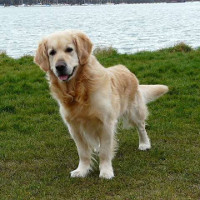
| Golden Retrievers are large, highly trainable dogs with an exceptionally gentle and affectionate character. It was originally developed in Scotland as a breed capable of retrieving game both on land and in water. Today, the Golden Retriever continues to be used as a working dog, but is also a popular choice of family pet due to its good nature. The breed has a medium-length wavy coat, which comes in a variety of light colors. | ||
 |
||
| Standard of the Golden Retriever | ||
A little of the English Cocker Spaniel |
||
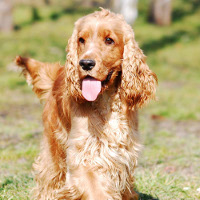
| Spaniels in general have been around for over 500 years. It wasn't until the early 1900s that English and American Cocker Spaniels became respected breeds in their own right, the two dogs having developed distinct personalities and looks over time. The American Cocker tends to be smaller, with a shorter muzzle. A versatile breed, the Spaniel has always excelled as a companion dog, as well as a hunter and show dog. In fact, the Cocker Spaniel has won Best in Show at Crufts more times than any other breed. | ||
 |
||
| Standard of the English Cocker Spaniel |
Appearance of the Golden Cocker Retriever |
| Generally a good mix of Spaniel and Retriever, the Golden Cocker Retriever tends to look like a smaller Golden Retriever with a face more like a Cocker Spaniel. Their ears are pressed against their face and may be covered with straight or curly fur. Their brown eyes are often an important feature of their face, representing a kind, gentle expression. Their muzzle is fairly long and ends in a dark nose. Their straight legs end in sturdy, hairy paws. Their curved tails are robust and often dense. Although coat length and type can vary, most have thick, straight, medium-length coats. The fur tends to be golden in color, although it can also be black, fawn or red. Measuring 51 to 61 cm, this is a medium to large breed. As adults, most will reach weights ranging from 13.5 to 25 kg. |
Temperament of the Golden Cocker Retriever |
| Although both parents are social and loving, it can be difficult to predict which breed the Golden Cocker Retriever will take after more, and so there can be a range of temperaments even within the same litter. Certainly, the Golden Cocker Retriever loves human companionship and likes to be surrounded by family as much as possible. Outgoing and courageous on the outside, the Golden Cocker Retriever has the ability to act calmly inside the house. A big goofball, this dog particularly likes to be around the family's children. In fact, they can become so dependent on their owners that they develop separation anxiety. A good sport with other animals, most Golden Cocker Retrievers will integrate well with other animals, especially dogs. As both parents have hunting backgrounds, it would be wise to keep them away from prey, such as rabbits. Seemingly always on the move, Golden Cocker Retrievers have lots of energy and like to be involved in everything. Intelligent and active, it's not uncommon for this breed to be under-stimulated in the wrong home, which can lead to behavioral problems. They require almost constant interaction and would not be suited to a household often left empty. |
Needs and activities of the Golden Cocker Retriever |
| The Golden Cocker Retriever has a high energy level that will require 60 minutes of activity a day. He'll make an excellent running partner, love to fetch and will always ask to go swimming. Two walks a day are recommended, with the addition of other activities to stimulate his mind. He's the type of dog who enjoys obedience trials. An ideal environment for your Golden Cocker Retriever is a spacious rural home with a fenced yard and a warm climate. Apartment living is discouraged; your hybrid needs to be able to let off steam and explore several times a day. |
Maintenance of the Golden Cocker Retriever |
| The Golden Cocker Retriever is not considered a hypoallergenic breed, and will shed moderately throughout the year. To avoid tangles and braids, daily brushing with a stiff bristle brush for 10 to 15 minutes will help reduce damage to the coat. Golden Cocker Retrievers may require professional grooming every 4 to 6 weeks to prevent coat damage and maintain good hygiene. We recommend bathing your dog every 6 to 8 weeks. This breed is not known for drooling. Ears should be wiped and cleaned weekly. If your hybrid likes water, check for excess moisture in the ears after each bath to avoid yeast or bacterial growth. Nails should be trimmed every 2 to 3 weeks. Teeth should be brushed daily to prevent tartar build-up. |



 English (United Kingdom)

Comments