 |
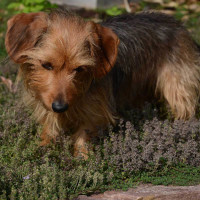
Dorkie Terrier |
|
He is not recognized by the F.C.I. |
Origin |
Germany <> Great Britain -> U.S.A. | |
Translation |
Francis Vandersteen |
A brief presentation of the Dorkie Terrier |
| The Dorkie Terrier is a shaggy hunting dog, a mix of Yorkshire Terrier and Dachshund. This is a small breed, but with a big character that suits the strong personalities of both parents. As for the appearance of Dorkie Terriers, their Yorkshire parentage is very obvious, with their coats often taking on the familiar black and bronze of the Yorkshire Terrier. However, the Dachshund is also referred to in its proportionally longer back and shorter legs. A well-socialized Dorkie Terrier makes a charming canine companion full of character. However, this is a dog that is ready to defend itself. If threatened or treated with disrespect, they may growl or break. For this reason, as with all dogs, Dorkie Terriers need to be supervised with children around. |
History of the Dorkie Terrier |
| The growing popularity of hybrid dogs took place towards the end of the 20th century. This involves parent dogs from different breeds, crossed together to produce puppies combining both their characteristics. So, although Dorkie Terriers are newcomers themselves, their family tree is long and venerable. |
A little of the Dachshund |
||
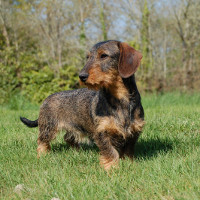
| Dachshunds have German origins, and their name translates as hunting dog. This reflects the work they were bred to do, hunting badgers. The breed was developed around the 1500s, using sires including Pinschers, Braque Françaises and Basset Fauve de Bretagne. Of course, the Dachshund's most distinctive feature is its long back mounted on short legs. This made it the ideal size for exploring badger burrows. Some people even maintain that their long, mast-like tail was a deliberate trait to be used as a means of getting a dog out of a badger burrow if it got stuck. The Dachshund's cheeky personality and quirky appearance have made them popular as pets. With Queen Victoria as a fan, their star continued to rise, right up until the Second World War. The breed's undeniable link with Germany meant that it was temporarily unpatriotic and its numbers dwindled. But after the war, their charm and character were reclaimed and they were once again welcome as pets. | ||
 |
||
| Standard of the Dachshund | ||
A little of the Yorkshire Terrier |
||
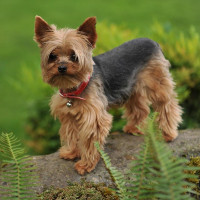
| The Yorkshire Terrier is of English origin, dating back to the early 19th century. With modern Yorkshires being such popular pets, it's easy to forget that they were once working dogs. Among the Yorkshire Terrier's precursors were breeds such as the English Black and Tan Terrier, the now extinct Paisley Terrier, the popular Maltese, the Skye Terrier, the Dandie Dinmont Terrier and the Airedale Terrier. The indication of their role applies to all terrier breeds, as these little dogs were bred to be rakers. Their job was to hunt vermin in Yorkshire's wool and cotton mills. These dogs were tenacious and courageous, and were a playmate trotting alongside the workers' heels. Indeed, they accompanied their masters home and grew so fond of each other that they also became pets. Of course, the modern Yorkshire Terrier is more pocket dog than working dog, but even so, their tenacious character still lurks beneath those long, silky curls. | ||
 |
||
| Standard of the Yorkshire Terrier |
Appearance of the Dorkie Terrier |
| The Dorkie Terrier tends to have the appearance and coat of a Yorkshire Terrier, but with the elongated body of a Dachshund. They have a good-sized muzzle, black leather nose and floppy ears. Look at that pretty face and it's easy to spot the Yorkie heritage. Their body is somewhat stretched and their legs a little truncated, all ending in a long flag tail, chewed up with feathers. Coat color is more generally black and beige or brown and beige, although red and blue variations exist depending on parentage. They are generally medium to long-haired dogs, the exact length depending on whether the Dachshund parent is short- or long-haired. |
Temperament of the Dorkie Terrier |
| Both parent breeds are strong-minded and tend to think for themselves. This can make for a stubborn dog with an opinion on matters. On the positive side, this gives them character and charm, but on the negative side, can lead to bad behavior, such as liveliness. Well socialized as a puppy and having slowly learned to behave well, the Dorkie Terrier is a real furry angel coat as a family dog. But even with a well-behaved Dorkie Terrier, you can't rest on your laurels. They need clear boundaries so there's no doubt about what's allowed and what's not. They also need firm but fair guidance, so they understand their place in the home and don't become too bossy or superior to themselves. And, finally, these little dogs have a great voice. They know how to bark and aren't afraid to do so. Once again, they make an excellent watchdog, but at the same time can get you into arguments with the neighbors. |
Needs and activities of the Dorkie Terrier |
| The Dorkie needs at least 30 to 45 minutes of activity a day to keep it healthy and happy. This breed tends to be a little lazy, so you may need to entice it with a game of fetch or a walk around the neighborhood. You can also interest him in agility training and competition or Frisbee in the park. A trip to the dog park with other dogs can also be a good choice. If your dog doesn't get enough exercise, he's likely to become anxious and overweight. It's important for him to get at least half an hour of vigorous exercise a day. |
Maintenance of the Dorkie Terrier |
| The Dorkie's coat doesn't require much maintenance, but it is recommended to brush it with a metal comb and stiff bristle brush three or four times a week. If they have knots or braids, loosen them with your fingers before brushing. You should also clean their teeth with a soft toothbrush and toothpaste specially designed for dogs. You can do this several times a week, but daily is recommended. Trim their nails as needed and clean their ears once a week. Watch for redness, as bacteria and yeast can thrive in a moist environment like the canine ear. |



 English (United Kingdom)

Comments