Chi-Poo

He is not recognized by the F.C.I.

Origin
Mexico <> France -> U.S.A.
Translation
Francis Vandersteen
This breed is also known as
Wapoo
Poochi
Choodle
Chipoodle

A brief presentation of the Chi-Poo

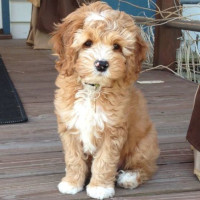
Developed around 50 years ago, the Chi-Poo has had more time than other specific crossbreed dogs to make a name for itself, and is certainly a popular crossbreed worldwide. Small and compact, these Poodle-Chihuahua mixes make excellent companions but are not suitable for any kind of work. Affectionate towards its family, the Chi-Poo will form close bonds with those it loves and knows how to play gently with children. The gentle waves of the Chi-Poo's soft coat give it the appearance of a teddy bear, and its sparkling eyes and shiny nose only add to the effect. Most will have a uniform white or cream color, but some are bicolored and others have light or white fur patches.

History of the Chi-Poo

The Chi-Poo is one of the quintessential hybrids: small, sociable and minimal-coated. While the Poodle is one of the most popular breeds used in the world of specific crossbreeding dogs, the Chihuahua offers a tiny size that is preferred by city folk. Originally developed in the 1970s, the Chi-Poo is also known as the Poochi, Wapoo, Choodle and Chipoodle. While many of the original hybrid dogs were first created in America, experts are unsure of the Chi-Poo's country of origin. With limited information about the history of this relatively recent breed, we have to turn to their parents to better understand their past.
        

A little of the Chihuahua

        
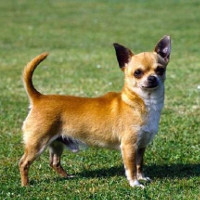
The Chihuahua is thought to have existed over a thousand years ago in the ancient civilizations of South America. Naturally, they have close ties with Mexico, where they were popularized in the 19th century. The name Chihuahua comes from the Mexican region with which they have the closest ties. Over the years, many dogs were exported across the Texas border, and it was in South America that the breed was standardized. Bred as pets, the Chihuahua's small size and delicate bone structure would make them unsuitable working dogs. Preferred by those living in small homes in urban areas, the Chihuahua is a very popular companion dog breed.
Standard of the Chihuahua

A little of the Poodle

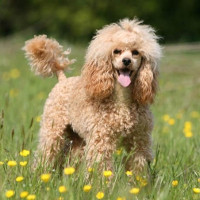
Although the Poodle may be associated with France, where it was beloved by high society for many years, it most likely originated in Germany. A working dog, this breed was traditionally used to retrieve birds from water during hunts. The UKC recognizes the Poodle within its public service group, and this intelligent dog is currently a strong contender in a number of canine disciplines, including agility and canine dancing. As they have a hypoallergenic coat and are available in three sizes (toy, miniature and standard), many breeders like to use Poodles in their crossbreeding.
Standard of the Poodle

Appearance of the Chi-Poo

Delicate little dogs with short to medium wavy coats, these crossbreeds are decidedly cute. As with most cross-breeds, the appearance of dogs within a breed varies greatly, and even those from the same litter (especially F1 litters) can be radically different from one another. While some dogs will have the pointed muzzle of the wily Chihuahua, others will inherit a more square-shaped, less prominent muzzle. The Chi-Poo's ears are highly variable, and can stand straight like those of the Chihuahua, or hang flat, framing their face. Their dark-brown eyes are both attentive and playful. Their body is small and refined, supported by straight, delicate limbs. Although their elegant tail may hang down, many will have a tail that curls over their back, covered with an adorable plume of fur. As Chihuahuas' fur can be short or long, the Chi-Poo's coat varies enormously. Many will have a medium, wavy coat that can be a multitude of colors, including white, fawn, cream, brown, red and black. White patches of fur are relatively common and are frequently seen on the chest. The Chi-Poo can measure between 12 and 32 centimeters and generally weighs between 2.5 and 9 kilos. While most Chihuahuas are crossed with Miniature Poodles, Poodle Toy crosses are not uncommon.

Temperament of the Chi-Poo

A breed that's virtually stress-free to own, but also a dog that doesn't require an enormous amount of exercise. This easy-going dog is well suited to those who can't be home all the time and may not have the time to take their pet on long daily walks. Likewise, their small size makes them a good choice for those living in small homes without access to a garden. Not surprisingly, many owners appreciate how low-maintenance the Chi-Poo can be. Confident and sociable, Chi-Poo can easily make friends with other dogs, especially if exposed to them from an early age. They're equally at ease around people, although they often bond more with one or two of their owners than with anyone else. Some dogs can be wary of people outside their immediate circle, and may act aloof in their company. Very playful with children in the household, it's important to monitor interactions, as it's not uncommon for these delicate dogs to accidentally injure themselves during an innocent game of fetch. A very capable watchdog, the Chi-Poo will know long before you do if someone new arrives at home. Their lively yapping will rouse you from the deepest sleep and, in busy households, can become irritating.

Needs and activities of the Chi-Poo

The Chi-Poo doesn't have much breed information, however, we can study parent breeds to find out what their offspring might look like. The Chihuahua is an active little dog. It loves to chase small animals like squirrels, and will play as long as you can. The Chihuahua is an excellent walking companion and loves games of fetch. However, be careful not to let the Chihuahua overexert itself. Poodles also need regular exercise. He can be very active, and when his energy builds up, he can be a bit destructive. It's important to give him daily opportunities to use that energy. Given these facts, it's reasonable to assume that the Chi-Poo will be a fairly active dog in need of daily exercise. When out and about, head for the dog park so your Chi-Poo can watch and learn, as well as make new friends.

Maintenance of the Chi-Poo

The Chi-Poo has minimal grooming requirements. It's not difficult to maintain, and a once-a-week groom is often more than enough to keep your Chi-Poo in top condition. He has a minimal coat, and is in fact an excellent dog for those with allergies. Simply brushing him once a week with a bristle brush will help his natural oils penetrate his coat and remove excess hair. Of course, during the fall season, you may need to do this more than once a week. Sometimes, curls will need to be trimmed with scissors to maintain the shape of the coat. Don't neglect your Chi-Poo's teeth and nails, brushing them every day if possible and trimming the nails every two weeks.

Comments

Latest page updates

  • Telomian

    Telomian He is not recognized by the F.C.I. Origin Malaysia Translation Francis Vandersteen A brief presentation of the Telomian The Telomian is a very rare breed of dog, and the only one native to Malaysia to have been bred outside the country. They were originally bred by the indigenous people of Malaysia to combat parasites such as snakes, rats,...
  • King Wheaten -- Cavalier King Charles Spaniel X Irish Soft Coated Wheaten Terrier

    King Wheaten He is not recognized by the F.C.I. Origin Great Britain <> Ireland -> U.S.A. Translation Francis Vandersteen A brief presentation of the King Wheaten The King Wheaten is a small dog with a heart this big and a playful disposition. Borrowing the energy and soft-coated waves of the Irish Soft Coated Wheaten Terrier and the size and...
  • Spanierd -- English Springer Spaniel X German Shepherd

    Spanierd He is not recognized by the F.C.I. Origin Great Britain <> Germany -> U.S.A. Translation Francis Vandersteen A brief presentation of the Spanierd The Spanierd is a hybrid dog. Its parent breeds are the English Springer Spaniel and the German Shepherd. They have an affable personality. He's known for entertaining family and friends with his...
  • Alaskan Goldenmute -- Alaskan Malamute X Golden Retriever

    Alaskan Goldenmute He is not recognized by the F.C.I. Origin U.S.A. <> Great Britain -> U.S.A. Translation Francis Vandersteen This breed is also known as Alaskan GoldenGoldenmuteAlaskan Gold Retriever     A brief presentation of the Alaskan Goldenmute The Alaskan Goldenmute is a descendant of two great dog breeds: the Alaskan Malamute and the Golden...
  • French pointing dog Pyrenean type

    French pointing dog Pyrenean type FCI standard Nº 134 Origin France Translation Mrs. Peggy Davis Group Group 7 Pointing Dogs Section Section 1.1 Continental Pointing Dogs « Braque » Type Working With working trial Acceptance on a definitive basis by the FCI Tuesday 18 January 1955 Publication of the official valid standard Tuesday 01 August 2023 Last...
  • French pointing dog Gascogne type

    French pointing dog Gascogne type FCI standard Nº 133 Origin France Translation Mrs. Peggy Davis Group Group 7 Pointing Dogs Section Section 1.1 Continental Pointing Dogs « Braque » Type Working With working trial Acceptance on a definitive basis by the FCI Monday 17 January 1955 Publication of the official valid standard Tuesday 01 August 2023 Last...
  • Vucciriscu

    Vucciriscu He is not recognized by the F.C.I. Origin Sicily Translation Francis Vandersteen En français, cette race se dit Vucciriscu Diese Norm ist in deutscher Sprache sichtbar Vucciriscu En español, esta raza se dice Vucciriscu In het Nederlands, wordt dit ras gezegd Vucciriscu This breed is also known as Sicilian Vucciriscu Sicilian Butcher...

© 2026 Groupe Milouchouchou ASBL. Tous droits réservés. En savoir plus

Protected by Copyright01
We use cookies

We use cookies on our website. Some of them are essential for the operation of the site, while others help us to improve this site and the user experience (tracking cookies). You can decide for yourself whether you want to allow cookies or not. Please note that if you reject them, you may not be able to use all the functionalities of the site.

Ok