 |
Bullmatian |
|
He is not recognized by the F.C.I. |
Origin |
Great Britain <> Croatia -> Afghanistan, U.S.A. | |
Translation |
Francis Vandersteen |
A brief presentation of the Bullmatian |
| Crossbreeding the Bulldog and the Dalmatian has created a specific, good-natured, family-oriented crossbreed. With good total musculature and a strong, robust body, Bullmatians are athletically built. Their face is less snobby than the Bulldog's, and they may or may not have their distinctive stubby tail. Of course, the Dalmatian's most striking feature is its white coat with black spots, but not all Bullmatians share this trait. In fact, their fur can be a range of colors from brindle or black to brown or white. |
History of the Bullmatian |
| A rare and unusual-looking breed, the Bullmatian is a cross between the English Bulldog and the Dalmatian. Anecdotally, the breed originated in Afghanistan, then was exported to the United States. Over the last thirty years or so, there has been a real trend towards mixing pedigree dogs and creating specific crossbreeds. Hundreds of new breeds have been created in this way, and the Bullmatian is one of the most recent additions. With only a few years of history under their belts, there's not much to say about the Bullmatian's past, but we do know a lot about its parents. |
A little of the English Bulldog |
||
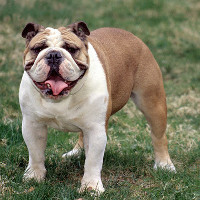
| The English Bulldog is often cited as England's mascot and is one of the oldest breeds of dog indigenous to the UK. As their name suggests, they were used in sports such as bull-baiting, as well as in competitive fighting. Once these inhumane sports were banned in the 1800s, the English Bulldog developed a gentler personality and became a household pet. | ||
 |
||
| Standard of the English Bulldog | ||
A little of the Dalmatian |
||
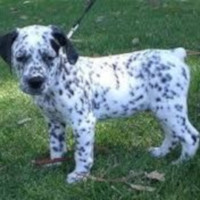
| The Dalmatian is a well-known dog breed, popularized by Walt Disney's 101 Dalmatians. Their true origins are unclear, with most agreeing that they have existed since the time of the ancient Greeks. Their name is thought to be associated with a region of Croatia called Dalmatia. Traditionally, these dogs were used as carriage dogs, running alongside carriages and making their way. Their association with the fire service is due to the fact that they would also be transport dogs for the old horse-drawn fire departments. | ||
 |
||
| Standard of the Dalmatian |
Appearance of the Bullmatian |
| Usually retaining at least a few dark spots from the Dalmatian parent, the Bullmatian looks like a stockier, shorter Dalmatian with a square-shaped skull. While the Dalmatian is long and lean, crossing it with the well-muscled, robust Bulldog has produced a breed with a more compact body and shorter limbs. Bullmatians' ears hang to the side of their face and are medium-sized. Their head is broad, with almond-shaped brown eyes and a black nose. Their muzzle is longer than the Bulldog's and rarely has skin folds. Their neck is shorter and stockier than that of the Dalmatian. Their body is rectangular and their limbs are thick and strong. They can either have the long, slender tail of the Dalmatian, or the short tail characteristic of the Bulldog. Adults can measure between 35 and 60 centimeters in height and weigh between 18 and 30 kilos. The Bullmatian's coat is short and dense, and comes in a range of colors. Although many are white with black patches, the coat can also be fawn, red, brown, brindle or black. Dark spots and patches are typical. |
Temperament of the Bullmatian |
| It can be difficult to predict the temperament of any dog, but it's particularly hard to know which personality traits a mixed breed will inherit. On the whole, Bullmatians are people lovers and loyal to their families. They are easy-going and laid-back, and tolerate children very well. It's not unusual for Bullmatians to protect their home and family, and they're often wary of strangers, especially those who encroach on their territory. To avoid hostile behavior, try to introduce them to a variety of people when they're young, both inside and outside the home. Highly energetic and fast-moving, Bullmatians shouldn't be couch potatoes and need plenty of attention and stimulation. They don't like to be left alone and are happiest when they're at the center of all the action. Always curious, they'll continually sneak up behind you to check on what you're doing. |
Needs and activities of the Bullmatian |
| To keep these dogs active and healthy, take them on daily runs and walks. Also give them time in a fenced yard to get rid of energy. It's important to keep dogs mentally and physically stimulated. Therefore, you should provide your Bullmatian with toys inside the house. This breed can be energetic and should do about 1-2 hours of activity a day. |
Maintenance of the Bullmatian |
| Because of their short, straight coats, this specific crossbreed will have a relatively low maintenance level. To keep their coats shiny and healthy, brush them a few times a week and bathe them whenever necessary. In addition to caring for their coats, Bullmatians, like all breeds, need maintenance of their teeth, ears and nails. Dogs can develop dental problems, and to prevent them, you need to brush their teeth. Two or three times a week should be the minimum, but every day is best. Their ears can also become infected and need to be gently cleaned every week. Inspect them at the same time and act if you notice anything strange to avoid infections sooner. Finally, dogs sometimes need to have their nails trimmed. This will probably be once or twice a month, but it could be less often, depending on your dog's lifestyle and how quickly the nails wear down on their own. If your pet's nails snap against the ground while they're walking, they should be trimmed. |



 English (United Kingdom)

Comments