
 |
Bossi-Poo |
|
He is not recognized by the F.C.I. |
Origin |
U.S.A. <> France -> U.S.A. | |
Translation |
Francis Vandersteen | |
This breed is also known as |
Bossipoo
|
A brief presentation of the Bossi-Poo |
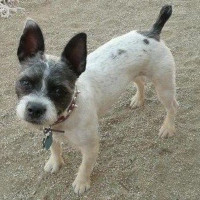
| Crossing the Boston Terrier with the loving and intelligent Poodle has resulted in a fantastic cross that would make a welcome addition to many households. The Bossi-Poo's good nature makes them a hit with children, while their manageable coat and moderate exercise requirements mean they represent a relatively low-maintenance choice. The Bossi-Poo, which tends to look like a good mix of each parent breed, should have a medium-sized muzzle, dark brown eyes and a stiff coat. Although the coat color is often the same black and white as that of the Boston Terrier, it is also possible for the coat to come in other shades, such as gray or brown. |
History of the Bossi-Poo |
| The Bossi-Poo is a dog of many names, and can also be called the Bossi Doodle, BostonPoo or Boston Doodle. Although technically any Poodle can be included in the cross, it's most often the Miniature Poodle that is crossed. Poodles are probably the most widely used breed among specific crossbreed dogs, and this is no coincidence. The Poodle is a very popular choice, as not only does it come in many sizes and colors, but it's also quick to learn, obedient and affectionate. A real attraction of the Poodle when it comes to canine hybridization is that it can often bring a hypoallergenic layer to the mix. The Boston Terrier is a newcomer to the world of specific crossbreed dogs, but certainly brings a lot to the table. The Bossi-Poo was probably created in the last two decades and has yet to make a name for itself. By examining the backgrounds of both parents, we can better understand this new breed. |
A little of the Boston Terrier |
||
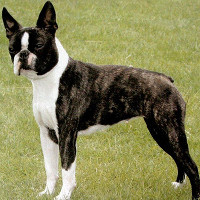
| Boston Terriers are closely related to a number of well-known breeds, including the French Bulldog and Bull Terrier. They take their name from the city in which they originate, Boston, Massachusetts. Although they originated in the late 1800s, it wasn't until 1914 that they were recognized by the Kennel Club and classified in their public service group. | ||
 |
||
| Standard of the Boston Terrier | ||
A little of the Poodle |
||
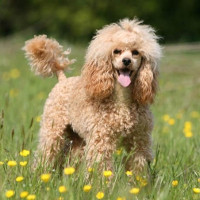
| The Poodle is now a much-loved pet and is known to excel in activities such as obedience and agility. Before that, they were commonly used to retrieve birds from water when hunting, and they also traditionally helped sniff out truffles and even performed in circus acts. Germany and France are thought to have played a part in the Poodle's development and, although their name derives from a German word, the breed really flourished once it arrived in France in the 1700s. The Kennel Club currently recognizes three variants of the breed: Standard, Miniature and Toy. | ||
 |
||
| Standard of the Poodle |
Appearance of the Bossi-Poo |
| Although the Miniature Poodle and the Boston Terrier have similar heights and weights, their facial features and coat types are very different, meaning that their offspring vary in appearance, even within the same litter. With successive matings, this variation will diminish, but for the time being, each Bossi-Poo puppy will have a somewhat distinctive look. The Bossi-Poo's skull is relatively small, and it tends to have a longer muzzle and fewer facial creases than its Boston Terrier relative. While their ears can stand up straight, most will have ears that turn back and fold forward. Their dark brown eyes are almond-shaped, giving them a gentle, curious expression. Their body is lean and compact, while their limbs should be straight and symmetrical. The Bossi-Poo's tail can be short and curly like the Boston Terrier, or long and straight like that of the Poodle. Some individuals will wear a short coat, others a medium-length, wavy or curly coat. Many will be black and white, but the coat can just as easily be brown or gray. Facial fur tends to be a little longer than body fur, and whiskers are not uncommon. White patches on areas such as the chest and legs are common. Adult Bossi-Poos measure from 28 to 38 centimeters and weigh from 6.8 to 11 kilos, bearing in mind that these are the figures from the cross with the Miniature Poodle and that if a standard Poodle were used, the offspring would be considerably larger. |
Temperament of the Bossi-Poo |
| As both the Poodle and the Boston Terrier are wonderful pets with sparkling personalities and a real eagerness to please, it's not surprising that the Bossi-Poo is an affectionate and passionate animal. Most will be independent and bold, happy in their own company and not overly reliant on their owners. Although they will form close bonds with their families, they will rarely do so to the extent that this becomes a problem, and separation anxiety is not a frequent feature of this breed. Highly sociable and always keen to meet new people and animals, the Bossi-Poo will be friendly and outgoing both inside and outside the home. This means they should have plenty of opportunities to mingle with other dogs, especially at local boarding kennels or dog parks where they're happiest. Their trusting nature and love of all things two- and four-legged make the Bossi-Poo a pretty awful watchdog, and they're more likely to try to befriend an intruder rather than scare them away. |
Needs and activities of the Bossi-Poo |
| This hybrid breed is good at tricks, competitive obedience, guarding and agility. They are very active and will need regular exercise, but they should be happy to live in any home. A house or apartment with a yard or nothing will suit this breed, but make sure they get their 30 to 60 minutes of activity a day. |
Maintenance of the Bossi-Poo |
| The Bossi-Poo is very tolerant of heat but not so tolerant of cold, so may need a sweater when walking outdoors in winter. This breed has low shedding levels, but should always be brushed once or twice a week. Like all dogs, the Bossi-Poo will need regular maintenance of its teeth, nails and ears. If possible, brush his teeth every day, and at least two or three times a week. If you hear your pet's nails clicking on the floor, it means they're overdue for grooming. On average, dogs need their nails trimmed once or twice a month, but in some individuals, nails wear naturally and they may need it less often. As many dogs can easily develop ear infections, you should clean them weekly to keep them clean and healthy. Since this breed can sometimes have a foul odor, bathe them from time to time. |



 English (United Kingdom)

Comments